Introduction
Vertical farming has emerged as a technological approach to food production that uses stacked growing systems inside controlled environments. Depending on the design, such farms can use hydroponics, aeroponics, artificial lighting, climate control, and automated monitoring.
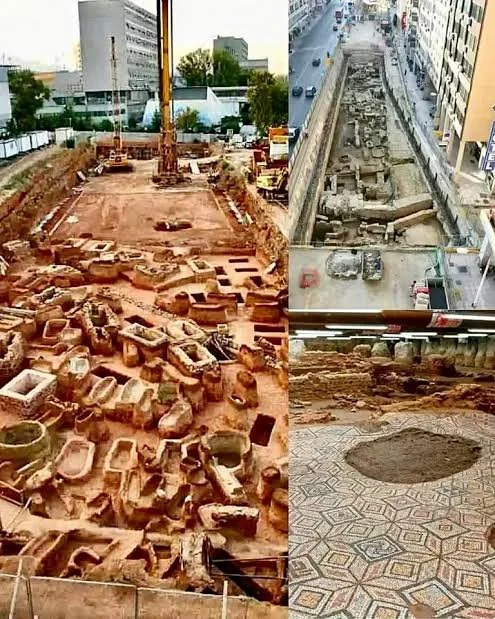
The idea of placing vertical farms beneath a major urban transport system is particularly intriguing. Thessaloniki has extensive underground infrastructure associated with its metro, tunnels, stations, utilities, and construction zones.
The title Secret Vertical Farms Beneath Thessaloniki's Metro should not be treated as evidence that underground commercial farms actually operate beneath the metro. Such a claim would require reliable documentation. Instead, the concept provides a useful opportunity to explore whether underground urban agriculture could theoretically make use of unused infrastructure.
Why Underground Agriculture Is Attractive
Cities face increasing pressure to produce food closer to consumers.
Traditional agriculture requires large areas of land, while urban land is expensive and contested.
Vertical farming attempts to solve part of this problem by growing crops upward rather than outward.
An underground location could potentially provide stable temperatures and protection from extreme weather.
However, plants still require light, water, nutrients, ventilation, and carbon dioxide management.
The underground environment does not eliminate these requirements.
Hydroponic Systems
Hydroponics grows plants without conventional soil.
Roots receive water containing carefully controlled nutrients.
Different hydroponic systems circulate water in different ways.
Because water can be collected and reused, hydroponic farming may use less water than some forms of conventional agriculture.
However, the system depends on pumps, filtration, nutrient management, electricity, and technical maintenance.
A power failure can quickly become a serious problem.
Artificial Lighting
Plants require light for photosynthesis.
In underground farms, natural sunlight is limited or absent, so artificial lighting is required.
Modern LED systems can provide controlled wavelengths and intensities while using less electricity than older lighting technologies.
Nevertheless, lighting remains one of the major energy demands of indoor agriculture.
An underground farm therefore needs a reliable electricity supply and effective heat management.
Why a Metro System Is Complicated
A metro tunnel is not simply an empty underground room.
It contains tracks, electrical systems, ventilation, emergency infrastructure, drainage, signaling equipment, passenger-access systems, and structural components.
Safety regulations would make unauthorized agricultural activity extremely difficult.
Any legitimate commercial operation would need to be physically separated from operational railway infrastructure.
Access would also have to be controlled so that workers and equipment do not interfere with passenger services.
Could Disused Underground Spaces Be Reused?
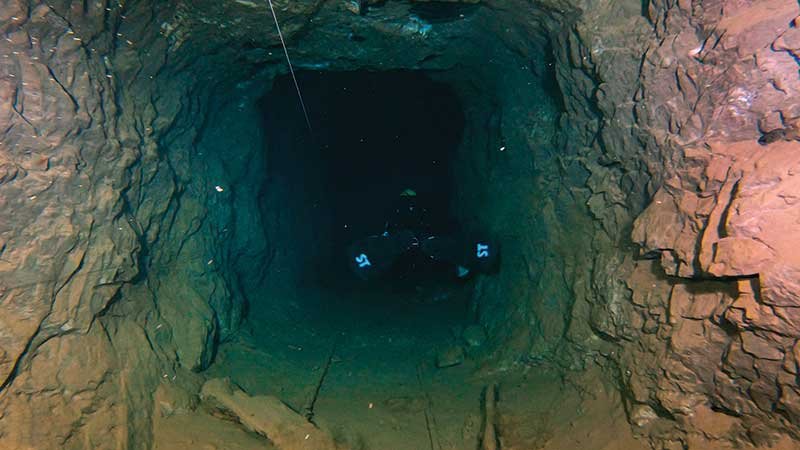
The idea becomes more plausible when discussing abandoned or unused underground structures rather than active railway tunnels.
Former industrial spaces, basements, warehouses, underground parking areas, or decommissioned infrastructure can potentially be adapted for controlled-environment agriculture.
But conversion requires detailed structural, electrical, fire-safety, ventilation, and environmental assessments.
Water management is another major concern.
What Crops Work Best?
Vertical farms generally favor crops that grow relatively quickly and do not require large root systems.
Leafy greens, herbs, microgreens, and certain small vegetables can be suitable.
Large fruiting crops require more space, stronger lighting, and longer growing periods, potentially reducing economic efficiency.
Therefore, an underground farm would likely focus on high-value crops that benefit from controlled conditions.
Energy Economics
The biggest challenge is often energy.
Indoor agriculture replaces free sunlight with electricity.
Even efficient LEDs consume significant power when operated across thousands of plants.
If electricity prices are high, the cost of indoor food production can exceed that of conventional agriculture.
This means the economic case depends on crop value, energy prices, productivity, labor costs, and distribution savings.
Food Security and Thessaloniki
Thessaloniki is a major urban center with a large surrounding agricultural region.
Urban farming could complement rather than replace conventional agriculture.
Local production could reduce transportation distances for selected products and provide fresh produce close to consumers.
But vertical farms are unlikely to replace field agriculture for staple crops such as wheat, maize, or potatoes because those crops require enormous amounts of space.
The “Secret Farm” Problem
A genuinely large underground vertical farm would require substantial infrastructure.
It would consume electricity, water, nutrients, equipment, and labor.
Deliveries would need to enter the facility, while harvested products would need to leave.
These physical requirements make it difficult to keep a large commercial farm completely secret.
A more realistic interpretation of the title is the possibility of experimental or small-scale projects operating in underused urban spaces.
Conclusion
There is no reliable basis for presenting secret vertical farms beneath Thessaloniki's active metro as an established reality.
The concept is nevertheless useful for examining the future of urban agriculture.
Underground spaces could theoretically support controlled-environment farming where suitable facilities exist, but major challenges remain in electricity use, ventilation, food safety, infrastructure, and economics.
The more realistic opportunity for Thessaloniki may lie in converting suitable abandoned or underused buildings rather than placing farms directly inside active metro infrastructure.