Introduction
The Aegean region is one of Europe's most geologically active areas. Its complex tectonic environment includes volcanic systems, faults, geothermal manifestations, and zones of elevated heat flow.
Geothermal energy takes advantage of heat stored within the Earth. In suitable locations, hot water or steam can be used for electricity generation, heating, industrial processes, or other applications.
The title Undisclosed Geothermal Power Grids in the Aegean Rift suggests the existence of hidden geothermal electricity networks. Such a claim should not be treated as established without evidence from energy regulators, utilities, engineering documentation, or reliable reporting.
The underlying geological potential of the Aegean, however, is scientifically significant.
Why the Aegean Is Geothermally Interesting
The Aegean region lies within a tectonically active environment influenced by the interaction of several major geological structures.
Earth's crust in the region has experienced extension, faulting, uplift, volcanic activity, and substantial geothermal circulation.
Faults can provide pathways through which groundwater moves deep into the crust.
As water descends, it can become heated before rising again toward the surface.
This process creates hot springs and other geothermal features.
From Hot Spring to Power Plant
Not every hot spring is suitable for electricity generation.
A commercial geothermal power system requires adequate temperature, fluid flow, permeability, and reservoir characteristics.
Exploration may involve geological surveys, geochemical sampling, temperature measurements, drilling, and reservoir modeling.
Deep drilling is often necessary to determine whether sufficient hot fluids exist underground.
Even when a resource is technically viable, development depends on economics, environmental considerations, infrastructure, and regulatory approval.
Different Geothermal Technologies
High-temperature geothermal resources can generate electricity through steam or other working fluids.
Lower-temperature resources may be more suitable for direct heating.
Binary-cycle systems can generate electricity from geothermal fluids that are not hot enough for conventional steam systems by transferring heat to another fluid with a lower boiling point.
This expands the range of geothermal resources that can potentially be exploited.
The Greek Energy Transition
Greece has expanded renewable-energy generation from wind and solar sources.
Geothermal energy could complement variable renewables because geothermal systems can potentially provide more continuous output than weather-dependent generation.
However, geothermal development is highly site-specific.
A resource that is excellent for heating may not be suitable for electricity production.
Why a Hidden Grid Would Be Difficult
Electricity networks require physical infrastructure.
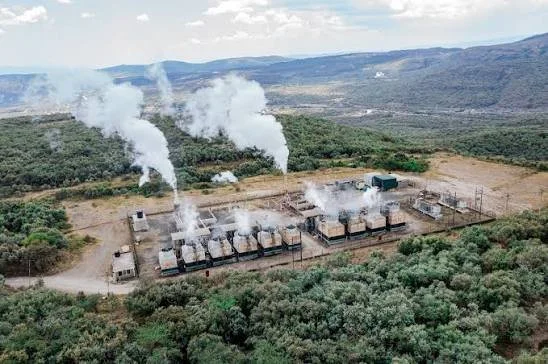
A geothermal plant needs wells, pipes, turbines or heat-exchange equipment, electrical systems, transformers, roads, monitoring equipment, and connections to the grid.
Large facilities would therefore be visible through planning, construction, and energy infrastructure.
A completely undisclosed commercial geothermal grid would be difficult to maintain without leaving regulatory and physical records.
Small experimental systems are more plausible than a large secret electricity network.
Environmental Concerns
Geothermal development can have environmental impacts.
Drilling may disturb land, while geothermal fluids can contain dissolved minerals and gases requiring careful management.
Reinjection is often used to return geothermal fluids underground and maintain reservoir pressure while reducing surface discharge.
There can also be concerns about induced seismicity in certain geothermal operations, although the risks depend strongly on geology and engineering practices.
The Aegean's Future Potential
The Aegean's volcanic and tectonic environment makes geothermal research scientifically valuable.
Areas associated with known geothermal activity may deserve continued investigation, particularly as Europe seeks diversified renewable-energy sources.
Geothermal systems can also support direct-use applications such as greenhouse heating, district heating, bathing facilities, and industrial processes.
These applications may sometimes be more economically appropriate than electricity generation.
Conclusion
There is no basis for assuming the existence of undisclosed geothermal power grids across the Aegean without documentary evidence.
The region nevertheless possesses genuine geothermal potential because of its complex tectonic environment.
The future of Aegean geothermal energy will depend on geological exploration, engineering innovation, environmental protection, and careful integration with Greece's broader electricity system.
The most important story may not be a secret grid beneath the islands but the possibility of using Earth's natural heat as one component of a more diversified European energy system.