Introduction
Jewish communities have existed across the Mediterranean for thousands of years, creating extensive networks of commerce, scholarship, migration, and religious exchange.
The title The Hidden Yemenite Jewish Routes to Rhodes Synagogues suggests a connection between Jewish communities from Yemen and the Jewish population of Rhodes.
A direct historical migration route specifically connecting Yemenite Jews with the synagogues of Rhodes is not established on the basis of the title alone.
Nevertheless, Jewish commercial and religious networks did connect the Middle East and Mediterranean over many centuries.
Jewish Communities of Yemen
Yemen developed a distinctive Jewish cultural tradition.
Yemenite Jews maintained unique liturgical customs, Hebrew pronunciation traditions, manuscripts, religious poetry, and scholarly practices.
Their communities were deeply rooted in the Arabian Peninsula.
Rhodes and Jewish History
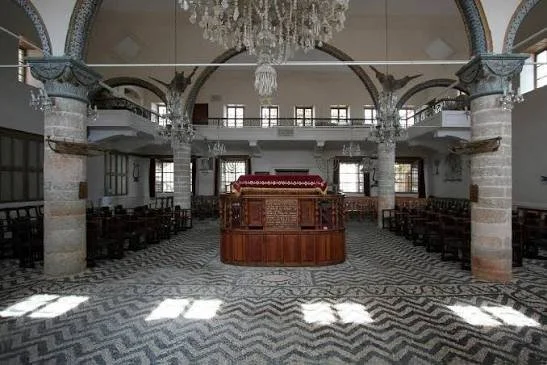
Rhodes possessed an important Jewish community, particularly the Romaniote and later Sephardic populations.
After the expulsion of Jews from Spain in 1492, many Sephardic Jews migrated throughout the Ottoman Empire.
Rhodes became one of the important centers of Sephardic Jewish life.
Mediterranean Networks
Jewish merchants participated in long-distance commerce.
Trade connected ports across:
the eastern Mediterranean,
North Africa,
Anatolia,
the Red Sea,
and the Middle East.
Merchants could move between multiple communities.
Religious scholars also traveled.
Yemen and the Mediterranean
The Red Sea connected Yemen with Egypt and other commercial centers.
From Egypt, trade routes led toward the Mediterranean.
This created a plausible geographical pathway through which individuals could eventually reach Mediterranean Jewish communities.
But a plausible route is not the same as evidence for a specific migration.
Synagogues as Community Centers
Synagogues served religious functions but were also centers of communal life.
They could preserve:
manuscripts,
charitable institutions,
schools,
communal records,
burial traditions,
and family histories.
These records can be valuable for reconstructing migration.
The Sephardic Transformation
The arrival of Sephardic Jews after 1492 transformed Jewish communities across the Ottoman world.
Rhodes became particularly associated with Sephardic culture.
This does not mean earlier Jewish traditions disappeared.
Different Jewish communities could coexist and interact.
Yemenite and Sephardic Traditions
Yemenite Jewish traditions differ in important respects from Sephardic traditions.
A Yemenite migrant arriving in Rhodes could therefore maintain distinctive customs while participating in a broader Jewish community.
Over time, intermarriage and communal integration could influence identity.
Historical Evidence
To establish a direct Yemenite-Rhodes migration, historians would seek:
genealogical records,
rabbinical correspondence,
cemetery inscriptions,
merchant documents,
synagogue records,
travel accounts,
or identifiable manuscripts.
Without such evidence, the connection remains a historical possibility rather than a confirmed route.
Conclusion
The Hidden Yemenite Jewish Routes to Rhodes Synagogues provide an opportunity to explore the remarkable connectivity of Jewish communities across the Mediterranean and Middle East.
A specific secret route should not be presented as established history.
What is firmly supported is the existence of extensive Jewish networks linking communities through commerce, scholarship, pilgrimage, and family relationships.
Rhodes therefore belongs to a much larger story of Jewish mobility in which religious communities could remain locally distinctive while participating in transregional networks spanning thousands of kilometers.