Introduction
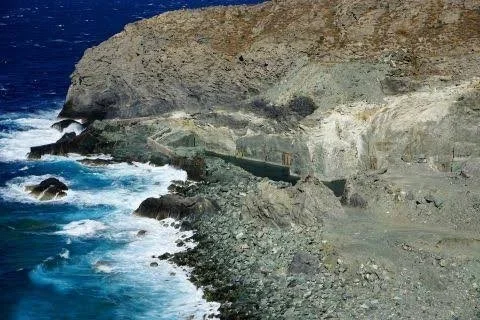
Antikythera is a small Greek island located between the Peloponnese and Crete. Although relatively remote, it occupies an important position within the eastern Mediterranean and is known for its archaeological significance, coastal landscapes, and distinctive geological environment.
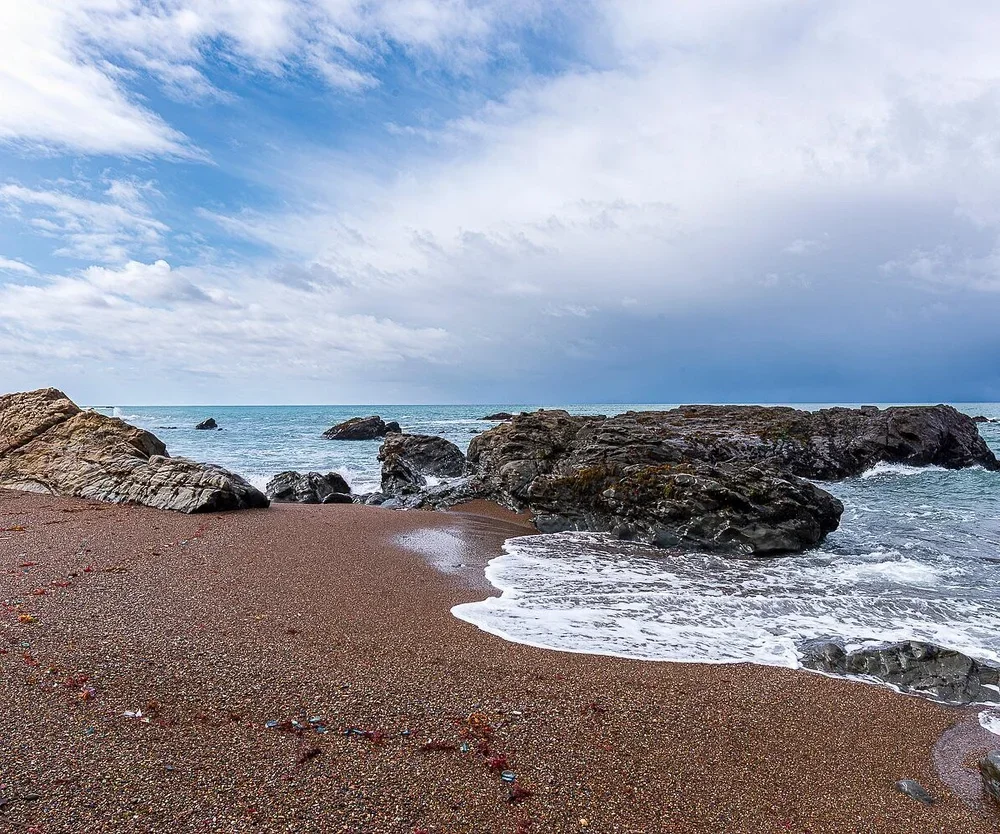
The title Moonstone Pebbles on Antikythera Shores evokes pale, luminous stones scattered along the island's beaches. Moonstone is a gemstone variety of feldspar recognized for its characteristic optical effect, often producing a soft glow that appears to move beneath the surface.
Whether naturally occurring moonstone pebbles can be found on specific Antikythera beaches requires mineralogical confirmation. Nevertheless, the subject provides an opportunity to explore feldspar minerals, coastal erosion, gemstone identification, and the geological processes that create rounded beach stones.
Understanding Moonstone
Moonstone is a variety of feldspar, a mineral group that makes up a substantial portion of the Earth's crust.
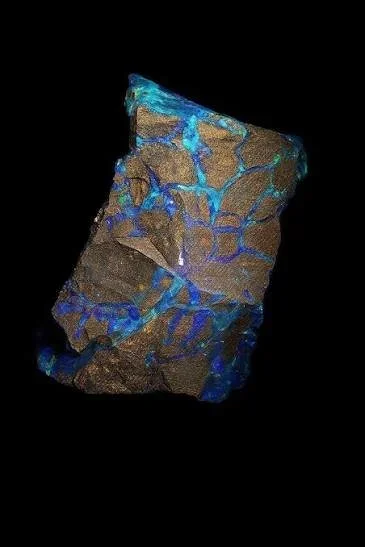
Its characteristic appearance is called adularescence. This optical effect creates a floating, bluish or whitish glow that appears to move across the surface when the stone is viewed from different angles.
The effect results from the interaction of light with microscopic internal structures within the mineral.
Moonstone commonly occurs in pale white, gray, peach, or other subtle colors. Some specimens display a blue sheen, while others produce a softer silver appearance.
Not every pale or translucent pebble is moonstone. Proper identification requires examining its mineral structure and optical properties.
The Geology of Antikythera
Antikythera belongs to a region with a complex geological history shaped by tectonic movements and the interaction of the African and Eurasian plates.
The island contains different rock formations exposed through weathering and erosion.
Over geological time, tectonic activity has uplifted and deformed rock layers, while rainfall and coastal processes have gradually broken down exposed material.
The resulting landscape includes rocky slopes, coastal cliffs, small beaches, and deposits of transported sediment.
The presence of feldspar-bearing rocks would provide a possible source for feldspar fragments, although a specific moonstone source would need to be identified.
How Pebbles Reach the Shore
Beach pebbles begin as fragments of larger rocks.
Weathering breaks exposed bedrock into smaller pieces through physical, chemical, and biological processes.
These fragments may be transported downhill by streams, carried by coastal currents, or displaced by waves.
As pebbles collide with one another and with surrounding rock, their sharp edges gradually become rounded.
The amount of rounding depends on the distance traveled, the energy of the water, the hardness of the material, and the length of time the pebble has been exposed to wave action.
A pebble found on a beach may therefore have originated from a geological formation some distance away.
Identifying Moonstone Pebbles
Identifying moonstone in a coastal environment requires more than looking for a pale or shiny surface.
The most important feature is adularescence, the characteristic internal glow produced by the mineral's structure.
A suspected specimen should be examined under controlled lighting while being rotated slowly.
Researchers may also use mineralogical techniques to distinguish moonstone from other feldspars, quartz, calcite, and weathered rock fragments.
Thin-section microscopy and X-ray diffraction can help establish mineral composition and structure.
These methods are particularly useful because feldspar minerals can look similar to one another when weathered.
Coastal Weathering and Mineral Preservation
The marine environment can both reveal and damage mineral specimens.
Wave action removes softer surrounding materials and concentrates more resistant fragments along beaches.
However, repeated abrasion can also damage the surface of delicate stones.
Saltwater, temperature changes, and chemical weathering may alter the appearance of minerals over time.
The survival of a recognizable moonstone pebble therefore depends on its composition, internal structure, and exposure history.
Historical and Archaeological Possibilities
Antikythera is famous for its archaeological heritage, particularly the discovery of the Antikythera Mechanism in a shipwreck dating to the Hellenistic period.
The island's position along maritime routes made it part of a wider Mediterranean environment of trade and travel.
If distinctive feldspar or moonstone specimens were locally available, they might have attracted attention from collectors or craftspeople.
However, the presence of a mineral on a modern beach does not prove that it was mined or traded in antiquity.
Archaeological evidence would be needed to establish historical use.
Environmental Protection
Small islands often contain fragile coastal ecosystems.
Removing large quantities of stones can alter beach composition and affect habitats.
Even collecting attractive specimens may be restricted in protected locations or areas of archaeological importance.
Scientific investigation should therefore prioritize observation, photography, mapping, and limited authorized sampling rather than uncontrolled collection.
Conclusion
The Moonstone Pebbles on Antikythera Shores offer an appealing subject connecting mineralogy with coastal geology.
Moonstone is a genuine feldspar gemstone known for its distinctive internal glow, while Antikythera provides a varied geological and coastal environment where mineral fragments can be exposed and transported by natural processes.
However, the presence of confirmed moonstone pebbles on specific Antikythera beaches remains a claim requiring mineralogical evidence.
Careful field identification, geological mapping, and laboratory testing would be necessary to establish whether these luminous stones are truly moonstone or simply other pale minerals shaped by the sea.