Introduction
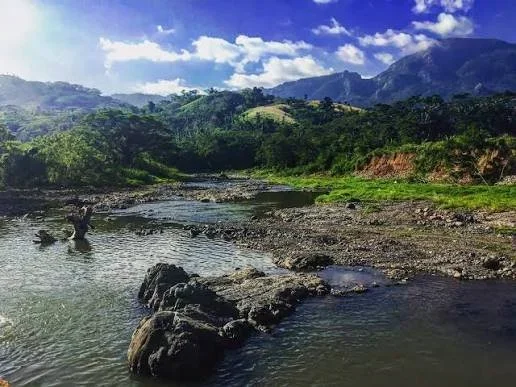
The Nestos River is one of the major rivers of northeastern Greece. Originating in the Rila Mountains of Bulgaria, it flows through mountainous terrain before reaching the Aegean Sea. Its course includes deep valleys, forested slopes, wetlands, and river landscapes shaped by erosion over thousands of years.
The title Thermal Mud Pools in Nestos River Gorges suggests the presence of naturally heated mud pools within the river's mountainous gorge system. Such features would be unusual and scientifically interesting, but specific thermal mud pools in the Nestos Gorges should not be treated as confirmed without geological documentation.
The subject provides an opportunity to examine geothermal activity, mud formation, river erosion, and the geological conditions required for naturally heated pools.
The Geological Setting of the Nestos River
The Nestos River crosses a region with a complicated geological history. Its upper and middle reaches pass through mountainous terrain containing different rock formations shaped by tectonic movements, erosion, and long-term weathering.
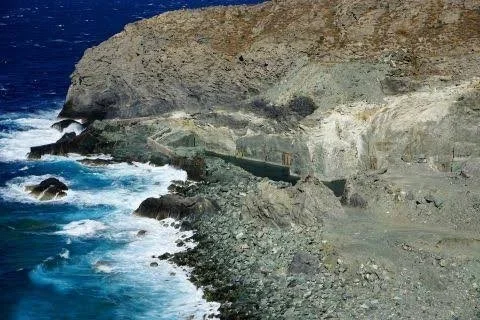
The river has carved valleys through resistant bedrock, creating steep slopes and exposed geological formations. Water continuously transports sediment from these slopes toward lower elevations.
The surrounding landscape also contains fractured rock formations and geological structures that can influence groundwater movement.
These characteristics make the region interesting for studying groundwater circulation, although they do not automatically indicate geothermal activity.
How Thermal Mud Pools Form
Thermal mud pools generally develop where underground heat warms groundwater and brings it toward the surface.
In volcanic environments, heat may originate from magma or hot rocks beneath the Earth's crust. In non-volcanic settings, geothermal gradients and deep circulation through fractured rocks can also produce elevated groundwater temperatures.
When heated groundwater mixes with fine clay, silt, and other sediments, it can form muddy pools.
Some geothermal mud pools contain dissolved minerals and gases. Their temperature, acidity, and chemical composition vary according to local geological conditions.
A true thermal mud pool must demonstrate measurable heating above the normal temperature expected from the surrounding environment.
The Role of Groundwater
Groundwater moves through pores, fractures, and permeable rock layers.
In mountainous areas, rain and snowmelt can infiltrate the ground and travel through underground pathways before emerging at springs.
If groundwater circulates deeply enough, it may absorb heat from surrounding rocks.
The water can then return to the surface through fractures or permeable geological layers.
However, groundwater emerging from a mountain slope is not necessarily geothermal. Many springs remain close to the average temperature of the local environment.
Mud Formation in River Gorges
Mud develops when fine particles accumulate in areas where water movement slows.
Clay minerals, silt, organic matter, and decomposed rock can collect in depressions, river margins, and floodplain environments.
In a gorge, mud may accumulate in sheltered pockets or along slower-moving sections of the river.
These deposits can change seasonally as water levels rise and fall.
A muddy pool is therefore not automatically a geothermal feature. Its temperature and water chemistry must be examined before it can be classified as thermal.
Scientific Investigation
Researchers investigating possible thermal mud pools would begin with temperature measurements.
Water temperature should be recorded at different depths and compared with nearby river water, groundwater springs, and local air temperatures.
Geochemical testing could identify dissolved minerals, gases, and other substances that might indicate deep groundwater circulation.
Geologists would also examine nearby faults and fractures because these structures can provide pathways for underground water.
Repeated measurements across different seasons would help determine whether elevated temperatures are persistent or simply caused by temporary environmental conditions.
Environmental Importance
Mud pools and thermal springs can support distinctive microbial communities.
Certain microorganisms survive in environments with unusual temperatures, mineral concentrations, or acidity.
If geothermal activity were confirmed in the Nestos region, studying these microorganisms could contribute to research on biodiversity and extreme environments.
However, the Nestos River system already has significant ecological value because of its forests, wetlands, river habitats, and surrounding protected landscapes.
Any investigation would need to avoid disturbing sensitive habitats or contaminating water sources.
Tourism and Conservation
Thermal mud pools are sometimes promoted as natural attractions, particularly when they are associated with warm springs or unusual mineral deposits.
However, visitor access should only be considered after scientific and environmental assessment.
Unstable mud, hot water, hidden cavities, and chemically unusual conditions can create safety risks.
The ecological condition of the surrounding river system should remain a priority.
Conclusion
The Thermal Mud Pools in Nestos River Gorges present an interesting geological possibility, but their existence as confirmed geothermal features requires evidence.
The Nestos River has a well-developed gorge system and a complex geological setting. These conditions provide opportunities to investigate groundwater circulation, sediment accumulation, and the relationship between rock formations and surface water.
To establish the presence of genuine thermal mud pools, researchers would need temperature records, water chemistry, geological mapping, and evidence of persistent underground heating.
Until such evidence is available, the title should be understood as a research topic rather than a verified description of a known geothermal attraction.