Introduction
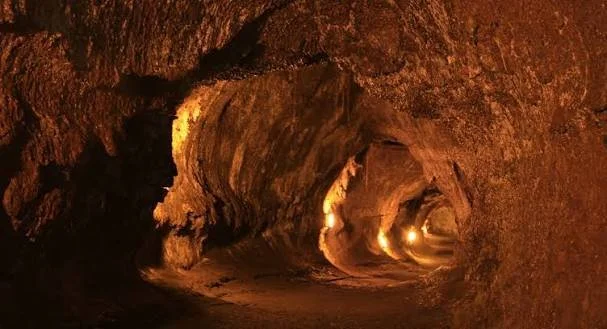
Lava tubes are natural underground passages created when flowing lava develops a solid outer crust while molten material continues moving beneath it. When the eruption or lava flow ends, the remaining liquid lava drains away, leaving a hollow tunnel.
These formations are commonly associated with volcanic landscapes, particularly basaltic lava fields. They can preserve valuable evidence about the movement, temperature, and behavior of ancient lava.
The title Lava Tubes in Susak Volcanic Chain requires geographical clarification. Susak is a Croatian island in the northern Adriatic Sea, known for its distinctive sandy and loess-rich landscape. It is not generally recognized as part of a volcanic chain containing established lava-tube systems. The subject is therefore best approached as an investigation into the geological conditions necessary for lava tubes and the importance of verifying the volcanic origin of any suspected underground cavity.
The Geography and Geology of Susak
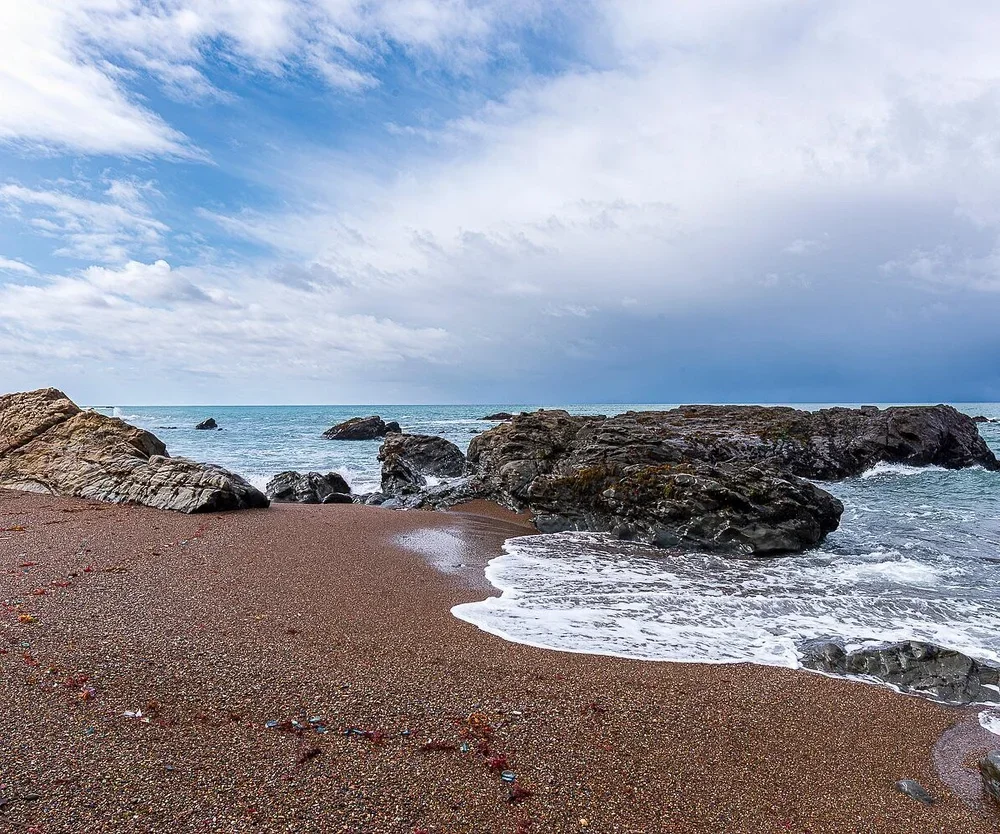
Susak lies in the northern Adriatic, near the Croatian islands of Lošinj and Unije. It is unusual among the Adriatic islands because much of its surface is characterized by sandy and fine-grained deposits rather than the extensive exposed limestone landscapes found on many neighboring islands.
Its geological structure reflects a complex history of sediment accumulation, marine processes, and changes in sea level.
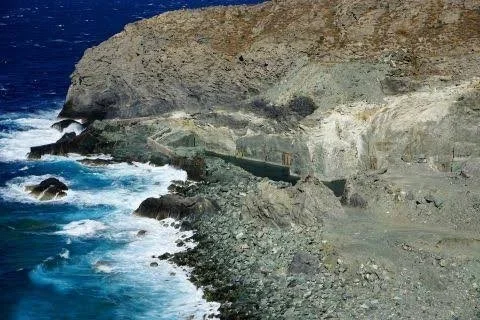
The island's distinctive landscape includes slopes, coastal cliffs, and deposits of sand and loess-like material. These features have influenced its vegetation, settlement patterns, and erosion processes.
A claim that Susak contains lava tubes would therefore require direct geological evidence of volcanic rock and an explanation of how such material fits into the island's geological history.
What Are Lava Tubes?
Lava tubes are hollow channels formed within certain types of volcanic lava flows. They are particularly associated with fluid basaltic lava, which can travel over considerable distances.
As lava moves across the ground, its exposed surface cools and hardens. This crust acts as insulation, allowing hotter molten material to continue flowing underneath.
When the eruption ends or the lava supply decreases, the remaining liquid material may drain away. The solidified outer shell then remains as a tunnel.
Lava tubes can range from narrow passages to large underground chambers. Some extend for hundreds or thousands of meters, depending on the characteristics of the eruption and lava flow.
The Formation of Lava Tubes
The formation of a lava tube begins with a sustained flow of molten rock. As the lava moves, its surface loses heat and begins to solidify.
The cooling crust becomes increasingly stable, while the interior remains hot enough to flow. Additional lava may continue passing through the channel, gradually enlarging or extending the tube.
Once the supply of lava stops, gravity may cause the remaining molten material to drain through the lower parts of the system.
The final structure can preserve a smooth or rippled floor, solidified lava walls, and roof formations created by cooling and dripping material.
Some lava tubes later collapse partially, creating skylights or openings that allow access from the surface.
Geological Conditions Required
Lava tubes generally require relatively fluid lava capable of maintaining movement beneath a solidifying crust.
Basaltic lava is especially suitable because it often has lower viscosity than more silica-rich volcanic magma.
The eruption must also produce a sustained flow. A brief eruption or highly fragmented volcanic deposit may not create the conditions needed for an extensive tube.
The surrounding landscape matters as well. Slopes, channels, and the volume of flowing lava influence where tunnels develop and how far they extend.
These geological requirements make it essential to establish whether a suspected site actually contains volcanic deposits before interpreting a cavity as a lava tube.
How Lava Tubes Are Identified
Geologists look for distinctive features that separate lava tubes from ordinary caves and erosion channels.
Possible indicators include:
Solidified lava walls and ceilings.
Flow structures preserved on tunnel surfaces.
Lava stalactites or drip formations.
Roof collapses associated with volcanic crust.
Connections to recognizable lava-flow deposits.
Basaltic rock with textures consistent with volcanic cooling.
Laboratory analysis can confirm the mineral composition and texture of the surrounding rock.
Geological mapping is also important. A suspected lava tube should be connected to a plausible volcanic flow rather than existing as an isolated cavity in unrelated sedimentary material.
Lava Tubes and Other Types of Caves
Caves can form through several different geological processes.
Limestone caves often develop through chemical dissolution. Water containing dissolved carbon dioxide gradually dissolves carbonate rock, creating underground passages.
Sea caves form through wave erosion along coastlines. Some caves develop through the collapse of underground chambers, while others are associated with tectonic fractures.
Lava tubes are different because they form directly from volcanic activity. Their walls are made of solidified lava, and their shape often reflects the movement of molten rock.
Distinguishing these cave types is essential when investigating unusual underground features.
Scientific and Environmental Importance
Lava tubes can preserve important evidence about volcanic history. Their internal structures may reveal the direction and behavior of ancient lava flows.
They can also provide sheltered habitats for specialized organisms. In some volcanic regions, cave-dwelling species have adapted to darkness, limited food supplies, and stable underground conditions.
Lava tubes may preserve mineral deposits and geological formations that are vulnerable to disturbance. They can also contain archaeological or paleontological material if they were later used by humans or animals.
However, the presence of a cave does not automatically imply that it was inhabited or used for a particular purpose.
Investigating Suspected Lava Tubes on Susak
Any investigation of a suspected lava tube on Susak would need to begin with geological verification.
Researchers would examine geological maps, collect rock samples, and identify the mineral composition of exposed formations. If volcanic material were found, its age and geological relationship to the island would need to be established.
Ground-penetrating radar, electrical resistivity surveys, and other geophysical techniques might help identify underground cavities, depending on the local geology.
If a cavity were discovered, detailed mapping and structural analysis would be required to determine whether it formed through volcanic processes, erosion, dissolution, or collapse.
Conclusion
Lava tubes are remarkable geological structures that preserve evidence of ancient volcanic activity. Their formation depends on sustained flows of relatively fluid lava that develop solid outer crusts while molten material continues moving underneath.
Susak's distinctive geology makes it an interesting subject for geological investigation, but the island is not generally established as part of a volcanic chain containing lava tubes. A specific lava-tube discovery would require documented volcanic rock, mapped underground passages, and evidence of a volcanic formation process.
By distinguishing volcanic tunnels from other types of caves, researchers can avoid misleading geological classifications and better understand the natural history of Adriatic islands.