Introduction
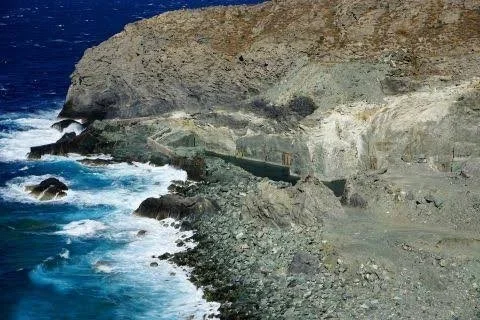
Serifos is a Greek island in the western Cyclades with a long history of mineral extraction. Its geological landscape contains iron-rich formations and mineral deposits that supported mining activity for centuries, particularly during the nineteenth and twentieth centuries.
The title Opal Deposits in Serifos Abandoned Mines suggests that abandoned mining areas may contain deposits of opal, a hydrated form of silica valued for its colors and optical effects.
The island's mining history is well established, but the presence of economically or gemologically significant opal deposits should not be assumed without mineralogical documentation. The subject nevertheless provides an opportunity to examine silica deposition, abandoned mine environments, mineral identification, and the scientific value of historic mining landscapes.
The Mining History of Serifos
Serifos became an important mining center because of its iron deposits.
Mining activity expanded significantly during the nineteenth century, when industrial demand for iron increased.
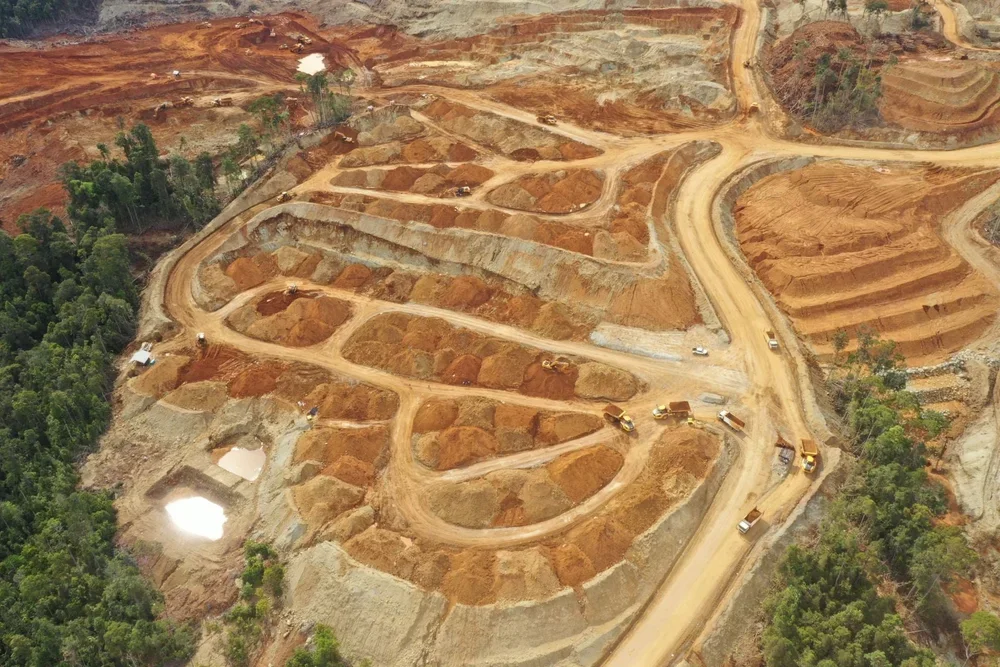
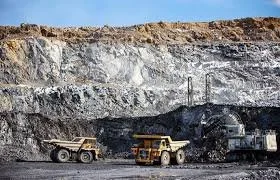
The island's mining landscape developed around extraction sites, processing facilities, transport infrastructure, and worker settlements.
Mining shaped local employment and the island's economic development.
Abandoned industrial structures remain important reminders of this history.
The Geology of the Island
Serifos has a complex geological structure shaped by tectonic activity, metamorphism, and igneous intrusions.
Its rocks include metamorphic formations and mineralized zones associated with the island's geological evolution.
Iron mineralization is particularly important to the island's mining history.
The presence of hydrothermal processes in a geological region can also create conditions in which silica-bearing fluids circulate through fractures.
However, evidence of iron mineralization does not automatically indicate the presence of opal.
Each mineral occurrence must be investigated independently.
What Is Opal?
Opal is a hydrated form of silica, chemically represented by a variable amount of water within a silica structure.
Unlike quartz, which has a well-organized crystalline structure, opal is generally classified as amorphous or poorly crystalline.
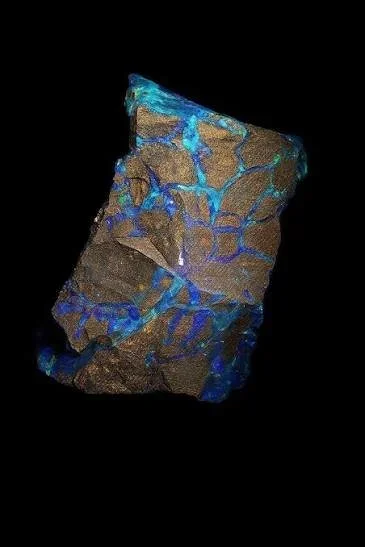
Some opals display play-of-color, a visual effect in which flashes of different colors appear as the stone moves under light.
This effect is produced by the interaction of light with regularly arranged microscopic silica spheres in certain precious opals.
Other forms, including common opal, may have a uniform or translucent appearance without colorful flashes.
How Opal Deposits Form
Opal can form when silica-rich water moves through pores, fractures, or cavities in rock.
As water evaporates or changes chemically, dissolved silica may gradually accumulate.
Repeated deposition can create layers or fill open spaces.
The formation of opal depends on several factors, including:
the availability of dissolved silica,
groundwater movement,
temperature,
acidity and alkalinity,
the presence of open cavities,
and the stability of the surrounding geological environment.
Different conditions produce different types of opal.
A silica-rich geological environment is therefore not enough to prove that opal exists in a particular location.
Could Opal Occur in Abandoned Mines?
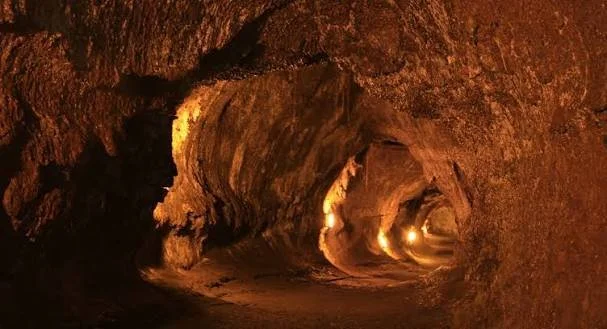
Abandoned mines sometimes expose mineral veins and cavities that were not economically important during the original mining operation.
Exploration focused on one target mineral may overlook smaller or less commercially valuable mineral occurrences.
Fractures, weathered rock surfaces, and mineralized cavities can also become easier to examine after excavation.
If opal occurs in Serifos, researchers would need to identify its geological setting and determine whether it formed naturally within the host rock or appeared as part of later weathering processes.
The presence of silica deposits alone would not establish gem-quality opal.
Distinguishing Opal from Other Minerals
Opal can be confused with chalcedony, quartz, glassy silica, and other pale or translucent minerals.
Visual inspection provides only preliminary clues.
Mineralogists can use microscopy, spectroscopy, X-ray diffraction, and chemical analysis to identify the material.
The presence or absence of play-of-color is important when evaluating precious opal, but it is not sufficient for identifying every type of opal.
Researchers must also consider the mineral's internal structure and water content.
Abandoned Mines as Scientific Sites
Old mines can provide valuable geological exposures.
Mining operations often reveal rock formations that would otherwise remain hidden beneath soil or vegetation.
Researchers can study mineral veins, fractures, alteration zones, and the relationship between different rock types.
Abandoned mines may also preserve evidence of historical extraction techniques, machinery, transport systems, and labor conditions.
Their value is therefore both geological and archaeological.
Safety and Environmental Concerns
Abandoned mines are dangerous environments.
Unstable tunnels, collapsing roofs, flooded shafts, poor ventilation, and loose rock can create serious hazards.
Some mining sites may also contain contaminated water or unstable waste materials.
Exploration should never involve entering closed or unsecured mine workings without authorization and professional safety procedures.
Scientific sampling should be conducted under appropriate permits and environmental safeguards.
Future Research
A reliable investigation into possible opal deposits would begin with a review of geological maps and existing mineral records.
Researchers could then examine accessible surface exposures and authorized mine samples.
Laboratory analysis would determine whether silica-rich materials are present and whether they qualify as opal.
The results could clarify whether the island contains only ordinary silica minerals or a previously undocumented opal occurrence.
Any discovery would also need to be evaluated in terms of geological significance, conservation, and potential commercial value.
Conclusion
The Opal Deposits in Serifos Abandoned Mines connect the island's mining heritage with the broader science of silica mineral formation.
Serifos is well known for its iron mining history and complex geology. Abandoned workings may offer opportunities to study mineralized rock formations that were not the primary focus of historical extraction.
However, a specific opal deposit has not been established merely by the existence of old mines or silica-bearing rocks.
Mineralogical testing, geological mapping, and documented sampling would be required to confirm the material's identity and determine whether any opal has gem-quality characteristics.
The abandoned mines remain valuable as both historical landscapes and geological research environments, regardless of whether opal is ultimately identified.