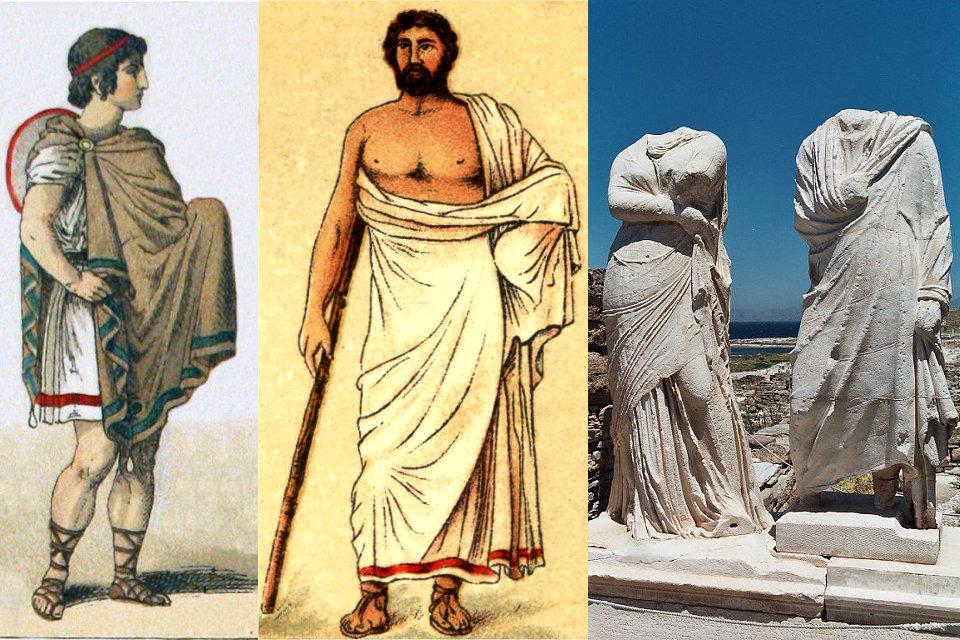
Greek clothing emphasized simplicity, comfort, and natural movement. Rather than tailored garments, clothing was formed through draping fabric around the body.
The main garments included:
Chiton: a light tunic worn by men and women
Peplos: a heavier garment worn primarily by women
Himation: a cloak draped over the shoulders
Leather sandals for footwear
Materials and Design Philosophy
Clothing materials included:
Wool (most common and practical)
Linen (lighter and used in warmer climates)
Instead of cutting and sewing, Greeks used folds, pins, and belts to shape garments. This created flowing silhouettes that emphasized natural human form.
Clothing as Identity
Fashion reflected:
Social status (wealthier citizens wore finer fabrics)
Civic identity (regional styles varied)
Gender roles and cultural expectations
Even without modern fashion systems, clothing carried strong symbolic meaning in Greek society.
Final Note
Together, these topics reveal that ancient Greece was not defined solely by myth and gods, but by a deeply interconnected world of politics, daily life, food, clothing, and belief systems.