In Ancient Greece, the role of women was shaped by strict social structures, cultural expectations, and varying regional practices. While ancient Greek mythology often features powerful female figures such as goddesses and heroines, real women in daily life experienced far more limited public agency.
In city-states like Athens, women were primarily associated with the household (oikos). Their responsibilities centered on managing domestic affairs, raising children, and overseeing household production. In contrast, Spartan women had comparatively greater freedom, including physical training and property ownership, due to the militarized structure of Spartan society.
Domestic Life and Responsibilities
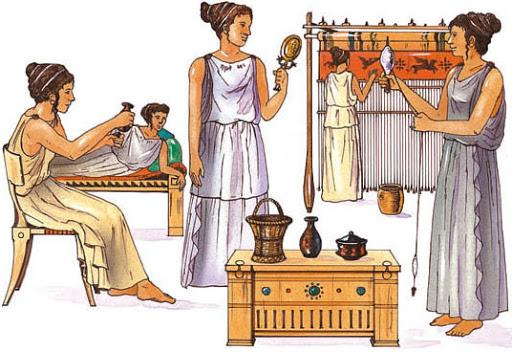
A typical Athenian woman’s life was centered around domestic labor. This included:
Weaving and textile production
Preparing food and managing household supplies
Supervising slaves within the home
Raising and educating young children
Weaving was especially significant, both economically and symbolically. Producing cloth was considered a virtue and a reflection of feminine skill and discipline.
Marriage and Social Expectations
Marriage was typically arranged and served social and economic purposes rather than romantic ones. Women were usually married in their early teens to adult men significantly older than themselves. Their primary duty after marriage was to produce legitimate heirs, ensuring the continuation of family lineage.
Women were expected to remain modest, private, and largely absent from political life. Public visibility was often restricted, particularly among respectable citizen families.
Religion and Limited Public Presence
Despite restrictions, women played important roles in religious life. They participated in festivals, served as priestesses, and performed rituals dedicated to goddesses such as Aphrodite and Demeter.
In these contexts, women could gain social influence and visibility that was otherwise unavailable in civic life.
Conclusion
The role of women in ancient Greece reflects a society built on gendered divisions of labor and power. While their public roles were limited, women were essential to the stability of the household and the continuity of society. Their influence, though often indirect, was deeply embedded in the cultural and religious fabric of Greek life.