Wine played a central and deeply symbolic role in Ancient Greece, shaping religion, economy, social interaction, and philosophy. It was closely associated with Dionysus, the deity of ecstasy, transformation, and ritual celebration.
Wine was not simply a beverage—it was considered a cultural marker that separated civilized Greek society from perceived “barbarism.” Its controlled consumption represented moderation, intelligence, and social order.
Production and Economic Importance
Wine production was one of the most important agricultural industries in ancient Greece. Grapes were cultivated across the Mediterranean climate, and vineyards were often located on hillsides to maximize sun exposure and drainage.
The production process involved:
Harvesting ripe grapes during seasonal festivals
Crushing grapes using feet or presses
Fermenting juice in large clay jars
Storing wine in sealed amphorae for transport and trade
Wine became a major export product, strengthening economic ties between Greek city-states and neighboring regions.
Consumption and Social Practices
Wine was consumed in highly structured ways. Unlike modern practices, Greeks rarely drank wine undiluted. Instead, it was mixed with water in a large bowl called a krater. Drinking wine straight was considered uncivilized and associated with barbarian behavior.
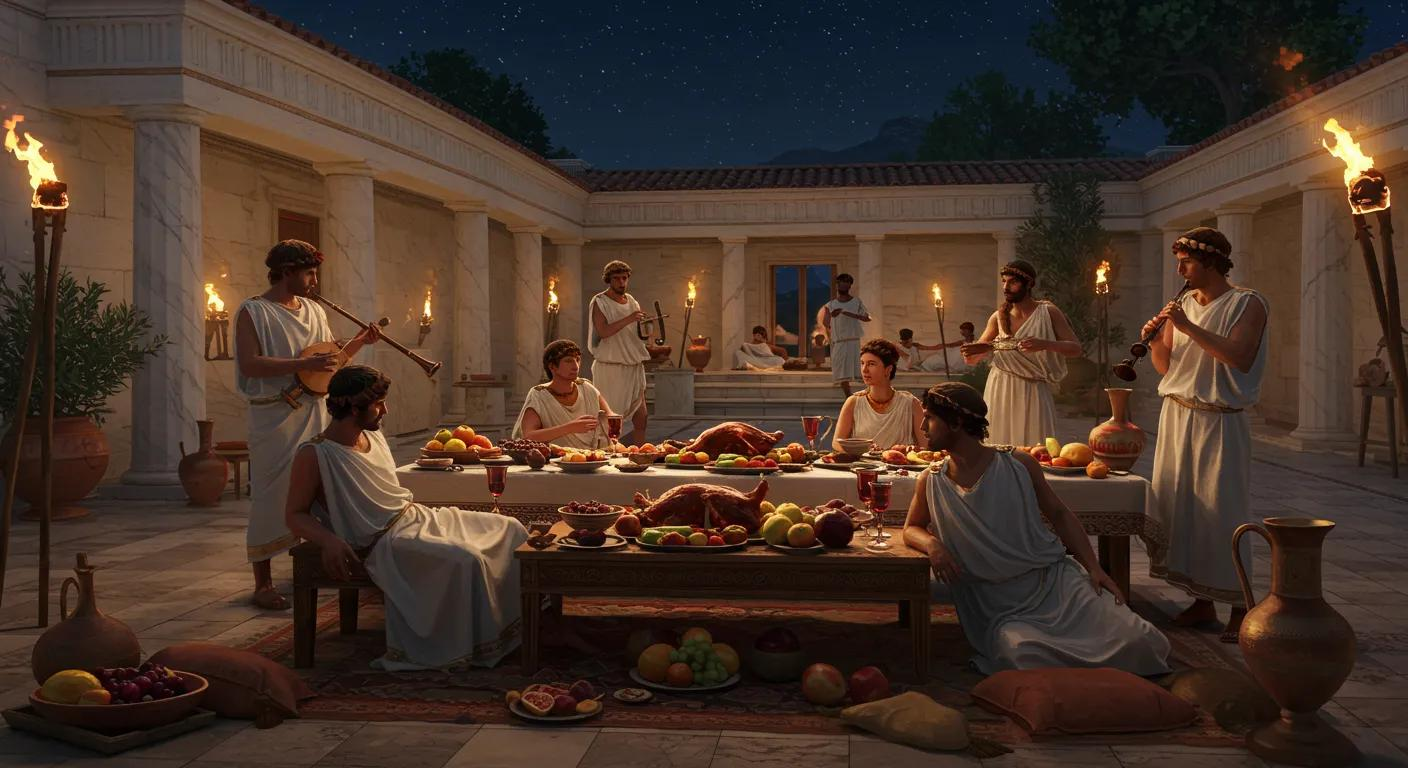
The most important social setting for wine consumption was the symposium, an elite gathering of men where intellectual and cultural life flourished. These events included:
Philosophical debates
Poetry recitations
Musical performances
Political discussions
Games and entertainment
Wine acted as a social lubricant, encouraging conversation and intellectual exchange while reinforcing social bonds among elites.
Religious and Symbolic Meaning
Wine was deeply embedded in Greek religious life. It was central to rituals honoring Dionysus, whose festivals included processions, performances, and ecstatic celebrations.
In religious contexts, wine symbolized:
Transformation and rebirth
Divine inspiration
The boundary between order and chaos
It was also used in libations—ritual offerings poured to the gods or the dead, reinforcing the connection between humans and the divine world.
Cultural Meaning and Philosophy
Wine in Greek culture represented balance. It was neither fully sacred nor fully dangerous—it depended on moderation. This reflects the Greek philosophical ideal of sophrosyne, meaning self-control and harmony.
Through wine, Greeks explored:
Social hierarchy
Intellectual identity
Emotional expression
Spiritual connection
Conclusion
Wine in ancient Greek culture was far more than intoxication. It was a powerful symbol of civilization, a tool for intellectual exchange, a religious offering, and a foundation of economic life.
From vineyards to symposia to sacred rituals, wine shaped how Greeks lived, thought, and connected with both each other and the gods.