Herodotus: The Father of History or the Father of Lies?
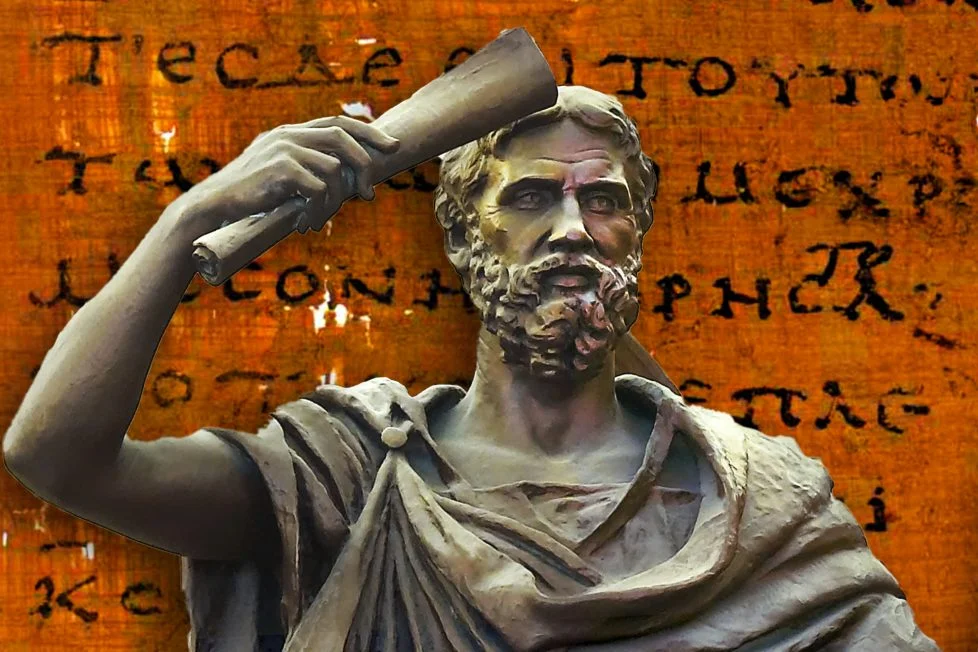
When Herodotus of Halicarnassus (c. 484–425 BCE) began his Histories, he wasn't just writing a book; he was inventing a discipline. The word "history" itself comes from his Greek term historía, meaning "inquiry" or "research." However, for 2,500 years, scholars have debated whether he was a meticulous researcher or a master of tall tales. This tension between objective reporting and narrative flair is what makes him the most fascinating architect of the ancient world.
1. The Innovation: From Myth to Inquiry
Before Herodotus, the past was the domain of the poets. Events were explained through the whims of the gods and the genealogy of heroes. Herodotus changed the game by shifting the focus to human cause and effect.
The Systematic Approach
His primary goal was to record the origins and events of the Greco-Persian Wars. To do this, he utilized three distinct sources of evidence:
Autopsia (Seeing for himself): He traveled extensively—from Egypt to Babylon and Scythia—to observe geography and customs.
Akoē (Hearing): He interviewed locals, recording their oral traditions.
Gnōmē (Reason): He attempted to weigh conflicting accounts against one another to find the most plausible truth.
This was a radical departure. He was the first to suggest that human events are driven by human decisions, geography, and cultural nomos (customs), rather than just divine intervention.
2. Why "The Father of Lies"?
The nickname "The Father of Lies" was coined in antiquity, most famously by the Roman orator Cicero. Critics argue that Herodotus was too quick to believe the fantastical stories he heard during his travels.
The Fantastical Accounts
The Gold-Digging Ants: He famously reported that in India, giant ants "larger than foxes" dug up gold-enriched sand.
Flying Snakes: He claimed that winged serpents flew from Arabia toward Egypt every spring.
The Source of the Nile: He recorded various outlandish theories about why the Nile flooded in summer.
Because he often wrote, "My duty is to report what has been said, but I am not obliged to believe it," modern critics have sometimes seen this as a "disclaimer" that allowed him to include entertaining fiction under the guise of history.
3. The Modern Vindication: The Archaeologist's Hero
In the last century, archaeology has done a surprising amount to restore Herodotus’s reputation. Many of his "lies" have turned out to be misunderstood truths.
The Gold-Digging Ants: Modern researchers found that marmots in the Himalayas do, in fact, throw up gold-dust-laden soil when burrowing, and the local word for "marmot" was easily confused with "mountain ant."
The Scythian Hemp: He described nomads who threw seeds onto hot stones in a tent to inhale the smoke and "howl with joy." For a long time, this was mocked as a hallucination, until archaeologists found Scythian burial mounds containing charred cannabis seeds and braziers.
The Phoenician Circumnavigation: He recorded a story that Phoenicians sailed around Africa and claimed the sun was on their right-hand side. Herodotus himself said he didn't believe it, but that detail is exactly what would happen if you sailed south of the equator—proving the voyage likely occurred.
4. The Narrative Art: History as a Story
Herodotus was a master of prose. He utilized "novellas"—short, self-contained stories—to illustrate his points.
The Theme of Hybris: He viewed history as a moral cycle. Great empires rise, become arrogant (Hubris), and are eventually struck down by Nemesis.
Cultural Relativism: He was remarkably open-minded for his time. He famously wrote about how a King asked Greeks and Indians how they treated their dead (Greeks burned them, Indians ate them). Both groups were horrified by the other's practice. Herodotus concluded that "Custom is king over all."
5. Herodotus vs. Thucydides: The Two Pillars
The debate over Herodotus is best understood by comparing him to his successor, Thucydides, who wrote the "scientific" history of the Peloponnesian War.
Herodotus (The Humanist): Universal in scope, interested in many cultures and geography. His tone is inquisitive and storytelling-driven. He sees causes in fate, custom, and human choice.
Thucydides (The Realist): Specific in scope, focusing on military and political history. His tone is analytical and clinical. He sees causes in raw power and political interest.
The Verdict
Is he the Father of History or the Father of Lies? The answer is: He is both.
He is the Father of History because he was the first to ask "why?" and to look for evidence beyond the myths of the poets. He is the Father of "Lies" only if we define history as a dry list of verified facts. Herodotus understood that to truly understand a people, you have to understand the stories they tell about themselves—even the ones about giant ants. He didn't just record the past; he gave it a soul.