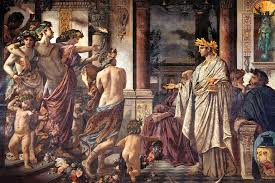
The symposium (literally "drinking together") was a central social, political, and cultural institution in ancient Greece. While often characterized as a drinking party, it was a highly ritualized event that served as the primary venue for aristocratic bonding, intellectual exchange, and the display of cultural status.
I. The Setting: The Andron
The symposium was held in the andron, a room located near the front entrance of a private home. This placement served a dual purpose: it allowed guests to enter and exit without disturbing the women of the household, who were generally excluded from these gatherings, and it provided a dedicated space to showcase the host's wealth. The andron was often furnished with klinai (couches) arranged along the perimeter, allowing men to recline while they socialized.
II. The Ritual of the Wine
Central to the symposium was the act of drinking, which was governed by strict social etiquette:
The Symposiarch: A "master of ceremonies" was elected to oversee the evening. They determined the ratio of water to wine (Greeks typically diluted their wine) and set the rules for the drinking games, ensuring that guests remained in a state of controlled conviviality rather than chaotic intoxication.
The Krater: Wine was mixed in a large, central vessel called a krater and then ladled into individual cups (kylikes or kantharoi).
Libations: The event typically began with a formal offering to Dionysus, the god of wine and festivity, acknowledging the divine connection to their revelry.
III. Social and Intellectual Functions
Beyond the consumption of wine, the symposium functioned as an "epipolitical" space—a place within the city-state (polis) that operated by its own internal rules.
Horizontal Bonds: The symposium was designed to foster equality among peers. By reclining together in a circle, men removed the overt hierarchies of the outside world, creating a "horizontal" community of aristocrats.
Intellectual Exchange: Guests engaged in logos sympotikos—structured, competitive conversation. This included philosophical debates, the recitation of epic poetry (such as Homer), and discussions of politics. Some of the most influential texts in Western philosophy, most notably Plato’s Symposium, take place in this setting.
Entertainment: The evening was often punctuated by performances from musicians, acrobats, and hetairai—educated female courtesans who provided music, conversation, and companionship.
IV. Cultural Significance and Ambiguity
The symposium reflected the Greek obsession with balance (sophrosyne). While it celebrated pleasure, it was also a place where a man’s character was tested:
The Display of Excellence: A successful symposiast was expected to contribute wittily to the conversation, excel at drinking games (like kottabos), and demonstrate musical or poetic knowledge.
The Dark Side: Archaeological evidence, particularly on decorated pottery, often depicts a more rowdy reality, including scenes of over-indulgence, vomiting, and bawdy behavior. These depictions serve as a reminder that the "refined" ideal presented in philosophical texts often clashed with the reality of a night fueled by wine.
Ultimately, the symposium was the "social laboratory" of ancient Greece. It was where the male elite forged the alliances, debated the laws, and refined the cultural values that defined their society. It turned drinking—a base, biological act—into a sophisticated ritual of political and intellectual life.