In the ancient Greek world, animals were inextricably woven into the fabric of the household (oikos), serving roles that ranged from essential economic partners to symbols of status and objects of deep emotional attachment.
I. The Working Partnership: Livestock
For the vast majority of Greeks living on the land, animals were not "pets" but "assets." They provided the labor and resources required for survival.
Oxen and Mules: These were the tractors of the ancient world. Oxen were prized for their strength in plowing the rocky, difficult Greek soil. Mules, known for their endurance and sure-footedness, were essential for transporting goods over the steep, mountainous terrain that characterized much of Greece.
Sheep and Goats: These were the primary source of wealth for many families. They provided the "Mediterranean basics": milk for cheese, wool for clothing, and hides for leather. The management of these herds—often entrusted to the younger members of the household or enslaved workers—was a daily, year-round commitment.
Pigs: Often kept in or near the home, pigs were the ultimate recyclers. They thrived on scraps and waste, and were the most common animal used for religious sacrifices, serving as a reliable meat source for the family during festival days.
II. Guarding and Hunting: Dogs
The dog (kyon) held a unique place in the household, bridging the gap between a tool and a companion.
Guard Dogs: Security was a constant concern. Large, fierce dogs were kept to protect the farmstead, the family, and the livestock from both human intruders and predators like wolves.
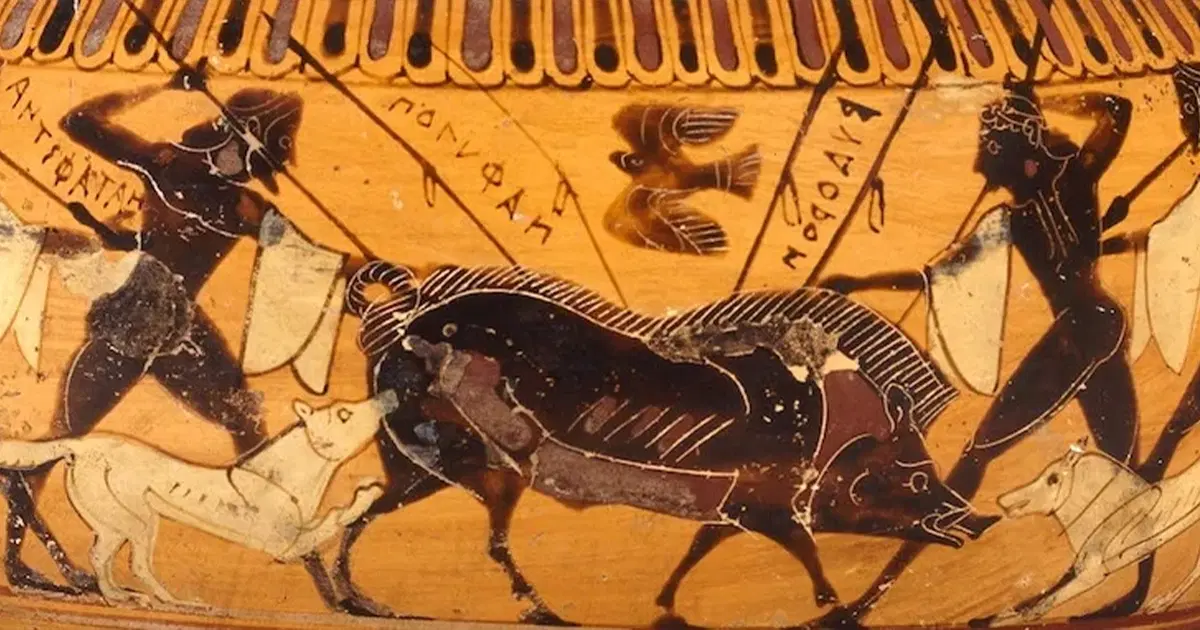
Hunting Dogs: For the elite, hunting was a vital pastime—it provided food, trained men for war, and offered a display of skill. These dogs were bred for agility, scent, and speed, and they were often depicted in art alongside their masters, highlighting a bond of mutual respect and cooperation.
III. The Emerging Role of "Companionship"
While the Greek view of animals was primarily utilitarian, the shift toward a more emotional connection is visible in the historical record, particularly by the Classical and Hellenistic periods.
Indoor Animals: Small birds (like quails or cockerels) and sometimes even monkeys or peacocks were kept by the wealthy in their homes. These were status symbols—exotic creatures that demonstrated a household’s reach and luxury.
Pets and Grief: There is poignant evidence that Greeks experienced genuine grief over the loss of their animals. Funerary inscriptions for household dogs—praising their loyalty, their playfulness, and the silence they left behind—reveal a deep emotional dimension that existed alongside the practical utility of animals.
IV. Animals in Religion and Legend
The household’s relationship with animals was also spiritual.
Sacrificial Rites: The household was the site of frequent, small-scale religious rituals. Animals were not just "food"; they were intermediaries between the family and the gods. The selection and treatment of an animal for sacrifice were governed by strict rules, emphasizing that the animal was a sacred offering.
Divine Presence: Many animals were associated with specific deities—owls with Athena, bulls with Poseidon, deer with Artemis. This meant that the presence of certain animals around the farmstead might be interpreted as a sign of divine favor or a warning, adding a layer of superstitious importance to the family’s animal life.
In the ancient Greek household, animals were the physical manifestation of a family's prosperity. A well-stocked farmstead with healthy livestock and vigilant dogs signaled a secure and pious oikos. Yet, even in a society that viewed animals through a lens of utility, the evidence of devoted burial and the depiction of loyal hunting dogs suggest that the Greeks, much like us, found genuine companionship in the creatures they lived alongside.