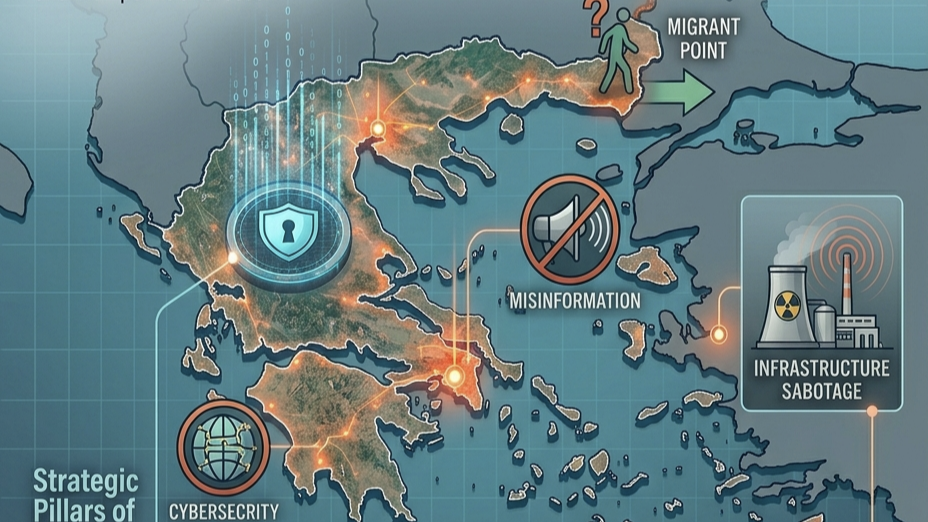
Greece has entered a heightened state of alert as officials warn of growing hybrid threats amid escalating instability in the Middle East.
Speaking at the Delphi Economic Forum, National Security Adviser Thanos Dokos stressed that authorities are closely monitoring potential risks, including terrorist attacks targeting foreign interests within the country—particularly those linked to Israel or the United States.
The warning reflects a broader concern: Greece is no longer just observing regional tensions—it is directly exposed to their consequences.
Hybrid threats, which can include terrorism, cyberattacks, and destabilization efforts, are becoming increasingly unpredictable. Officials highlight that the ongoing uncertainty surrounding conflicts in the Middle East, including tensions involving Iran, is creating a volatile environment with ripple effects across Europe.
Beyond security risks, there are also fears of wider disruption, from energy instability to global supply pressures, underscoring how interconnected modern crises have become.
Greece, positioned at the crossroads of Europe, the Mediterranean, and the Middle East, is now reinforcing coordination with international partners while remaining vigilant against emerging threats.
In an era where conflict is no longer confined to battlefields, the country is preparing for a new kind of warfare—one that operates in the shadows, across borders, and without warning.