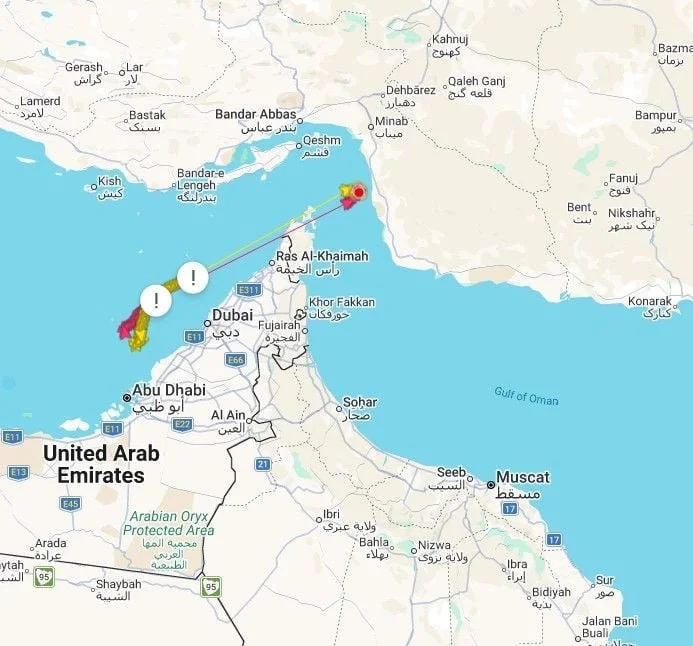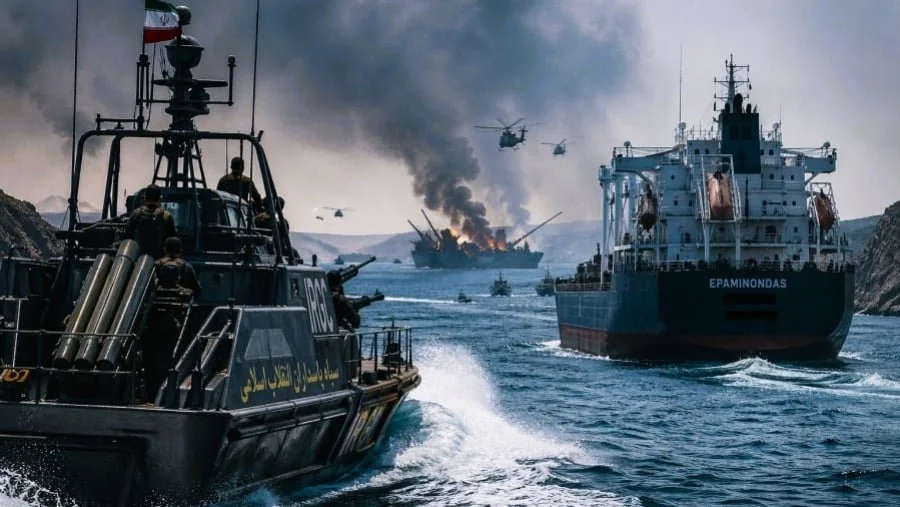
Tensions in the Middle East have escalated once again after the Greek-owned cargo ship Epaminondas came under direct attack in the Strait of Hormuz, one of the world’s most critical maritime corridors.
The vessel, sailing under a Liberian flag but linked to Greek interests, was fired upon by Iranian Revolutionary Guard forces without prior warning. Reports indicate that the ship sustained serious damage to its bridge after being targeted by gunfire, despite having previously received permission to pass through the strait.
Following the attack, Iranian forces boarded and seized the vessel, raising alarm across the international shipping community. The ship is operated by a Greek company, with a crew of 21 sailors—primarily Ukrainians and Filipinos—who, according to early reports, remain safe.
Iran claims the seizure was due to alleged violations of maritime regulations, including issues with navigation systems and transit permissions. However, the incident is widely seen as part of the broader escalation in the ongoing regional conflict, where commercial shipping has increasingly become a target.
The Strait of Hormuz handles a significant portion of the world’s oil supply, making any disruption a matter of global concern. This latest attack not only highlights the vulnerability of international shipping but also places Greece—one of the world’s leading maritime nations—directly in the crosshairs of geopolitical tensions.
As diplomatic efforts continue behind the scenes, the fate of the Epaminondas remains uncertain, symbolizing the growing instability in a region that controls the lifeline of global energy.