The Corinthian War (395–387 BCE) was the messy, high-stakes sequel to the Peloponnesian War. It was a conflict born from the realization that Sparta, having liberated Greece from the "tyranny" of Athens, had simply replaced it with a more rigid and heavy-handed tyranny of its own.
The war is most notable for its shifting alliances and the fact that it was largely fought with Persian gold rather than Greek resources.
1. The Alliance of Rivals
The war saw an unprecedented coalition form against Sparta. Former enemies joined forces, driven by the shared goal of checking Spartan expansion.
The Quadruple Alliance: Thebes, Athens, Corinth, and Argos—cities that had been on opposite sides just a decade earlier—united to challenge the Spartan hegemony.
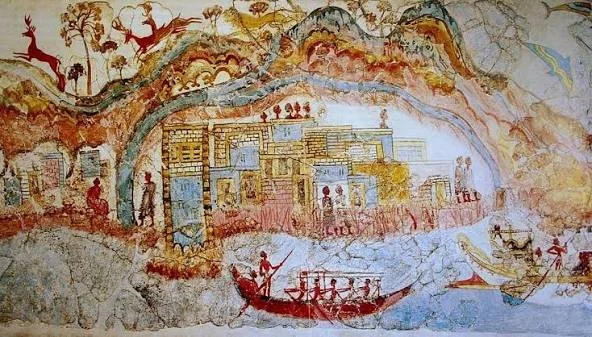
The Persian Pivot: The Persian Empire, realizing Sparta was becoming too powerful in Asia Minor, began funding the anti-Spartan alliance. They famously sent the Athenian admiral Conon a massive fleet to dismantle Spartan naval power.
2. The Battle of Cnidus (394 BCE)
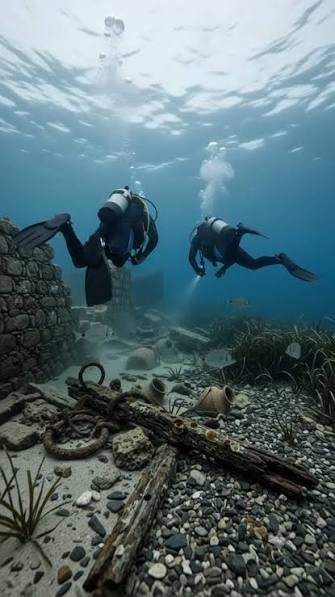
While much of the fighting took place around the Isthmus of Corinth (giving the war its name), the decisive blow occurred at sea off the coast of Asia Minor.
The End of Spartan Naval Dreams: The Persian-Athenian fleet crushed the Spartan navy at the Battle of Cnidus. This effectively ended Sparta’s attempt to be a maritime empire and allowed Athens to begin rebuilding its famous Long Walls.
The Resurrection of Athens: With the walls rebuilt and a fleet once again at their disposal, Athens began to reclaim its status as a major power, much to the alarm of both Sparta and Persia.
3. The "New" Warfare: Iphicrates and the Peltasts
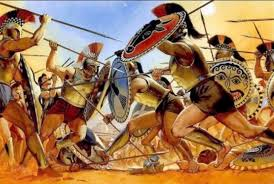
The Corinthian War marked a significant evolution in Greek military tactics. It moved away from the "gentlemanly" clash of heavy hoplite phalanxes toward more flexible, professional warfare.
The Peltast Revolution: The Athenian general Iphicrates introduced a lighter, faster infantryman known as the Peltast. They wore light armor and carried javelins and a small crescent-shaped shield (pelte).
The Destruction of a Mora: In 390 BCE, Iphicrates’ light troops managed to harass and destroy an entire Spartan mora (a battalion of roughly 600 men) at Lechaeum. This shocked the Greek world; for the first time, "unbeatable" Spartan hoplites had been defeated by "inferior" light-armed troops.
4. The King’s Peace (387 BCE)
By 387 BCE, the Persian King Artaxerxes II noticed that Athens was becoming too successful. Fearing a return of the Athenian Empire, he switched his support back to Sparta.
The Royal Decree: Facing the threat of Persian intervention, the exhausted Greek cities agreed to the Peace of Antalcidas (also known as the King's Peace).
Terms of Surrender: The Greeks officially ceded all cities in Asia Minor and Cyprus to Persia. In return, Persia guaranteed the "autonomy" of all Greek city-states—a clever way to ensure they remained small and fractured.
5. The Historical Legacy
The Corinthian War proved that the age of the independent polis was in decline.
Persia as Arbiter: The war established the Persian King as the ultimate judge of Greek affairs, a role he would hold until the arrival of Alexander the Great.
The Hollow Victory: Sparta remained the nominal leader of Greece, but its power was brittle and its manpower was dwindling.
The Rise of Professionalism: The success of light troops and mercenaries during the war paved the way for the sophisticated combined-arms tactics that the Macedonians would later perfect.
The Corinthian War is a fascinating study in realpolitik, showing how quickly "sacred" alliances can shift when power is on the line.