Crime and punishment in ancient Greece was a transition from the era of "blood feuds" and private vengeance to a system of state-regulated law. In Athens, specifically, the legal system was deeply tied to the concept of Dikē (justice), but it was a system run entirely by the citizens themselves—there were no professional lawyers, judges, or a permanent police force.
1. The Two Types of Lawsuits
The Greeks divided legal cases into two broad categories based on who was affected:
Dikē (Private Suit): A case involving a dispute between individuals, such as theft, breach of contract, or physical assault. Only the victim (or their family) could bring the charge.
Graphē (Public Suit): A case involving a crime against the community or the state, such as treason, embezzlement of public funds, or religious impiety. Any citizen in good standing could bring a Graphē charge, regardless of whether they were personally harmed.
2. The Jury System: Power in Numbers
Athenian trials were massive public spectacles. Instead of a single judge, the verdict was decided by a jury of citizens (dikastai).
Jury Size: To prevent bribery, juries were enormous. A standard private case might have 201 jurors, while a major public case could have 501, 1,001, or even 1,501 people.
Selection by Lot: Jurors were chosen randomly each morning using a Kleroterion—a stone machine that used colored balls to assign citizens to specific courts.
Voting: Jurors used bronze tokens called psephoi. A token with a hollow axle represented a "guilty" vote, while a solid axle represented "innocent."
3. The Prosecution and Defense
In a Greek court, you were your own lawyer.
Logographoi: While you had to speak for yourself, you could hire a professional "speechwriter" (logographos) to write a persuasive argument for you to memorize.
The Water Clock: Speeches were strictly timed by a Klepsydra. When the water stopped flowing, the speaker had to stop talking immediately.
Evidence from Enslaved People: In one of the darker aspects of Greek law, the testimony of an enslaved person was only considered admissible in court if it was obtained under torture (basanos), as it was believed they would only tell the truth under extreme duress.
4. Common Crimes and Their Consequences
Punishments were rarely about rehabilitation; they were designed for restitution or total removal from society.
Theft: Usually punished by requiring the thief to pay back double or ten times the value of the stolen item.
Homicide: * Involuntary: Often resulted in temporary exile until the victim's family forgave the killer.
Premeditated: Punishable by death or permanent exile and the confiscation of all property.
Adultery: An aggrieved husband had the legal right to kill a man caught in the act with his wife, or he could choose to accept a large fine (the "adulterer’s fine").
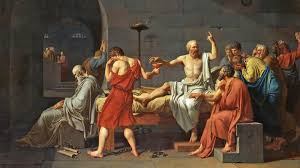
Impiety (Asebeia): Crimes against the gods, such as mocking mysteries or introducing new deities, were capital offenses (the charge famously brought against Socrates).
5. Methods of Execution
If a death sentence was passed, the method often depended on the nature of the crime and the status of the individual.
Hemlock (Koneion): Reserved for high-status citizens like Socrates. It was considered a "dignified" way to die, as it was self-administered.
The Barathron: In Athens, some criminals were thrown into a deep pit or cleft in the earth.
Apotympanismos: A brutal method where the condemned was shackled to a wooden plank and left to die of exposure and exhaustion.
6. Ostracism: The Ultimate Political Punishment
Once a year, the citizens of Athens could vote to exile any individual they deemed a threat to the democracy—even if that person hadn't committed a specific crime.
The Vote: Citizens wrote the name of the person they wanted to exile on a piece of broken pottery called an ostrakon.
The Result: If 6,000 votes were cast, the person with the most votes was exiled from Athens for ten years. They kept their property and status, but they had to leave the city immediately.
7. The Eleven (Hoi Hendeka)
While there was no police force, Athens had a board of eleven officials who oversaw the prison and the execution of sentences. They were assisted by the Scythian Archers, a group of state-owned enslaved people who acted as a rudimentary public order force, often used to clear the Agora or round up citizens for the Assembly.