The myth of Cecrops I marks the transition of Athens from a wild, primordial landscape into a structured civilization. As the legendary first king of Attica, Cecrops was not merely a ruler but a cultural hero responsible for the foundational laws, religious practices, and the very name of the city.
1. The Earth-Born King
Cecrops was an autochthon, meaning he was born directly from the earth. This origin story served a powerful political purpose for the Athenians, allowing them to claim they were the original inhabitants of their land, never having migrated from elsewhere.
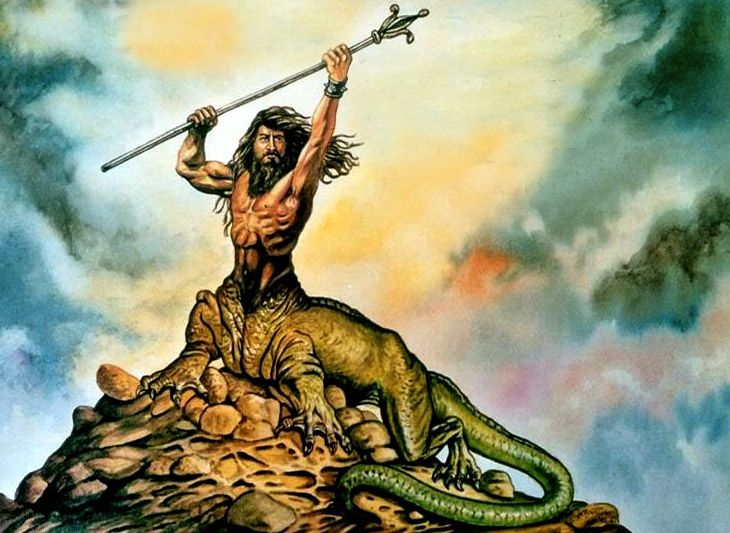
The Serpent Body: Cecrops was famously depicted as dipsyēs (double-natured). From the waist up, he was a man; from the waist down, he had the body of a massive serpent.
Symbolism: This hybrid form represented his connection to the "chthonic" (earthly) powers and the wisdom of the soil, as snakes were often seen as guardians of the earth in Greek mythology.
2. The Contest for Athens
The most famous event of Cecrops’ reign was the divine contest between Athena and Poseidon to determine who would be the patron deity of the city.
Poseidon’s Gift: The god of the sea struck the Acropolis with his trident, creating a salt-water spring (the Erechtheis). While impressive, the water was undrinkable and offered little practical use to the citizens.
Athena’s Gift: The goddess of wisdom planted an olive tree. Cecrops, acting as the judge (or the primary witness), declared Athena the winner. The olive tree provided food, oil, and wood, becoming the backbone of the Athenian economy.
The Judgment: In some versions, the citizens voted. Legend says the men voted for Poseidon and the women for Athena; because there was one more woman than man, Athena won, leading Poseidon to flood the Thriasian Plain in a rage.
3. The Architect of Civilization
Before Cecrops, the people of Attica were said to live like animals, without laws or marriage. Cecrops is credited with several "firsts" that defined Greek life:
Monogamy: He established the institution of marriage, moving society away from random mating to organized family units.
Writing and Census: He was the first to take a census of the population by asking each citizen to cast a stone into a pile, and he introduced the first rudimentary form of writing to the region.
Abolition of Blood Sacrifice: He moved religious practice away from animal or human sacrifice, decreeing that only barley cakes and fruit should be offered to the gods.
The Twelve Cities: He divided the scattered inhabitants of Attica into twelve distinct communities (demes) to make them easier to govern and defend.
4. The Cecropion and the Acropolis
The physical legacy of Cecrops is tied to the Acropolis. Even in the High Classical period (5th century BCE), the Athenians maintained a sacred precinct dedicated to him.
The Cecropion: This was a small shrine located next to the Erechtheion. It was believed to be the burial place of the serpent-king.
The Sacred Olive Tree: The Athenians claimed that the original olive tree planted by Athena during the contest grew right next to Cecrops' tomb. When the Persians burned the Acropolis in 480 BCE, legend says the tree miraculously grew a new branch overnight.
5. The Daughters of Cecrops
Cecrops had three daughters—Aglaurus, Herse, and Pandrosus—who appear in one of Athens' darkest myths. Athena gave them a wicker basket containing the infant Erichthonius (another earth-born king) and strictly forbade them from looking inside.
The Forbidden Peek: Driven by curiosity, two of the sisters opened the basket and saw a baby guarded by (or partly made of) snakes. Driven mad by the sight, they threw themselves off the cliffs of the Acropolis to their deaths. Only Pandrosus, who obeyed the goddess, was spared and later honored with her own shrine.
Cecrops remains a pivotal figure because he represents the harmonization of nature and law. By being half-snake and half-man, he bridged the gap between the chaotic, primal forces of the earth and the ordered, intellectual world of the city-state.