Ancient Greek Jewelry and Adornments
Ancient Greek jewelry and adornments are renowned for their exceptional craftsmanship, aesthetic beauty, and cultural significance. Throughout antiquity, jewelry served not only as a display of wealth and status but also as a form of protection, a connection to the gods, and an offering in funerary practices.
1. Materials and Techniques
The Greek metalworkers and jewelers achieved remarkable technical skill, utilizing materials imported through extensive trade networks.
Gold and Silver: Gold was the most prized material, often sourced from Lydia or Thrace. Greek craftsmen mastered the art of working with pure gold, allowing them to create delicate, hollow forms.
Gemstones and Glass: Early Greek jewelry relied mainly on metalwork, but by the Hellenistic period, the use of gemstones such as garnets, amethysts, carnelians, and emeralds became common. Glass beads and colorful enamels were also widely used.
Advanced Techniques:
Filigree: The soldering of fine, twisted gold wire onto a metal background to create delicate patterns.
Granulation: The fusing of tiny spheres of gold to create textured, decorative surfaces.
Repoussé and Chasing: A technique of hammering the metal from the reverse side to create a raised relief, then refining the details from the front.
2. Types of Jewelry and Adornments
Greeks wore various pieces depending on their gender, social status, and the occasion.
Diadems and Wreaths: Worn mostly by women or offered to the gods, these were made of thin gold foil shaped into leaves, flowers, or ribbons. Elaborate wreaths were often placed in the tombs of the deceased.
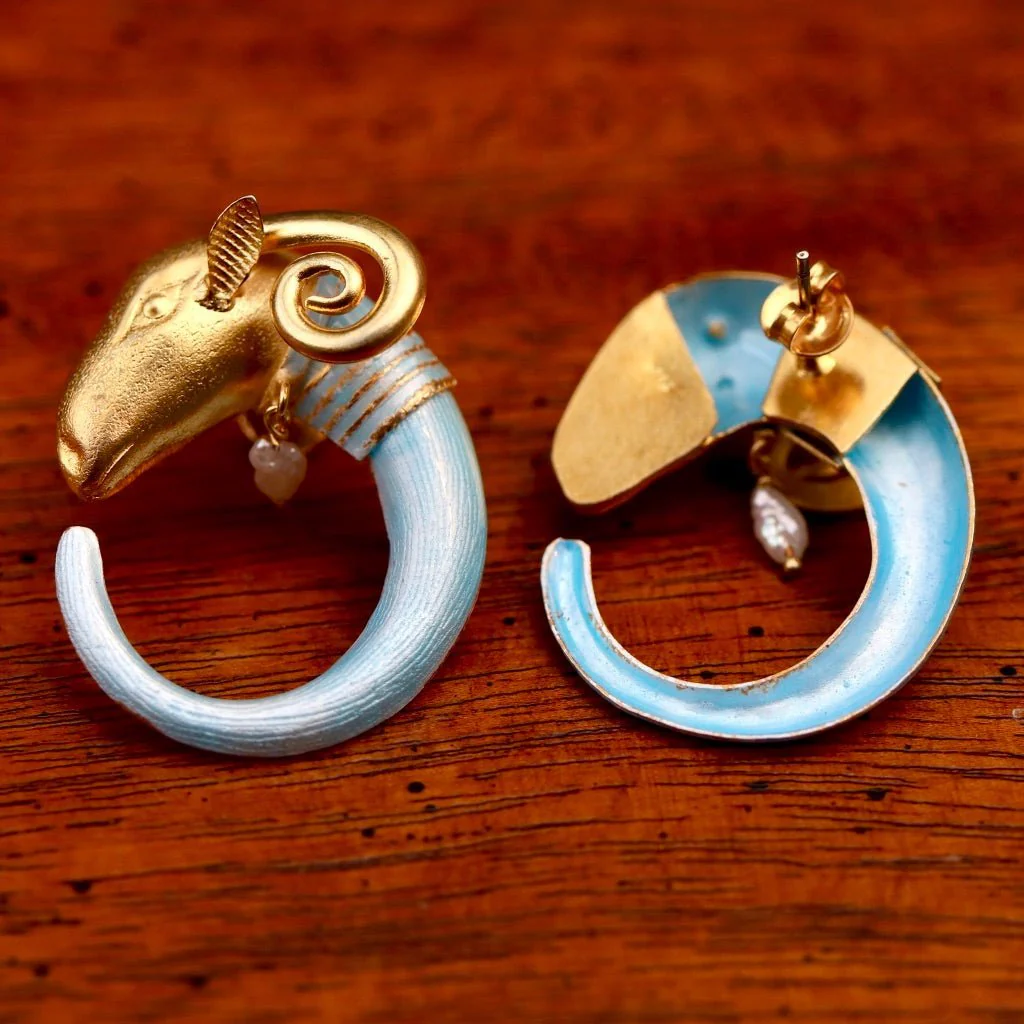
Earrings: Ranging from simple hoops to elaborate pendants. Popular designs included boat-shaped earrings (known as skafia) and pendant earrings featuring depictions of Eros, Nike, or doves.
Necklaces and Pendants: Necklaces often consisted of intricate chains with bead or drop-shaped pendants. Chokers with complex braided links were also fashionable.
Bracelets and Armbands: A very popular design was the spiral or coiled snake bracelet, often made to look as if it were wrapping around the arm.
Rings: Used for both adornment and utility, signet rings were worn on the finger and carved with intaglio designs for sealing documents or personal property.
3. Chronological Evolution
The style and complexity of Greek jewelry evolved significantly from the Bronze Age to the Hellenistic period:
Mycenaean and Minoan Period (c. 1600–1100 BCE): Heavily influenced by natural motifs, such as marine life, plants, and animals, featuring detailed sheet-gold work and early bead-making.
Classical Period (c. 480–323 BCE): Style became more restrained and sophisticated. Jewelry was often reserved for religious or private events. The emphasis shifted toward delicate craftsmanship and proportional harmony.
Hellenistic Period (c. 323–31 BCE): Following Alexander the Great's campaigns, Greek jewelry became much more elaborate, colorful, and heavily influenced by Eastern cultures. The use of gemstones and complex figurative designs became widespread.
4. Cultural and Religious Significance
Jewelry was deeply intertwined with the social and religious fabric of ancient Greek life.
Apotropaic Power: Many pieces were intended to ward off the "evil eye" or bring good fortune. Motifs like the Gorgoneion or specific divine symbols were worn as protective amulets.
Funerary Goods: Much of what archaeologists recover today comes from graves. Jewelry was placed with the deceased to signify their status in the afterlife or as an offering to the deities of the underworld.
Dedication to the Gods: Jewelry was frequently dedicated in sanctuaries and temples as an offering to the gods, serving as both a display of piety and a safe store of wealth for the temple treasury.