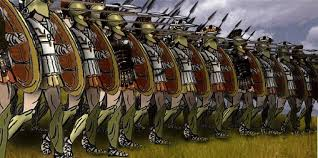
Ancient Greek warfare was characterized by heavily armored citizen-soldiers, the development of the phalanx formation, and the eventual rise of highly organized, combined-arms forces. Warfare in the Greek world evolved significantly from the Archaic period's close-quarter citizen clashes to the sophisticated, strategic campaigns of the Hellenistic era.
1. The Hoplite and the Phalanx
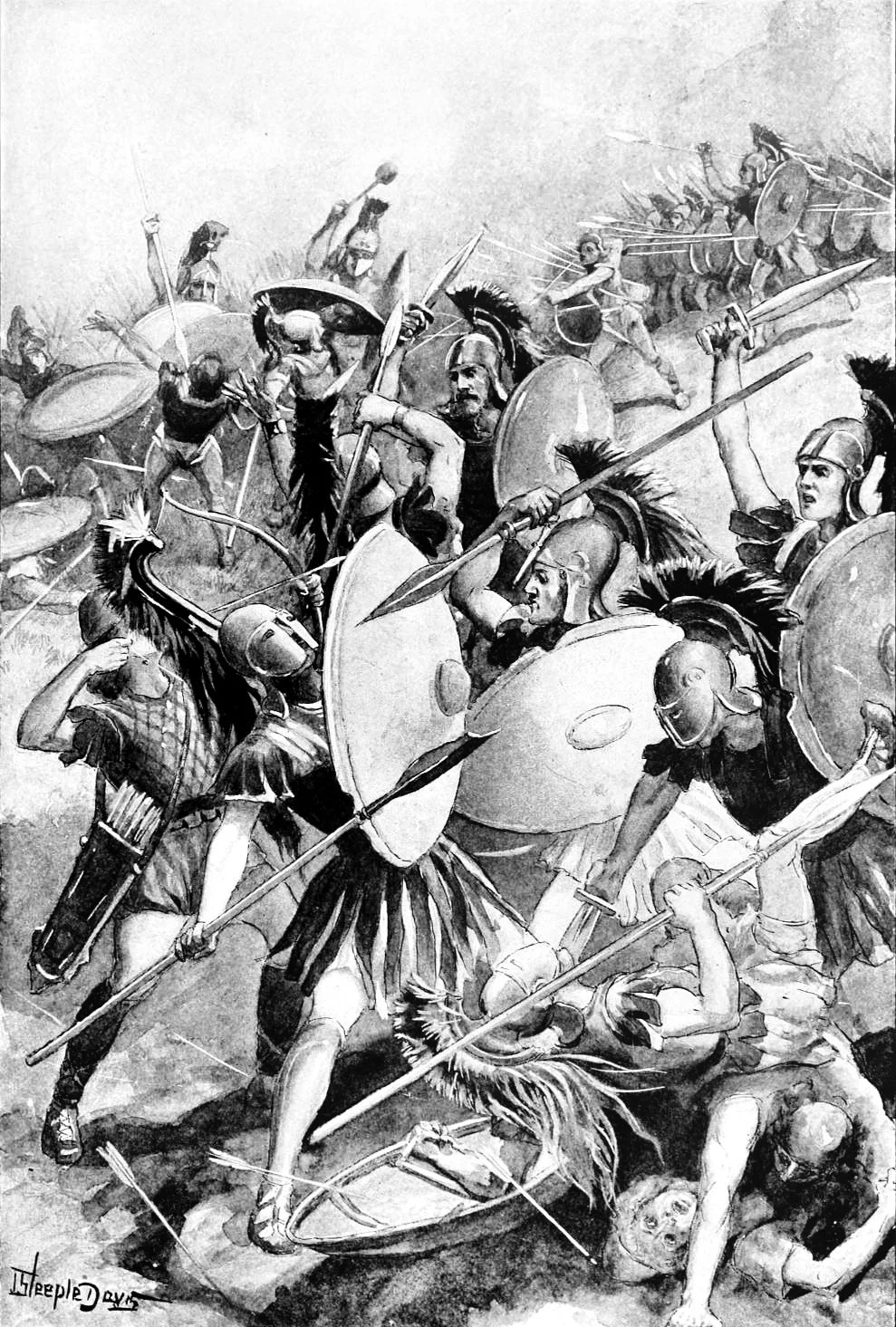
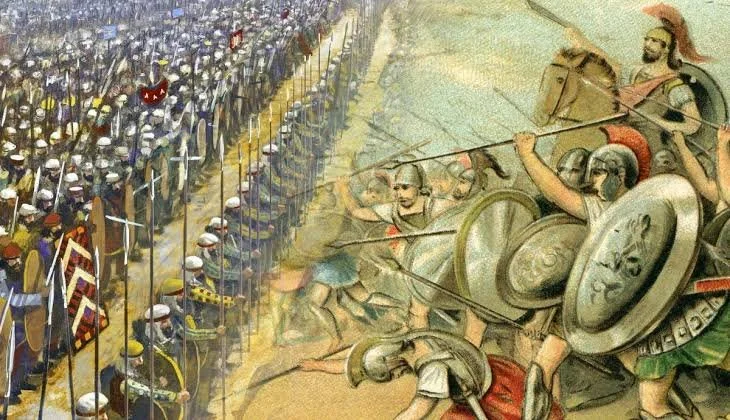
At the core of Greek warfare was the hoplite, a foot soldier armed with a heavy spear and a large circular shield. The tactical formation of these soldiers was the phalanx.
The Shield and Formation: Soldiers stood shoulder-to-shoulder, forming a solid wall of bronze shields (hopla). Each soldier's shield protected the man to his left, creating an interdependent, defensive unit.
The Weapons: The primary weapon was the dory, a heavy thrusting spear often eight to nine feet long. For close combat, soldiers carried the xiphos, a short sword.
Armor: Hoplites wore bronze helmets, breastplates (cuirasses), and greaves.
2. Spartan Military Excellence
Sparta revolutionized early Greek tactics by introducing a professional standing army and rigorous state training.
The Agoge: The rigorous educational and training system that turned boys into disciplined warriors from a young age.
Tactical Cohesion: Spartan forces were divided into smaller units, such as enomotiai (oath-bound squads) and morai (larger regiments), allowing for complex maneuvers on the battlefield.
The Paean: Singing a battle hymn as they advanced, which kept their steps rhythmic and maintained the integrity of the formation.
3. Naval Warfare and the Trireme
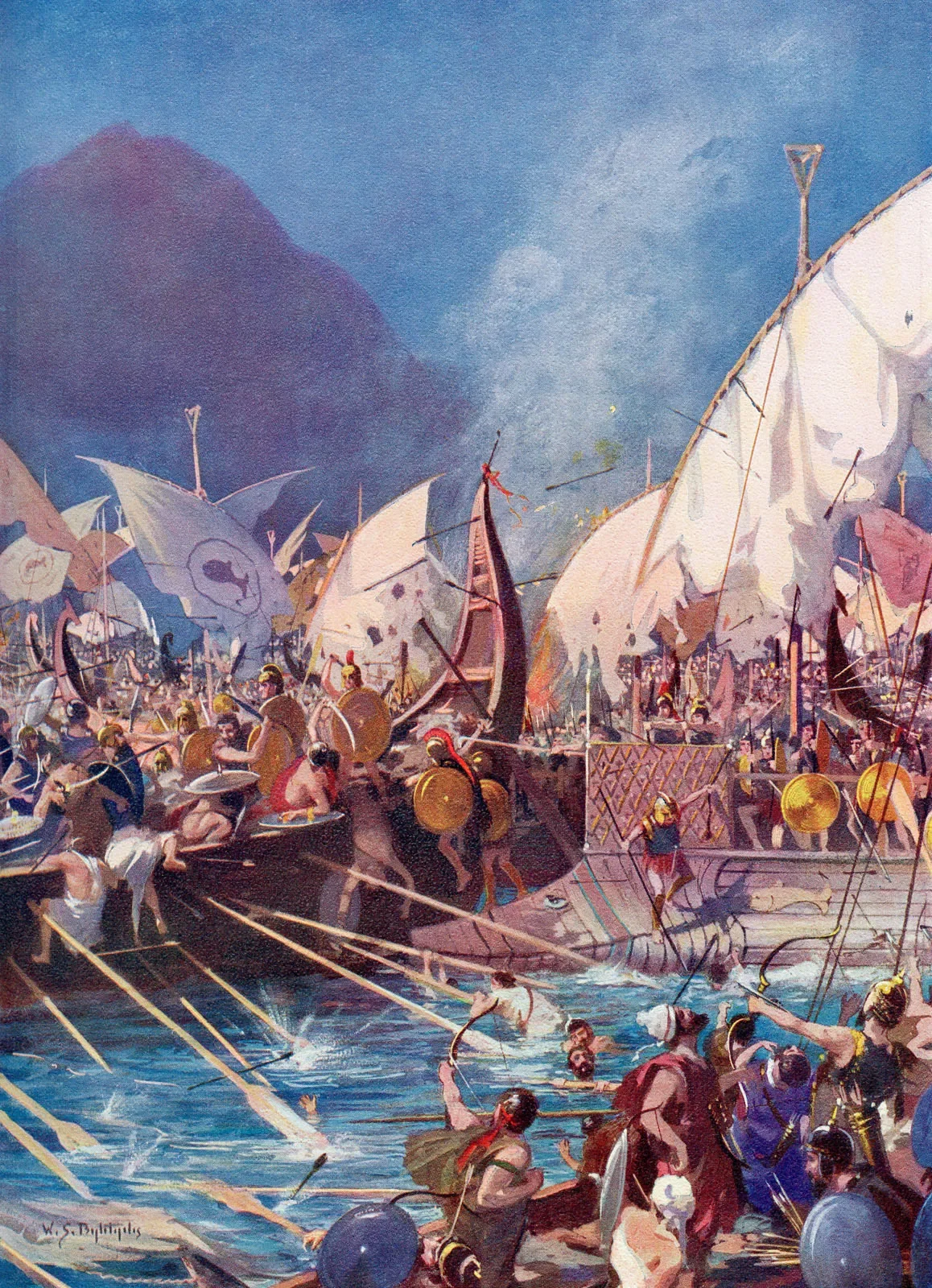
For maritime city-states like Athens, the sea was the main theater of war. The dominant warship was the trireme, a fast and agile galley propelled by three banks of oars.
Tactics: Naval warfare shifted from boarding actions to ramming. The standard tactic was the diekplous, where ships sailed through gaps in the enemy line and smashed their oars.
The Crew: Triremes were manned by free citizens and mercenaries, relying on rowers (thetes) rather than heavy infantry.
4. Tactical Innovations: The Theban and Macedonian Reforms
As warfare evolved, the standard phalanx was modified to break through enemy lines and adapt to new threats.
The Theban Deep Phalanx: Led by Epaminondas at the Battle of Leuctra (371 BCE), the Thebans deepened their phalanx to fifty ranks on the left, overpowering the Spartan right wing.
The Macedonian Phalanx: Philip II of Macedon introduced the sarissa, an eighteen-foot-long pike. The Macedonian phalanx was highly effective at holding ground, while companion cavalry delivered the decisive strike.
Combined Arms: The integration of light infantry, heavy cavalry, and the pike phalanx created a formidable tactical doctrine used by Alexander the Great.
5. Siege Warfare
Initially, Greeks rarely conducted long sieges, preferring direct battles. Over time, siege engineering became more sophisticated.
Earthworks and Blockades: Early methods relied on starving the city into submission or building circumvallation walls.
Engineered Devices: By the Hellenistic era, the use of battering rams, siege towers (helepolis), and early torsion artillery revolutionized how cities were captured.