In Ancient Greece, perfume was far more than a luxury; it was a bridge to the divine, a mark of social status, and a fundamental tool for hygiene. The "Old Style" of Greek scent-making relied on enfleurage—the process of infusing base oils (like olive, almond, or linseed oil) with aromatic flowers, herbs, and resins.
1. Susinum: The Royal Scent of the Lily
One of the most prized perfumes in the Greek world was Susinum, a heavy, luxurious scent based on the lily. It was complex to produce, often requiring multiple "soakings" of the petals in oil to achieve the desired potency. Because of the labor involved, Susinum was a status symbol worn by the nobility at banquets and weddings.
2. Kypros: The Scent of the Henna Flower
Kypros was a popular, lighter perfume made from the flowers of the henna plant (Lawsonia inermis). It was often mixed with cardamom and cinnamon to create a spicy, floral aroma. It was favored by both men and women and was particularly popular in the Hellenistic period as trade with the East expanded the availability of exotic spices.
3. Rhodinon: The Classic Rose
The rose was sacred to Aphrodite, and Rhodinon (rose oil) was perhaps the most enduringly popular scent in antiquity. Greek perfumers in Corinth and Rhodes were famous for their rose extracts. They would macerate thousands of petals in oil, often adding a touch of honey or salt to preserve the fragrance, creating a scent that was used for everything from personal grooming to anointing religious statues.
4. Resin and Myrrh: The Sacred Aromas
The Greeks had a deep affinity for "earthy" scents derived from tree resins. Myrrh and Frankincense, imported via the incense routes, were the gold standard for religious rituals. In daily life, wealthy citizens would wear myrrh-based oils to signal their piety and their ability to afford expensive imports from Arabia and North Africa.
5. Iris and Sweet Marjoram
For those seeking a more herbal or "green" fragrance, perfumes made from Iris (specifically the Orris root) and Amaracus (sweet marjoram) were common. These scents were considered cooling and were often applied to the chest and arms after a session at the gymnasium to mask the smell of sweat and olive oil.
6. The Alabastron: The Art of Storage
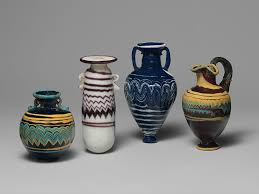
How a perfume was stored was as important as the scent itself. The Greeks used the Alabastron, a long, slim vessel with a rounded bottom and a narrow neck.
Material: Often carved from alabaster (hence the name) or crafted from "core-formed" glass with vibrant colorful swirls.
Application: The narrow neck allowed the user to dispense the expensive oil drop by drop. These vessels were often buried with the deceased, ensuring they remained fragrant in the afterlife.