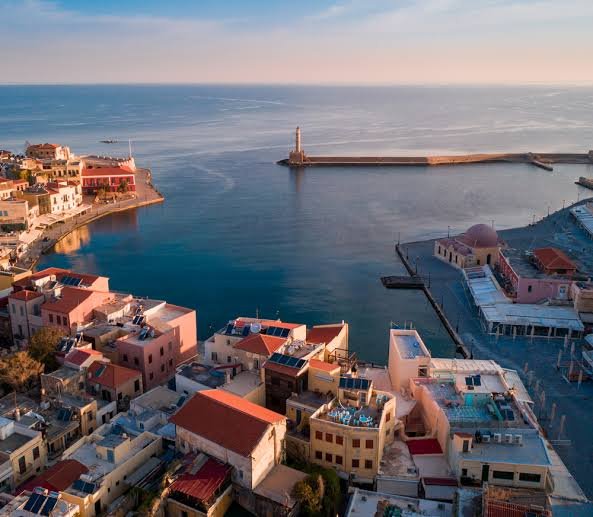
While agriculture was the backbone of the "Old Style" Greek economy, the sea was its central nervous system. For a civilization where no point of the mainland is more than 90 kilometers from the coast, the Aegean and Ionian seas were not barriers, but highways. The role of the fisherman (halieus) was essential, providing the primary source of protein for a population living on "rugged and thin-soiled" land.
1. The Small-Scale Coastal Fisher
Most Greek fishing was not a massive industrial undertaking but a grueling, daily labor performed by independent boat owners.
The Parathelassia: Small coastal villages relied entirely on the daily catch. These fishermen used small, open wooden boats, often operating at night using torches (pyreia) to lure fish to the surface.
The Tools of the Trade: Ancient fishermen utilized a variety of specialized gear:
Tridents (Triaina): Used primarily for larger fish or octopus in shallow water.
Bronze Hooks: Found frequently in archaeological sites, these were often weighted with lead sinkers.
Woven Traps (Kyrtoi): Made from reeds or willow, these were placed on the seabed to catch crustaceans and eels.
2. The Tuna "Hekatomb"
While most fishing was local, the migratory patterns of the Atlantic Bluefin Tuna created the closest thing the Greeks had to a large-scale fishing industry.
The Lookout (Thynniskopos): High on the coastal cliffs, lookouts would watch for the dark "purple" patches in the water that signaled a massive school of tuna.
The Net Walls: Using a technique called bolon, fishermen would deploy massive, heavy nets to encircle the school. The harvest was so large it was often described in religious terms, as a gift from Poseidon that could feed an entire city-state for months.
3. Garum and Preservation
Because fish spoils rapidly in the Mediterranean heat, the Greeks developed sophisticated "Old Style" preservation techniques to turn a perishable catch into a stable economic commodity.
Salting (Tarichos): Salted fish was the "canned food" of antiquity. Massive salting factories were established, particularly around the Black Sea, where fish was packed into amphorae for transport to Athens.
Garon (The Precursor to Garum): The Greeks were the first to master the fermentation of fish innards with salt to create a pungent, protein-rich liquid seasoning. This was a vital trade item, providing flavor and nutrients to the grain-heavy diet of the poor.
4. The Wealth of the Deep: Purple Dye and Sponges
The sea provided luxury goods that were more valuable than their weight in silver.
The Murex Snail: Fishermen harvested thousands of these sea snails to produce Tyrian Purple. It took roughly 10,000 snails to produce just one gram of dye, making it the ultimate status symbol for the elite and the priesthood.
Sponge Diving: The Greeks were the pioneers of "skin diving." Divers would tie a heavy stone (halteres) to their waist to sink rapidly to the sea floor, holding their breath to harvest sponges. These were essential for medicine, cleaning, and lining the helmets of soldiers.
5. Fishermen in the Social Hierarchy
Despite their vital role, the social status of the fisherman was complex.
The "Humble" Life: Unlike the "Citizen-Farmer," the fisherman was often viewed as a marginal figure. The work was seen as "stealthy" and unpredictable compared to the honest, visible labor of plowing a field.
The Marketplace (Agora): In cities like Athens, the "Fish Bell" was a central event. When the bell rang, it signaled that the fresh catch had arrived. The opsophagos (fish-lover) was a common character in Greek comedy—someone so addicted to expensive fish that they would spend their entire fortune at the stalls.
6. The Sea as a Connector
Ultimately, the fishing industry fueled the development of Greek maritime technology.
Shipbuilding: The need for stable, maneuverable fishing vessels led to innovations in hull design and sailcloth that were eventually scaled up for the merchant galleys and the Triremes of the navy.
The Thalassocracy: The Greek "Mastery of the Sea" began with the fisherman. By mapping the currents, the hidden reefs, and the seasonal winds to find fish, the Greeks gained the knowledge required to colonize the entire Mediterranean basin