To truly grasp the landscape of ancient Greek mystery cults, we have to look past the state-sponsored gates of Eleusis. While Eleusis offered a structured, mainstream civic escape from the terrors of Hades, a series of underground, alternative movements flourished across the Mediterranean.
Two of these traditions—Orphism and the Dionysian Mysteries—provided entirely different blueprints for taming the afterlife. One relied on literal secret passwords buried with the dead, while the other utilized wild, ecstatic ritual madness to break down the boundaries of the human ego.
1. The Orphic Gold Tablets: Geography and Cheat Codes for the Soul
If Eleusis was an institutional, mass-participation event, Orphism was an ultra-private, highly secretive, and deeply counter-cultural movement. Named after the mythical musician Orpheus, who successfully descended into Hades and returned, Orphics did not trust civic religion.
They lived an ascetic lifestyle, strictly adhering to vegetarianism, avoiding wool clothing (which they viewed as ritually impure), and participating in private initiations managed by traveling priests known as Orpheotelestai.
The ultimate goal of an Orphic initiate was to survive the geography of the underworld. When they died, they didn't rely on the collective memory of the city; they brought a physical map with them.
Archaeologists have unearthed dozens of these Orphic Gold Tablets (Totenpässe or "passports for the dead") buried in elite tombs across Greece, Italy, and Crete. Hammered from paper-thin gold sheets, these tiny amulets were placed directly in the hands or over the mouths of the deceased. Written in cryptic Greek hexameter, they contained an exact script of what the soul would encounter and precisely what it needed to say to the judges of the dead:
 [ SOUL ENTERS HADES ]
          │
          ├──► White Cypress Tree & Spring of Lethe (FORBIDDEN)
          │
          └──► Lake of Memory (Mnemosyne) Guarded by Sentinels
                    │
                    └──► Recite Password: "I am a child of Earth and Starry Heaven"
                              │
                              └──► Drink & Reign with the Heroes
The Inscribed Dialogue
The tablets warned the soul that the first thing it would see upon entering Hades was a gleaming white cypress tree standing next to a flowing spring. This was the Spring of Lethe (Forgetfulness). Uninitiated souls rushed to drink from it to quench their post-mortem thirst, instantly erasing all memories of their mortal lives and reducing them to mindless, drifting shadows.
The initiate was instructed to bypass this spring entirely and seek out the cold pool flowing from the Lake of Memory (Mnemosyne). When the terrifying guardians of the lake challenged the soul, demanding to know why a mortal presumed to drink from the waters of remembrance, the initiate had to recite the written formula:
"I am a child of Earth and Starry Heaven, but my race is celestial. I am parched with thirst and I am dying; give me quickly the cold water flowing from the Lake of Memory."
Upon hearing this password, the guardians would allow the soul to drink. By retaining its memory, the soul broke the cycle of reincarnation (wheel of rebirth), escaping the grim mud of Hades to rule alongside the gods and heroes in the Elysian Fields.
2. The Dionysian Mysteries: Ekstasis and Divine Madness
If Orphism was defined by quiet asceticism, strict rules, and text, the Dionysian Mysteries were defined by absolute, uninhibited physical release.
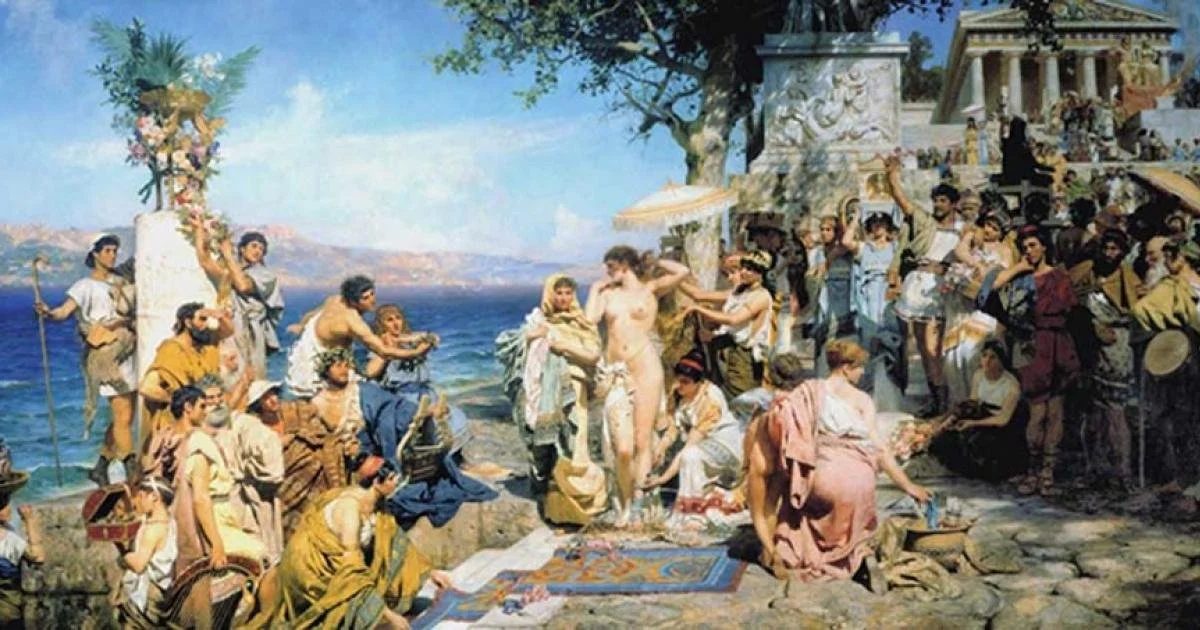
Dionysus was the god of wine, theater, vegetation, and religious ecstasy. His mysteries did not take place in windowless temples like the Telesterion of Eleusis; they were celebrated at night in the wild, untamed mountains, far away from the policing eyes of city-state magistrates.
The Mechanics of Ekstasis
The core goal of the Dionysian ritual was to achieve Ekstasis (literally "stepping outside oneself") and Entheos ("having the god within"). Initiates aimed to temporarily shed their civilized human identities, social classes, and anxieties, allowing the primal, raw energy of Dionysus to flood their psyches.
The ritual structure relied on four powerful psychological disruptors:
Sensory Overload: The night rituals were driven by the hypnotic, driving rhythms of frame drums (tympana), double-reeded pipes (auloi), and crashing cymbals, accompanied by torches slicing through the pitch-black mountain woods.
The Consumption of Unwatered Wine: While civilized Greeks always diluted their wine with water to maintain rational control, Dionysian worship demanded heavy consumption of pure, unwatered wine to shatter ego defenses.
Sparagmos and Omophagia: At the height of the ecstatic frenzy, the worshippers—most famously the Maenads (possessed women)—would chase down wild animals, tear them limb from limb with their bare hands (sparagmos), and consume the raw, warm flesh (omophagia). They believed they were literally consuming the life force of the god himself.
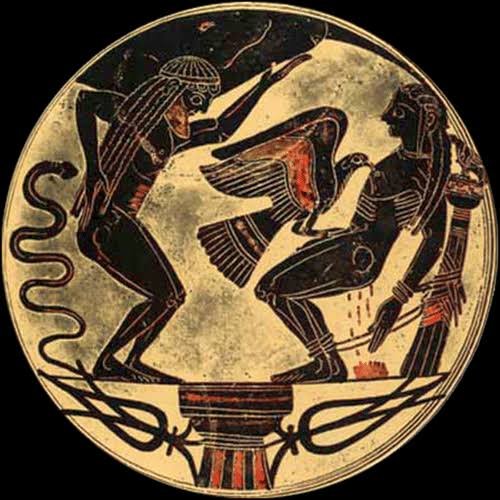
The Thyrsus: Worshippers carried a thyrsus—a long staff made of giant fennel, topped with a pine cone and wrapped in ivy leaves (as visible in the vase painting above). It served as an emblem of wild fertility and a ritual wand used to channel the god's electrical, ecstatic power.
By experiencing this temporary, controlled descent into madness, initiates underwent a symbolic death and rebirth. They believed that by letting Dionysus break their human egos during life, their souls would be fundamentally unshakeable after death. They would not be terrified of the dark underworld because they had already touched the wild, immortal source of life itself.
3. Comparing the Three Paths to Immortality
The different mystery cults of the Greek world met diverse psychological and spiritual needs, providing a specialized menu for the anxious ancient soul.
Mystery CultPrimary DeityRitual EnvironmentCore MechanismVision of The Eleusinian Mysteries
Deities: Demeter & Persephone
The Ritual: Conducted within a highly structured, secret temple auditorium known as the Telesterion. Initiates underwent a sacred drama and viewed holy relics, often aided by a psychoactive beverage called Kykeon that induced intense mystical illumination.
The Reward: Initiates were promised a peaceful, sunlit communal autumn meadow located within the confines of Hades, far removed from the drudgery of the average shade.
The Orphic Mysteries
Deities: Orpheus & Dionysus Zagreus
The Ritual: These were private, domestic initiations that demanded strict, lifelong lifestyle choices. Initiates practiced vegetarianism, followed complex text-driven liturgical formulas, and were buried with gold funerary amulets inscribed with secret passwords.
The Reward: The ultimate escape from the "wheel of rebirth." The soul was liberated from the cycle of reincarnation, ultimately ascending to a divine state.
The Dionysian Mysteries
Deities: Dionysus / Bacchus
The Ritual: These rites took place in wild, nocturnal mountain landscapes (Bacheia). The path to enlightenment involved ecstatic dance, sensory overload, the consumption of unwatered wine, and the controversial ritual consumption of raw meat to achieve a state of enthousiasmos (divine possession).
The Reward: The initiate was promised an eternal, ecstatic feast and permanent membership in the god's celebratory revelry (thiasos) in the afterlife.
Whether through the quiet memorization of gold tablets or the wild, drum-driven dances of the mountaintops, these mystery cults proved that ancient Greek religion was deeply personal. They allowed individuals to step outside the rigid boundaries of their civic duty and construct a private, fortified bridge across the terrifying chasm of death.