To modern eyes, ancient Greek religion looks like an absolute paradox. It was an intricately structured world of grand temples, massive festivals, and rigid civic obligations—yet it operated with absolutely no central holy book, no universal dogma, and no professional, full-time class of priests.
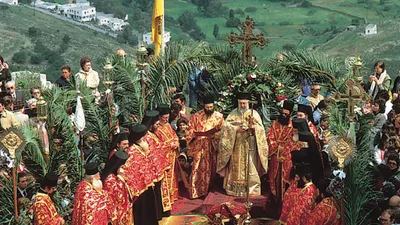
In ancient Greece, a priest (hiereus) or priestess (hiereia) was not a spiritual shepherd, a moral counselor, or a theologian. They were civic officials. Their job wasn't to save your soul; their job was to manage the delicate, transactional relationship between the human city and the immortal gods.
1. The Nature of the Job: Civic Management
In a world without separation of church and state, religious offices were viewed much like political or military positions. Priests and priestesses were caretakers of divine property.
 [ THE TRANSACTIONAL SYSTEM ]
   Human City  ──►  Ritual Honors (Sacrifice/Festivals)  ──►  The Gods
   Human City  ◄──  Divine Protection (Harvests/Victory) ◄──  The Gods
A Greek priest was essentially a landlord for a god's earthly estate. Their primary responsibilities were purely practical:
Property Management: Overseeing the temple building, protecting the sacred treasures, and managing the temple's lucrative agricultural lands and finances.
Ritual Execution: Ensuring that sacrifices, prayers, and libations (liquid offerings) were performed exactly according to ancestral traditions (ta patria). Mispronouncing a single word during a public prayer could offend a god and endanger the entire city-state (polis).
Because it wasn't a monastic calling, most priests lived normal lives. They owned property, got married, engaged in politics, and served the temple part-time or for a fixed, annual term.
2. Power and Gender: The Autonomy of Priestesses
While classical Greek society—especially in democratic Athens—was profoundly patriarchal, denying women political votes and legal independence, Greek religion was a sphere of radical gender equality.
The Greeks operated on a strict principle of sexual symmetry: male gods required priests, and female goddesses required priestesses.
Priestesses wielded immense, independent institutional power. They managed massive state budgets, controlled vast temple estates, and had the authority to bar male politicians from entering sacred sanctuaries.
The most powerful woman in the entire Mediterranean world was arguably the Pythia, the High Priestess of Apollo at Delphi. When she spoke in her trance, her words directed foreign policy, declared wars, and brought down empires. No king or general dared launch a major military campaign without her divine stamp of approval.
3. How One Became a Priest
Because there were no seminaries or formal theological training, the path to priesthood varied wildly depending on local civic traditions and the specific deity being served.
1.Hereditary Succession (Elite Bloodlines):Method 1.
In many cities, specific priesthoods were the exclusive, perpetual property of ancient aristocratic families (genos). For example, the High Priest of Poseidon at Athens always had to come from the Eteoboutadae clan, passing down secrets and ritual techniques from generation to generation.
2.Democratic Sorting (The Lot):Method 2.
In radical democracies like Athens, many annual priesthoods were selected using a kleroterion—a randomization machine that chose citizens by sortition (the lot). The Greeks believed that letting a machine choose the priest took human bias out of the equation, allowing the gods themselves to select who would serve them that year.
3.Public Auctions (Purchasing the Office):Method 3.
In the wealthy Greek cities of Asia Minor (modern Turkey), priesthoods were frequently put up for public auction by the democratic state. The highest bidder bought the office, receiving a prestigious civic title, a cut of the temple's financial intake, and tax-exempt status in exchange for upfront cash to fuel the city's treasury.
4. Perks of the Profession
While the job carried immense responsibility, the material and social rewards for serving a god were substantial, making priesthoods highly competitive offices.
Ultimately, Greek priests and priestesses were the gatekeepers of civic peace. By keeping the temples clean, the fires lit, and the sacrifices precise, they ensured that the thread connecting the human world to Mount Olympus never snapped.