To understand ancient Greek religion, you have to look down.
While the bright, shining Olympian gods—like Zeus, Apollo, and Athena—dwelt high above on the cloud-veiled peaks of Mount Olympus, there was an entirely separate, shadowed pantheon that ruled the dark spaces beneath the earth. These were the chthonic deites (from the Greek chthôn, meaning "earth" or "soil").
Chthonic religion was the dark, visceral underbelly of Greek spiritual life. It didn't deal with abstract cosmic justice or civic pride; it dealt with the raw, terrifying realities of the human condition: death, decomposition, agricultural fertility, and ancestral curses.
1. The Chthonic Pantheon: Wealth and Wrath
The underworld wasn't just a place of grim ghosts; it was a realm of dualities. The earth swallowed the dead, but it also birthed the grain, silver, and gold that kept the living alive. Because of this, chthonic deities held immense economic and existential power.
                    [ THE CHTHONIC DUALITY ]
                             │
            ┌────────────────┴────────────────┐
            ▼                                 ▼
   THE REALM OF DEATH                THE REALM OF PLENTY
(Hades, Hecate, The Furies)     (Demeter, Plutus, Dionysus)
Hades (Plouton): The King of the Underworld. The Greeks were so terrified of drawing his lethal attention that they rarely spoke his actual name. Instead, they called him Plouton ("The Wealthy One"), referencing the mineral riches and hidden agricultural seeds locked inside his subterranean kingdom.
Persephone: The dual-natured queen who split her year between the sunlit world of the living and the dark throne room of the dead, acting as the literal bridge between agricultural life and skeletal decay.
Hecate: The goddess of crossroads, witchcraft, and restless ghosts. She ruled the liminal nighttime spaces where the boundary between the living and the dead grew dangerously thin.
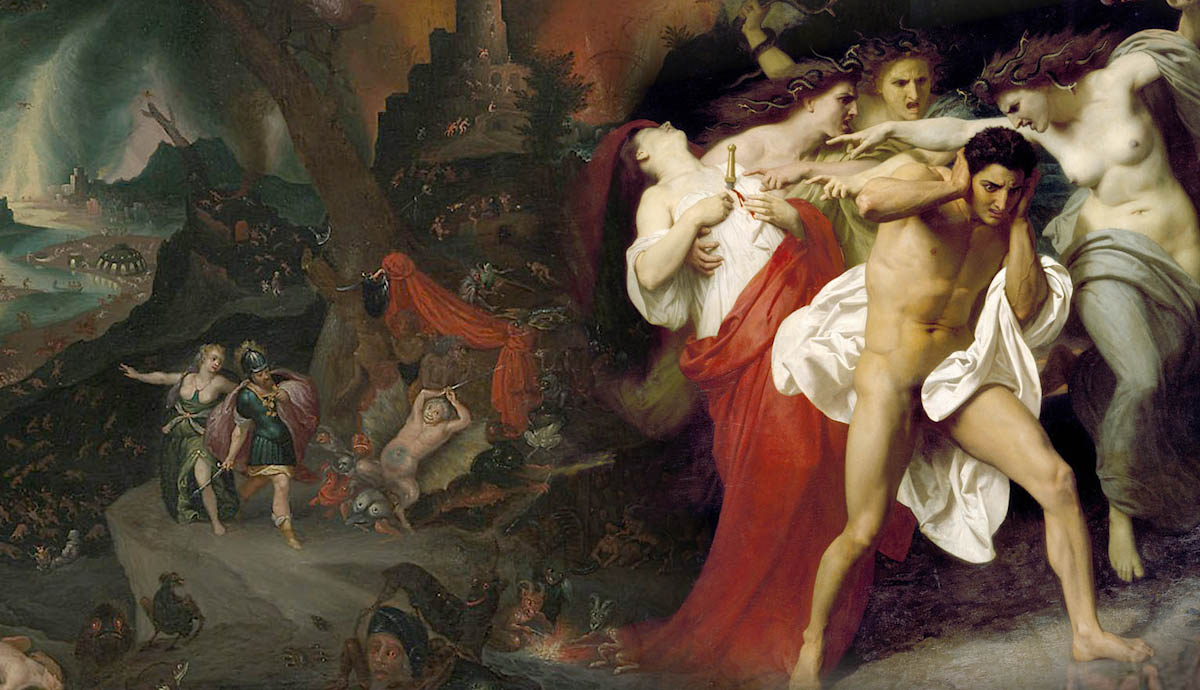
The Erinyes (The Furies): Chthonic deities of vengeance born from drops of spilled blood. They didn't care about city laws; they relentlessly hunted down those who violated cosmic taboos, like killing a family member, dragging them to madness.
2. Ritual Inversion: Ouranic vs. Chthonic Sacrifice
Because chthonic deities inhabited a completely different spatial realm than the Olympians (Ouranic gods), the rituals used to worship them were a total inversion of standard Greek religious practice.
The Greeks practiced strict ritual compartmentalization to avoid cross-contaminating the bright sky with the pollution (miasma) of the dark earth.
The Anatomy of an Inverted Sacrifice
In ancient Greek religious practice, the distinction between Ouranic (sky/Olympian) and Chthonic (earth/underworld) ritual was a fundamental division, dictating everything from where a sacrifice occurred to how the participants used their own bodies.
Ouranic Rituals (Honoring the Sky Gods)
These ceremonies were designed to reach the heavens, emphasizing elevation, light, and communal participation.
The Altar: Performed on a Bomos, a high, elevated stone structure constructed to rise toward the clouds.
Animal Color: Only pristine white victims—such as sheep or bulls—were used, reflecting the brightness of the celestial realm.
Head Orientation: During the fatal moment, the animal’s throat was pulled upward toward the sun.
The Feast: These rituals functioned as a communal meal; while the smoke and scent rose to appease the gods, the meat was roasted and shared among the citizens.
Hand Gestures: Worshippers held their palms turned upward, facing the sky during public prayer.
Chthonic Rituals (Honoring the Earth and Underworld Gods)
These ceremonies were designed to permeate the ground, emphasizing descent, darkness, and exclusion.
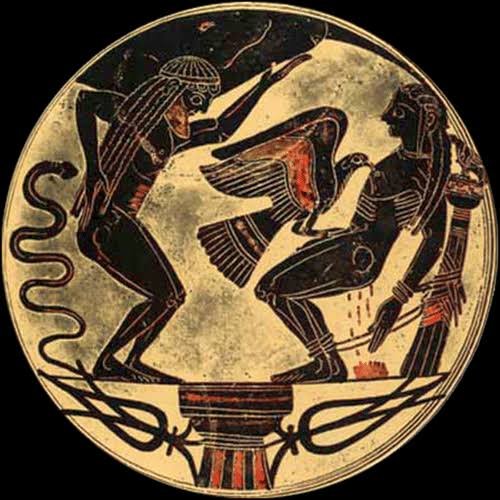
The Altar: Performed at a Bothros (a pit dug into the dirt) or a deep, natural rock cleft, ensuring contact with the earth.
Animal Color: Victims were exclusively deep black, mirroring the absolute darkness of the underworld.
Head Orientation: The animal's head was forced downward over the pit, ensuring the blood drained directly into the soil to feed the spirits below.
The Feast: This was a holocaust, meaning the entire animal was incinerated within the pit. Consuming meat offered to the dead was considered a horrific taboo that invited dangerous spiritual pollution.
Hand Gestures: Worshippers pressed their palms flat downward against the ground, sometimes stamping their feet to symbolically wake the dead.
3. Katadesmoi: Weaponizing the Underworld
Chthonic religion wasn't just practiced at temple festivals; it was heavily utilized in ancient counter-cultural "black magic." If an ancient Greek wanted to defeat a business rival, win a bitter court case, or force someone to fall in love with them, they didn't pray to Zeus. They hired a sorcerer to write a Katadesmos (a lead curse tablet).
[ Write Curse on Lead ] ──► Pierce with Iron Nail ──► Bury in Grave/Well ──► Furies Drag Target Down
Lead was chosen because it is cold, heavy, and dead. The practitioner would scratch a binding spell into the lead sheet—frequently invoking Hades, Hecate, and Hermes Chthonios (Hermes the Guide of Souls)—fold it tightly, pierce it with a rusty iron nail to "lock" the curse, and drop it into a deep well or bury it inside the fresh grave of someone who died prematurely.
The Greeks believed the restless soul of the dead person would act as a cosmic courier, carrying the lead tablet directly to the court of Hades to drag the target’s health, mind, or speech down into the binding shadows.
4. The Eleusinian Promise: Taming the Shadow
Despite the terror surrounding the underworld, chthonic worship wasn't entirely grim. It provided the framework for the Eleusinian Mysteries, the most sacred and secretive religious initiation in the ancient world.
Standard Greek civic religion offered a bleak, depressing vision of the afterlife—a gray, mindless eternity where souls drifted like shadows in the fields of asphodel, forgetting who they were.
But the Mysteries—rooted in the chthonic myth of Demeter recovering Persephone from the underworld—offered initiates a secret chemical and spiritual loophole. By participating in secret night rituals and drinking a hallucinogenic barley mix called kykeon, initiates conquered their fear of death. They weren't promised an escape from the underworld; instead, they were promised that when they descended into the chthonic realm, they alone would retain their memories, basking in eternal light and dancing in golden meadows while the uninitiated rotted in primordial mud.