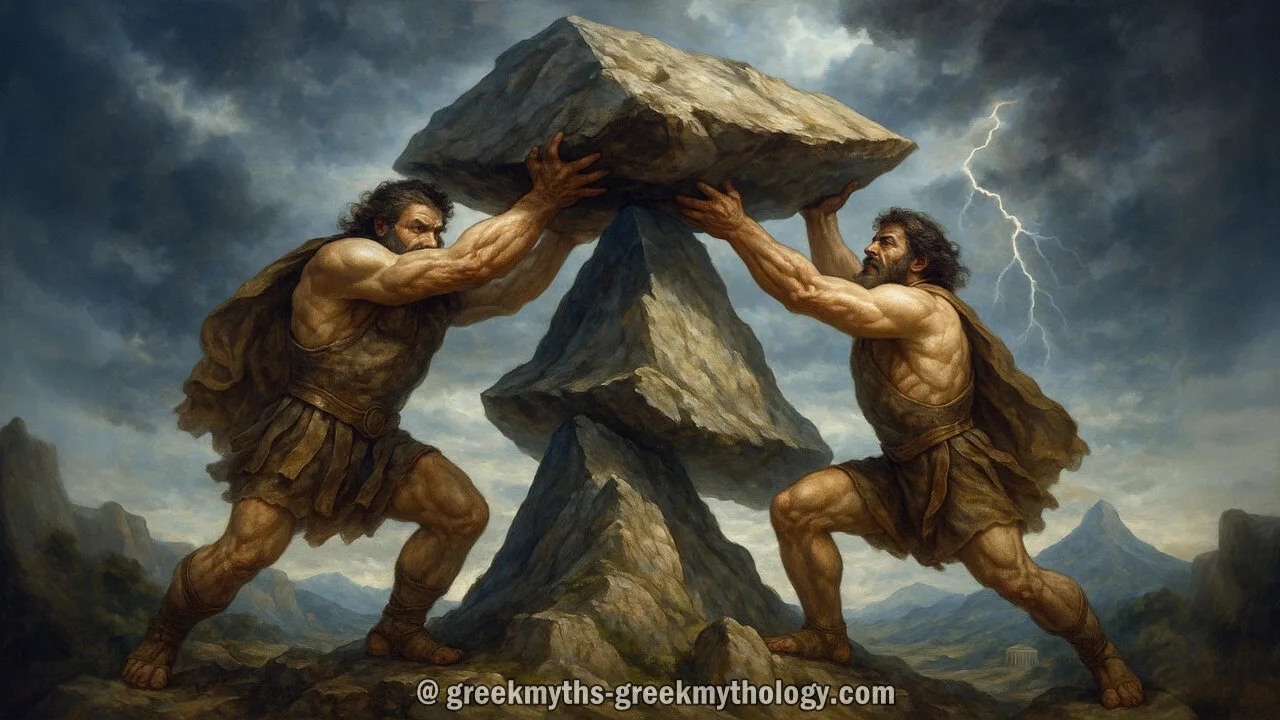
The myth of Otus and Ephialtes, collectively known as the Aloadae, is one of the most audacious stories in Greek mythology. They were twin giants, the sons of the sea god Poseidon and Iphimedia, and their legend is a cautionary tale of extreme ambition, hubris, and the limits of mortal—even half-divine—power.
The Audacity of the Aloadae
The brothers were characterized by their immense size and rapid growth; it is said they grew a cubit in width and a fathom in height every year. By the time they reached adolescence, they were already formidable, but their ambition far outpaced their age.
Challenging Olympus: Not content with ruling the earth, the twins decided to overthrow the Olympian gods. Their plan was as literal as it was arrogant: they would stack mountains upon mountains to reach the gates of heaven. They famously piled Mount Ossa upon Mount Olympus, and then Mount Pelion upon Ossa, attempting to create a staircase to the gods.
The Threat to the Cosmic Order: Their goal was not just to defeat the gods but to capture them. They openly boasted that they would kidnap Hera and Artemis to be their wives, effectively seizing the power and the women of the divine realm for themselves.
The Capture of Ares
The twins’ arrogance was fueled by a temporary success. In their campaign, they managed to capture the god of war, Ares. They bound him in bronze chains and imprisoned him in a jar (or a bronze vessel) for thirteen months. This sent a shockwave of panic through Olympus; even the mighty Ares, the embodiment of brutal conflict, had been incapacitated by the sheer strength of the young giants. Ares was only released when Hermes, the messenger god, stealthily intervened and liberated him.
The Divine Trap
The gods realized that the brothers were nearly invincible so long as they fought together. To defeat them, Zeus and the other Olympians utilized trickery rather than direct force:
The Deception of Artemis: Artemis, the goddess of the hunt, appeared before the brothers on the island of Naxos. She transformed herself into a beautiful deer and leapt between them.
The Fratricidal Error: The brothers, determined to catch the prize, both hurled their javelins at the deer. Because they were so eager and positioned on opposite sides of the animal, they missed the deer and struck each other. They were killed by their own weapons, a victim of their own competitive, reckless nature.
Eternal Punishment
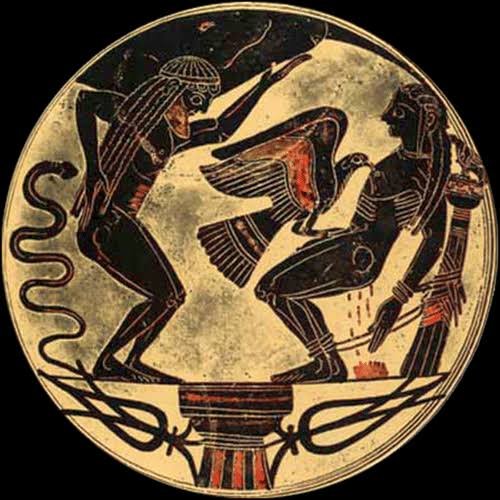
Their hubris did not end with their deaths. In the underworld of Tartarus, they faced an eternal punishment that mirrored their lives of restless, misguided ambition. They were bound back-to-back to a pillar with writhing snakes, and a screech owl—a bird associated with bad omens and restless nights—was placed upon them to ensure they would never find the peace or stability they had tried to steal from the gods.
Cultural Significance
The Limits of Hubris: The story of the Aloadae is a quintessential Greek myth regarding the "middle ground." Just as Icarus flew too close to the sun, the Aloadae reached too high for the heavens. It reinforces the idea that there is a fixed, sacred boundary between the mortal and the divine that cannot be crossed.
The Fear of the Unchecked: For the ancient Greeks, the twins represented the fear of the "barbarian" or the "untamed" power that existed outside the laws of the polis. They were a force of nature—powerful, rapidly growing, and irrational—that had to be contained by the order and cunning of the Olympian gods.
Comparison to the Gigantomachy: While the giants of the Gigantomachy (the great war against the gods) were born of Gaia to destroy the gods out of primal hatred, the Aloadae were motivated by personal arrogance and a desire for prestige. Their story is more "human" in its motivation, making it a more relatable warning against the dangers of ego and the refusal to accept one’s place in the cosmic hierarchy.