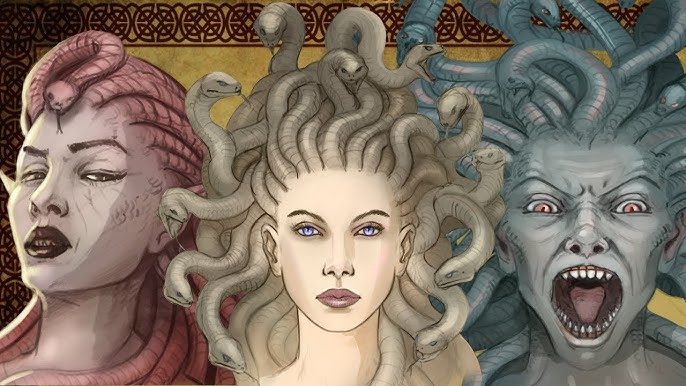
In the popular imagination, Medusa is often a solitary monster. However, in the earliest Greek traditions, she is the youngest of the three Gorgons: Stheno, Euryale, and Medusa. While Medusa is defined by her mortality and her tragic transformation, her sisters possess a much more primal, terrifying significance in mythology.
The Divine Nature of the Gorgons
Unlike Medusa, who was once mortal, Stheno (meaning "the mighty") and Euryale ("far-leaping") were born as immortal monsters. They were the offspring of the primordial sea deities Phorcys and Ceto.
Immortal Terrors: Because they were born into their monstrous state, they represent a different category of being than their sister. They are not victims of a curse, but rather manifestations of the wild, untamable dangers of the ancient world.
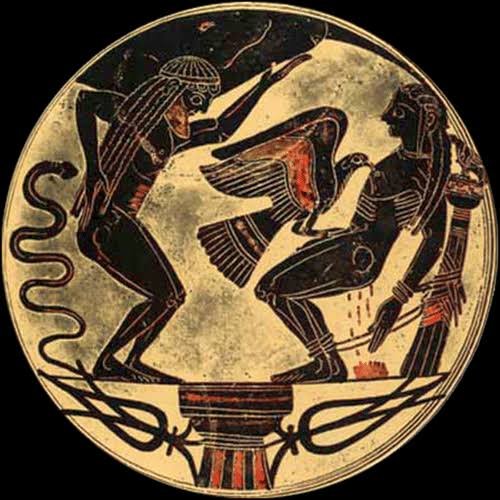
The Shared Aesthetic: All three sisters were described as having wings of gold, hands of brass, and massive tusks, with hair comprised of living, venomous snakes. Their gaze was famously lethal, capable of turning any mortal who looked upon them into stone.
The Story of the Three Sisters
The myth of the Gorgons is most closely associated with the hero Perseus. When Perseus was tasked by King Polydectes to bring back the head of a Gorgon, he was essentially venturing into a death trap, as all three were considered invincible to conventional human weapons.
The Tragedy of Medusa: The fundamental distinction between the sisters lies in their mortality. Medusa, having once been a woman, was the only one of the three who could be killed.
The Vengeful Sisters: When Perseus struck off Medusa's head, her sisters were asleep. Upon waking to find their younger sibling dead, they attempted to hunt down Perseus. Because he possessed the winged sandals and the Helm of Darkness (which rendered him invisible), Perseus was able to escape their fury.
Eternal Grief: Stheno and Euryale are often depicted as the primary guardians of the Gorgon lineage. Their rage following Medusa's death is a rare moment in mythology where monsters are shown to possess profound loyalty and grief, emphasizing that even the most "monstrous" creatures had their own familial bonds.
Symbolic Significance
Stheno and Euryale represent the limitations of the hero's journey.
The Inaccessible: The hero could slay the "mortal" threat (Medusa), but he could not defeat the "immortal" forces of the natural world (Stheno and Euryale). They remained, hidden in the dark fringes of the world, serving as a reminder that the world remains dangerous and that not all terrors can be conquered by human action.
The "Other": In ancient art, the Gorgons were frequently used as apotropaic symbols—images intended to turn away evil. Their fierce faces, often depicted with lolling tongues and wide, staring eyes, were placed on armor, shields, and temples to frighten off malevolent forces. The sisters were, in effect, the ultimate protectors because they were the most feared creatures in the mythic imagination.
Why They Are Often Forgotten
As Greek literature shifted from the mythic (where the world was full of unexplainable, immortal monsters) to the heroic (where human figures like Perseus and Heracles became the focus), the role of Stheno and Euryale diminished. It was easier for storytellers to focus on the singular tragedy of Medusa—a story that could be explained through moralizing—than to deal with the presence of her two immortal, unchanging sisters.
While Medusa has become a modern icon of female rage and victimhood, Stheno and Euryale remain as they were in the beginning: primordial, unstoppable, and eternal symbols of the chaotic, terrifying power of the deep.