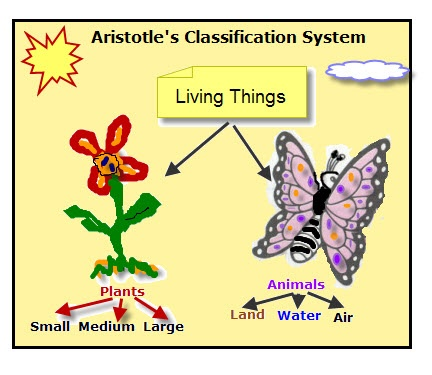
Before the rise of formal scientific institutions, the natural world was understood through local folklore, agricultural utility, or mythological symbolism. This changed in the 4th century BCE when the philosophers of Athens applied systematic observation and logical division to the natural world, creating the Western world's first formal systems of biological taxonomy.
This monumental task was split between two thinkers: Aristotle, who mapped the animal kingdom, and his student Theophrastus, who laid the foundations for botany.
1. Aristotle and the Taxonomy of Animals
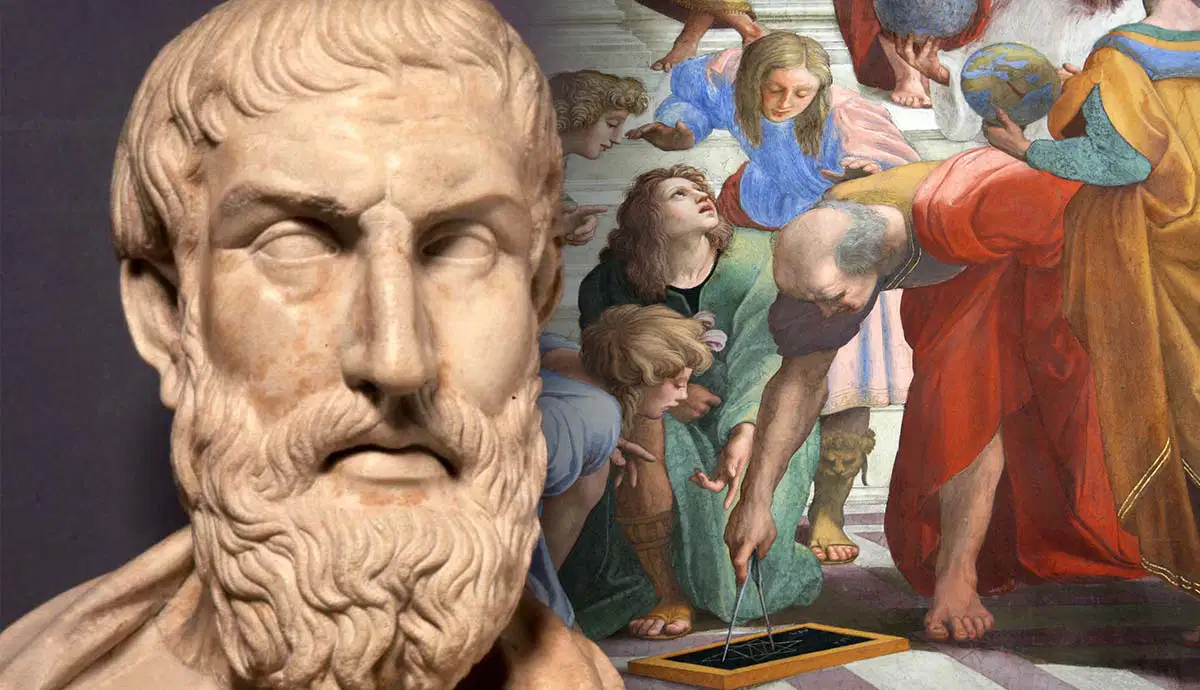
Aristotle (384–322 BCE) is universally recognized as the father of zoology. During his time on the island of Lesbos, he dissected, dissected, and observed over 500 distinct species of animals.
Rather than arranging animals alphabetically or by their usefulness to humans, Aristotle grouped them according to their anatomical structures, reproductive methods, habitats, and behaviors. He organized this system into a grand cosmic hierarchy known as the Scala Naturae (the Ladder of Nature), ascending from inanimate matter up to human beings.
At the core of his system, Aristotle divided all animals into two primary macro-categories based on the presence or absence of red blood:
Enaima (Animals with Red Blood)
This group roughly corresponds to modern vertebrates. Aristotle further divided these based on how they gave birth:
Viviparous Quadrupeds: Air-breathing land mammals that gave birth to live young (such as horses, lions, and deer).
Cetaceans: Marine mammals like dolphins and whales. Aristotle accurately observed that despite living in the ocean, they possessed lungs, breathed air, and gave birth to live young, separating them from fish.
Oviparous Quadrupeds: Egg-laying reptiles and amphibians (such as lizards, frogs, and turtles).
Birds (Ornithes): Feathered, winged egg-layers, which he sub-divided by their diets and foot structures (raptors, waterfowl, land birds).
Fish (Ichthyes): Cold-blooded, gill-breathing aquatic egg-layers.
Anaima (Animals without Red Blood)
This group corresponds to modern invertebrates. Because their internal fluids were clear or yellowish, Aristotle grouped them by their structural exteriors:
Malakia (The Soft-Bodied): Cephalopods like octopuses, squids, and cuttlefish. Aristotle spent hours studying their complex ink sacs and tentacles.
Malacostraka (The Soft-Shelled): Crustaceans with flexible exoskeletons, such as crabs, lobsters, and shrimp.
Ostrakoderma (The Hard-Shelled): Shelled mollusks and echinoderms, including snails, clams, oysters, and sea urchins.
Entoma (The Segmented): Insects, spiders, centipedes, and wasps. The word entoma translates to "cut into segments," which is the direct Greek origin of the modern word entomology.
2. Theophrastus and the Birth of Botany
When Aristotle died, he left his massive library and research botanical gardens to his closest collaborator, Theophrastus of Eresos (c. 371–287 BCE). While Aristotle focused on things that moved, Theophrastus dedicated his life to classifying the stationary world of flora.
In his landmark treatises, Enquiry into Plants and On the Causes of Plants, Theophrastus categorized over 500 distinct plant types collected from across the Mediterranean and the conquests of Alexander the Great.
The Four Great Plant Form Classes
Theophrastus realized that plants could not be easily dissected like animals. Instead, he classified them primarily by their growth habits, size, and the structure of their wooden stems:
Trees (Dendra): Large plants characterized by a single, woody main trunk rising from the root system (such as oaks, olives, and pines).
Shrubs (Thamnoi): Mid-sized plants that produced multiple woody stems branching directly from the root without a single main trunk (such as brambles and myrtles).
Sub-Shrubs (Phrygana): Low, woody-based perennial wild plants and culinary herbs that possessed many small, twiggy branches close to the ground (such as thyme, sage, and lavender).
Herbs (Poai): Soft, non-woody, succulent plants that lacked a permanent wooden stem and generally died back seasonally (such as grasses, grains, and annual flowers).
Micro-Observations: Roots, Leaves, and Lifecycles
Beyond this basic classification, Theophrastus made incredibly detailed structural distinctions. He was the first to differentiate between monocots and dicots based on whether seeds germinated with one leaf or two.
He classified plants by their lifecycles into annuals, biennials, and perennials. Furthermore, he noted the difference between wild and cultivated crops, deciduous and evergreen foliage, and correctly identified that flowers function as the reproductive organs of plants, mapping how insects were required for pollination.
3. Structural Paradigms of Ancient Classification
The methodologies of the two systems showcase how early biologists structured their observations:
Aristotelian Zoology: Built on internal anatomy, focusing heavily on blood types, organ systems, and reproductive mechanics to group animals.
Theophrastian Botany: Built on external morphology, focusing on stem types, growth habits, and structural lifecycles to group plants.
Animal Hierarchy: Highly vertical, structured from simple organisms up to complex mammals, culminating in humans at the apex.
Plant Grouping: Highly horizontal and practical, balancing scientific morphology with agricultural, medical, and timber utilities.
4. The Legacy of the Athenian Taxonomy
The classification systems forged by Aristotle and Theophrastus were so robust that they remained the undisputed gold standards of biology for nearly two thousand years. Their vocabulary and methodologies were inherited by the Roman encyclopedist Pliny the Elder and preserved by Islamic scholars during the Middle Ages.
When the Swedish botanist Carl Linnaeus revolutionized modern taxonomy in the 18th century by introducing binomial nomenclature, he built his work directly upon the foundations laid by these ancient Greeks. Linnaeus famously noted that Aristotle and Theophrastus were the undisputed "fathers" of his science, whose clear-eyed, empirical method of grouping life by shared physical traits first demonstrated that nature is not a chaotic clutter, but an intricately ordered system waiting to be mapped.