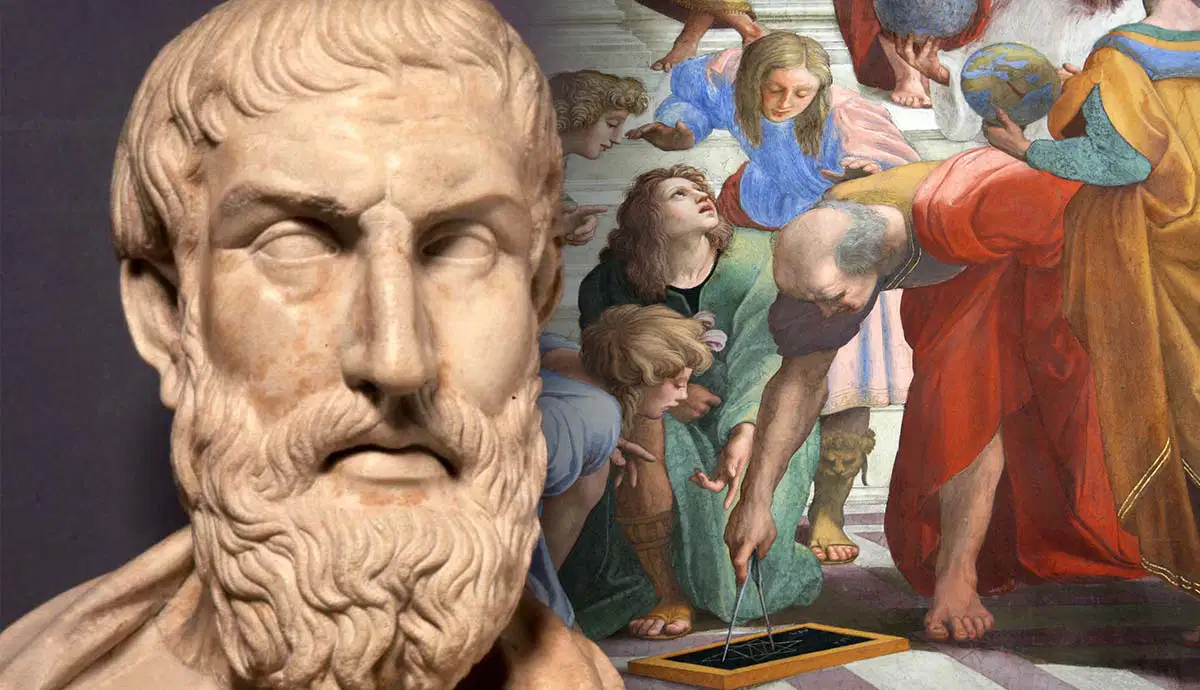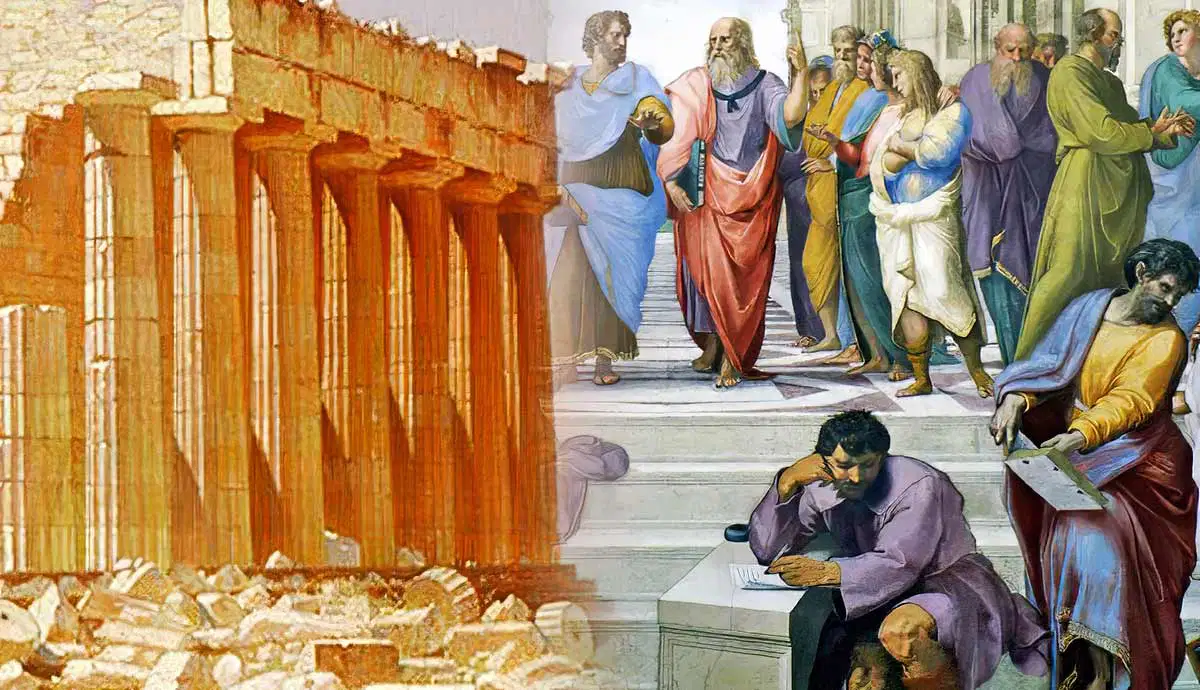
The European Renaissance of the 14th through 17th centuries is frequently celebrated as a sudden, brilliant rebirth of art and literature. However, at its core, the Renaissance was fueled by a massive, high-stakes scientific revolution. This revolution was not a rejection of the past, but a systematic, passionate retrieval and interrogation of ancient Greek science.
For centuries, Western Europe had lost direct access to original Greek texts, relying instead on heavily summarized Latin translations or theological interpretations. As the Byzantine Empire collapsed, a flood of original Greek manuscripts traveled west. Renaissance scholars, physicians, and engineers did not merely memorize this ancient knowledge—they used it as a launching pad to birth modern physics, anatomy, and astronomy.
1. The Medical Renaissance: Vesalius and the Interrogation of Galen
During the Middle Ages, European medicine was completely dominated by the writings of the 2nd-century Greek physician Galen of Pergamum. Because Galen’s complex theories of bodily humors and anatomy aligned with Christian theology, his texts were treated as infallible dogma. Medical students learned anatomy not by looking at bodies, but by having a professor read Galen’s texts aloud while a technician pointed to a carcass from a distance.
The Return to Empirical Observation
In 1543, the Flemish physician Andreas Vesalius published his groundbreaking work, De Humani Corporis Fabrica (On the Fabric of the Human Body). Vesalius was deeply inspired by the empirical spirit of the ancient Alexandrian Greek anatomists, Herophilus and Erasistratus, who believed in looking directly inside the human body.
Vesalius personally picked up the scalpel, conducting his own human dissections. In doing so, he made a shocking discovery: Galen had never dissected a human being. Vesalius realized that Galen’s texts were full of structural errors because the Greek master had dissected monkeys, pigs, and sheep instead.
By using the ancient Greek method of direct observation (autopsia) to correct Galen’s actual text, Vesalius shattered medieval medical dogma and birthed modern human anatomy.
2. The Mathematics of Space: Archimedes and Renaissance Engineering
In the medieval period, mathematics was largely treated as an abstract, philosophical tool. The Renaissance completely overturned this view by translating and mass-printing the works of Archimedes of Syracuse (c. 287–212 BCE), the greatest mathematician and mechanical engineer of antiquity.
Mechanics and Art
Archimedes's writings on hydrostatic balance, the geometry of spheres, and the mechanics of levers and pulleys hit Renaissance Europe like a lightning bolt:
Filippo Brunelleschi: The legendary architect utilized Archimedes's mathematical principles of leverage, load-bearing weight, and pulleys to engineer the massive hoisting machines required to build the iconic dome of the Florence Cathedral.
Galileo Galilei: Galileo began his scientific career by studying Archimedes's texts on floating bodies. Inspired by the Greek thinker's use of geometry to explain physical forces, Galileo constructed his own hydrostatic balance to calculate the specific gravity of metals, laying the direct tracks for modern experimental physics.
3. Shaking the Heavens: Ptolemy, Aristarchus, and Copernicus
The traditional medieval view of the universe was built entirely upon the geocentric (earth-centered) astronomical system perfected by the Alexandrian Greek astronomer Claudius Ptolemy in the 2nd century CE. Ptolemy’s system was highly complex, utilizing a series of overlapping mathematical circles called epicycles to explain why planets occasionally appeared to move backward across the night sky.
The Heliocentric Retrieval
In 1543, the Polish astronomer Nicolaus Copernicus published De revolutionibus orbium coelestium (On the Revolutions of the Heavenly Spheres), proposing the radical theory that the Earth and other planets actually orbited the Sun (Heliocentrism).
Copernicus was not inventing this idea out of thin air. In the preface to his book, he explicitly credited ancient Greek scientists for providing him with the initial hypothesis. Copernicus had read the works of Aristarchus of Samos (c. 310–230 BCE), a Hellenistic Greek astronomer who had calculated the massive size of the Sun and proposed a sun-centered universe eighteen centuries earlier.
By retrieving Aristarchus’s forgotten Greek hypothesis and applying advanced mathematics to it, Copernicus launched the Scientific Revolution that permanently dethroned the Earth from the center of the cosmos.
4. The Humanist Methodology: Ad Fontes
The engine driving this entire scientific transfer was the Renaissance humanist motto: Ad Fontes ("To the Sources").
Humanists realized that over centuries of copying, medieval Latin translations of Greek science had become deeply corrupted with errors, omissions, and theological biases. Renaissance scholars dedicated their lives to learning classical Greek, tracking down the oldest surviving Byzantine manuscripts, and setting up printing presses—most famously the Aldine Press in Venice—to publish the original, unedited Greek texts of Aristotle, Hippocrates, and Euclid.
   [ Medieval Science ] ────► Relied on corrupted, fragmented Latin translations of Greek text.
                                         │
                                (Humanist Revolution: Ad Fontes)
                                         │
   [ Renaissance Science ] ──► Printed original Greek texts, weaponizing ancient logic to correct ancient errors.
This textual accuracy was vital. Once European thinkers possessed the raw, unedited logic of the Greeks, they realized that ancient science was not a unified, dogmatic block of truth, but a vibrant history of fierce debate, experimentation, and disagreement.
5. Summary of Scientific Transitions
Anatomy: Transitioned from a medieval reliance on Galen’s primate-based texts to Vesalius's direct human dissection, heavily inspired by Alexandrian Greek empirical methods.
Physics & Engineering: Transitioned from abstract medieval scholasticism to practical mechanics, leveraging Archimedes's geometry, pulleys, and hydrostatic principles.
Astronomy: Transitioned from Ptolemy’s dogmatic geocentric model to Copernicus's heliocentric universe, directly adapted from the ancient calculations of Aristarchus.
The relationship between Greek science and the Renaissance reveals a profound paradox. The thinkers who birthed the modern world—Vesalius, Galileo, and Copernicus—achieved their radical breakthroughs not by ignoring ancient history, but by plunging deeply into it. By resurrecting the original, unvarnished methodologies of Greek mathematics, anatomy, and astronomy, Renaissance scientists acquired the exact tools they needed to cross-examine antiquity, prove its errors, and ultimately surpass it—proving that the path to the future is often paved by a deeper understanding of the past.