The Battle of Marathon remains a striking historical example of how tactical brilliance and terrain exploitation can overcome overwhelming numerical odds.
1. The Pretext: The Wrath of Darius
The battle was rooted in revenge. A few years prior, several Greek city-states had supported the Ionian Revolt against Persian rule, burning the regional capital of Sardis. King Darius swore vengeance. He reportedly had a servant whisper to him three times before every dinner: "Master, remember the Athenians."
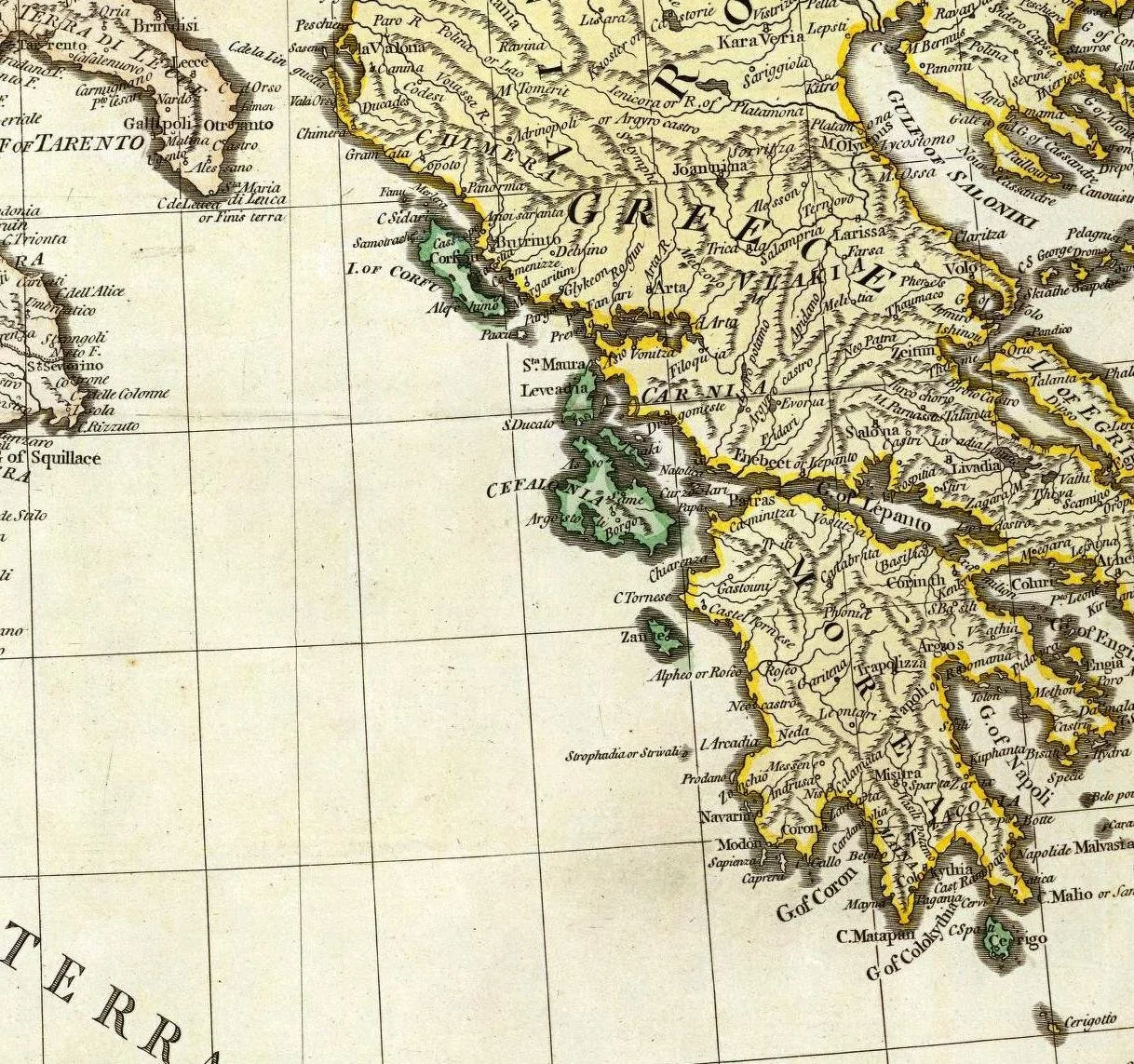
In 490 BCE, a massive Persian armada carrying roughly 25,000 infantry and cavalry sailed across the Aegean. After destroying Eretria, the fleet landed at the bay of Marathon, just 26 miles north of Athens. The flat plain was chosen specifically because it was ideal terrain for the feared Persian cavalry.
2. The Standoff and the Missing Spartans
The Athenians rushed an army of about 9,000 hoplites to Marathon, reinforced by 1,000 brave soldiers from the neighboring city of Plataea. They were outnumbered at least two to one.
The Appeal to Sparta: The Athenians sent a professional runner named Pheidippides to Sparta to beg for reinforcement. He ran an incredible 140 miles in less than 36 hours.
The Religious Delay: The Spartans, devoutly religious, refused to march immediately. They were celebrating the Carnea festival and explained that religious law forbade them from going to war until the full moon. Athens was on its own.
3. Miltiades’ Tactical Genius
For several days, the two armies faced each other in a tense standoff. The breakthrough came when the Athenian general Miltiades learned from scouts that the Persian cavalry had temporarily boarded their ships—likely to prepare for a surprise landing closer to Athens while the infantry held the Greeks in place.
Miltiades knew this was their only window to strike, but the Persians still held the numerical advantage. To compensate, he completely altered traditional Greek tactics:
Thinning the Center: He weakened his own center line to make his army match the width of the Persian line, preventing them from being outflanked. He heavily reinforced his left and right flanks.
The Sprint: To avoid the devastating volleys of the Persian archers, Miltiades ordered his heavily armored hoplites to cover the final mile at a full run—a feat completely unprecedented for infantry in heavy bronze gear.
4. The Double Envelopment
The tactic worked beautifully, creating a classic pincer movement. First, the strong Persian center easily pushed back the thin Greek center. However, the heavily reinforced Greek flanks completely crushed the Persian wings.
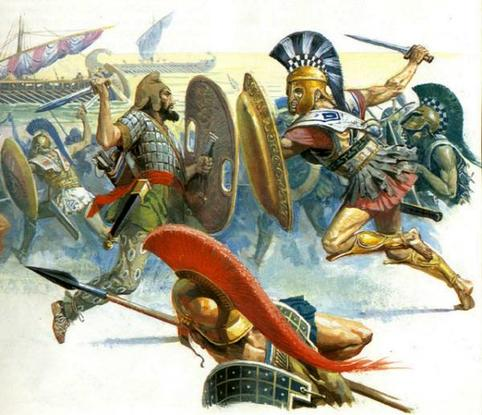
Instead of pursuing the fleeing enemy wings, the Greek flanks wheeled inward and trapped the victorious Persian center from behind. Panic ensued. The lightly armored Persian infantry, trapped in a chaotic crush, were no match for the heavy bronze shields and thrusting spears of the Greek phalanx. The Persians broke and fled toward their ships, with the Greeks cutting them down in the surf.
5. Force Comparison and Casualties
The contrasting styles of war played a massive role in the outcome. The Greek alliance relied on heavy bronze cuirasses, large hoplon shields, and long dory spears. In contrast, the Achaemenid Empire's troops relied on lighter fabric or wicker shields, short spears, and bows, which left them vulnerable in close-quarters combat.
According to the ancient historian Herodotus, the tactical gamble paid off with staggering asymmetry. The Greeks reportedly lost only 192 men, while the Persian casualties reached approximately 6,400. While modern historians suspect the Greek casualty count may be idealized, the battle was undeniably a routing.
6. The Shield Signal and the True Marathon Run
The battle wasn't quite over. The remaining Persian fleet immediately began sailing around Cape Sounion to attack an undefended Athens before the army could return.
According to legend, a messenger ran the 26 miles from the battlefield of Marathon straight to the city. He burst into the assembly, gasped "Joy to you, we've won!" and dropped dead from exhaustion—inspiring the modern Olympic Marathon race.
More importantly, the entire Athenian army then marched back to Athens at a grueling, frantic pace. When the Persian fleet arrived at the harbor of Phaleron, they looked up to see the very same bloody, exhausted hoplites lined up on the hills, ready to fight again. The Persians gave up and sailed back to Asia.
7. Historical Legacy
Marathon was a psychological watershed moment. It proved that the massive Persian Empire could be defeated on land. For Athens, it birthed a golden age of democratic pride; the Marathonoi (the men who fought at Marathon) were revered as ultimate heroes for generations.
Though Darius's son, Xerxes, would return ten years later with a much larger army, the victory at Marathon gave Greece the confidence and time it needed to prepare for the definitive clash of the Greco-Persian Wars.