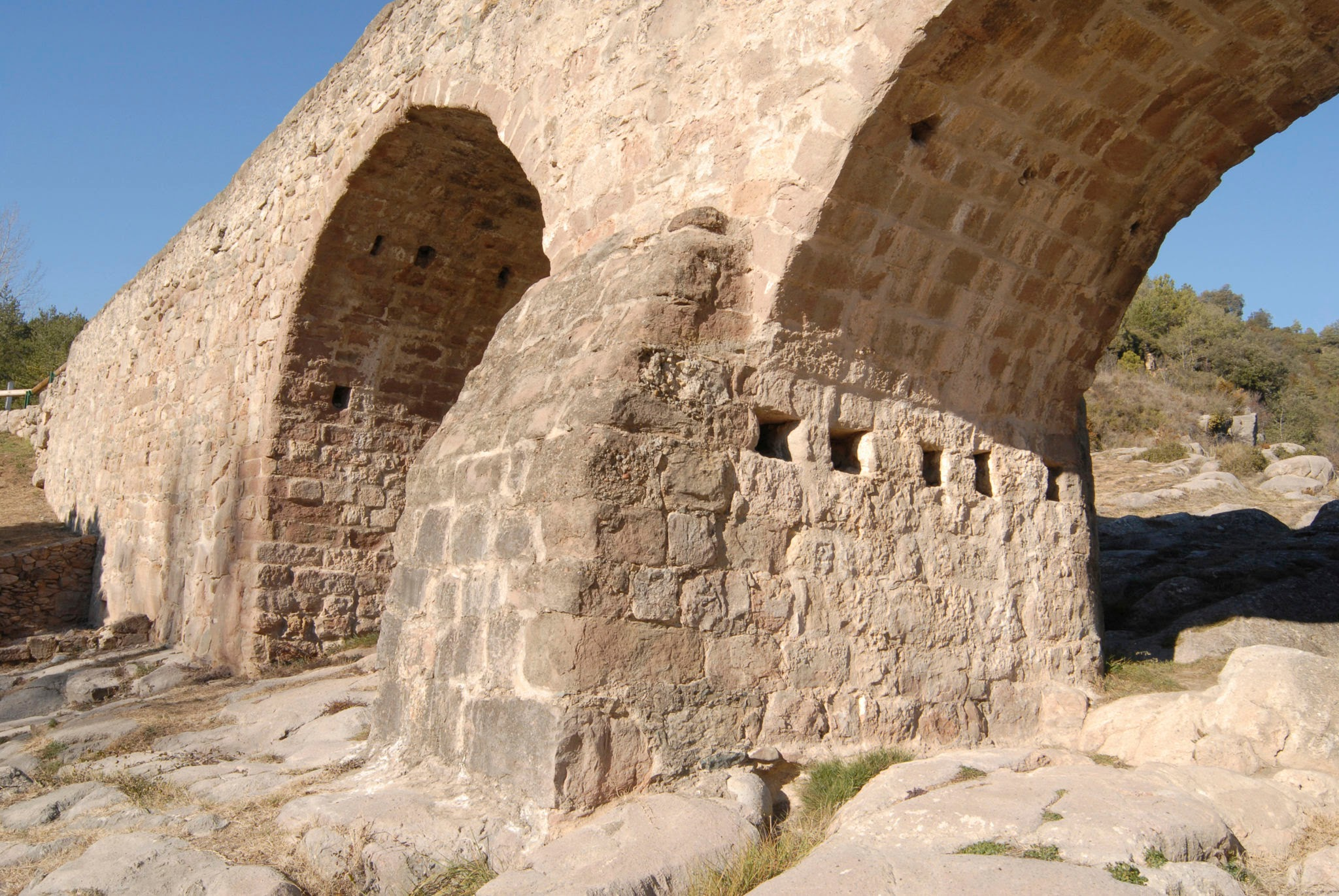
While the later Roman Empire is justly famous for its monolithic, straight-line highways, the ancient Greeks developed a highly sophisticated, localized infrastructure system specifically engineered to conquer the rugged, fragmented mountain chains of the Balkan peninsula.
The Corbeled Vault Bridge: The earliest Greek bridges, dating back to the Mycenaean Bronze Age, utilized corbeling technology rather than the true radial arch. Shipwrights and masons stacked massive, unmortared limestone blocks (Cyclopean masonry) horizontally, pushing each successive layer slightly inward until the two sides met at the top center.
The Sacred Grooved Roads: For land transportation, the Greeks carved highly specialized grooved roads (haxitotoi) directly into the solid limestone bedrock. These were not casual dirt paths, but a primitive, highly efficient rail system. Masons cut two parallel, flat-bottomed channels precisely 1.44 meters apart (a measurement that matches modern railway standard gauge almost exactly).
The Bedrock Rail System: Heavy wooden ox-carts and sacred wagons fitted with matching wooden wheels slid into these stone tracks. The grooves acted as a permanent steering guide, preventing wagons from sliding off steep mountain cliffs or getting stuck in winter mud. At busy intersections, the Greeks even cut primitive stone "switches" into the rock to divert traffic along different routes, allowing massive stone blocks from mountain quarries to be transported safely down to temple construction sites.