Ancient Greek jewelry was a deeply expressive medium where high-level micro-engineering met profound religious and mythological symbolism. Rather than serving as mere wealth displays, gold ornaments functioned as protective amulets, political statements, and physical narratives of divine power.
The Pantheon in Miniature: Goldsmiths possessed an astonishing capacity for micro-sculpture, fashioning complex mythological scenes onto tiny surfaces. Earrings, necklaces, and pendants frequently featured incredibly detailed figures of Eros (the god of love) riding dolphins, Nike (the winged goddess of victory) driving celestial chariots, and Ganymede being carried to Mount Olympus by the eagle of Zeus. Wearing these images invoked the direct protection and favor of the specific deity depicted.
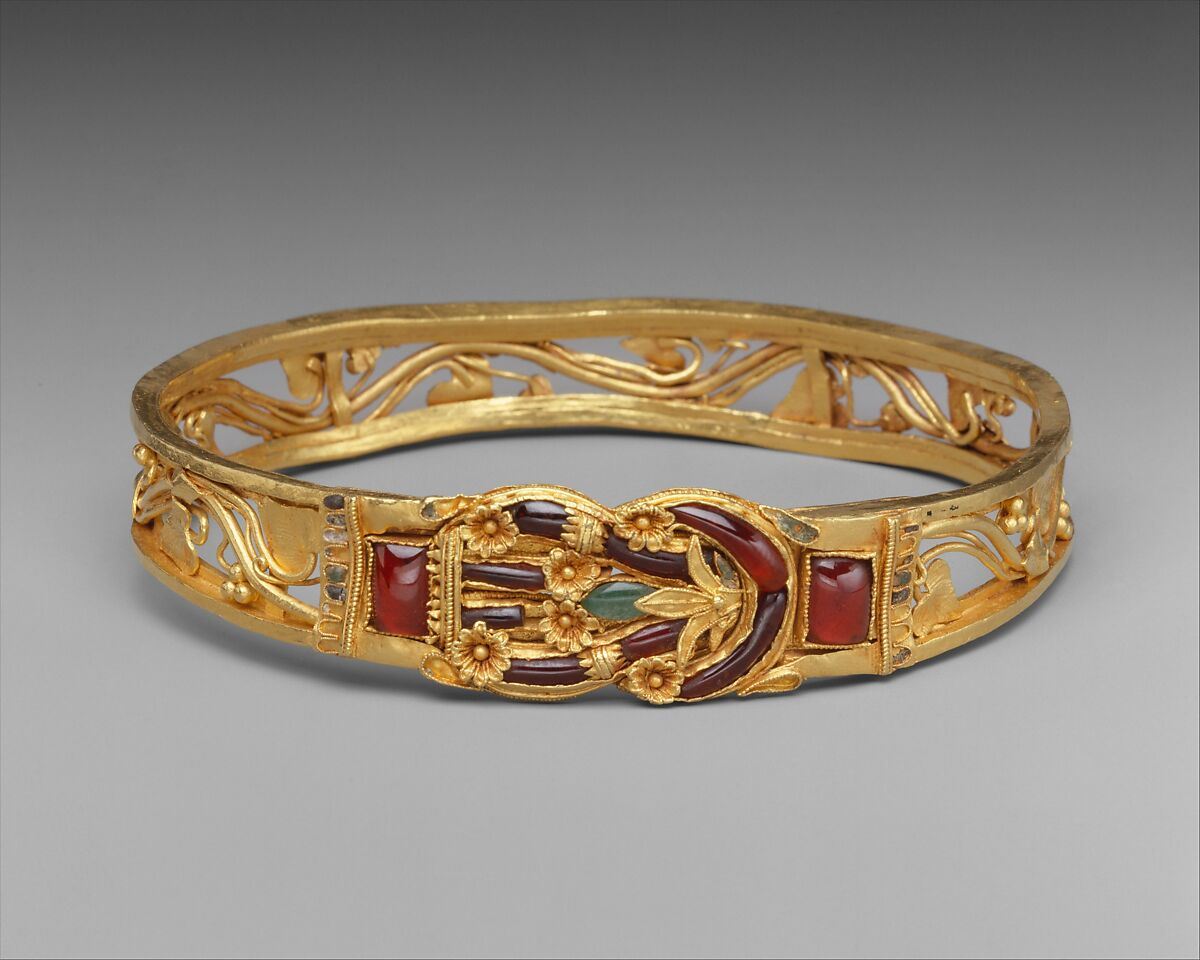
The Herakles Knot: One of the most popular and long-lasting motifs in Hellenistic jewelry design was the Herakles Knot (a specialized, reef-knot configuration made of interlocking gold bands). Symbolizing the unbreakable strength of the hero Herakles, who used a similar knot to tie the invulnerable skin of the Nemean Lion around his neck, this design was incorporated into bridal girdles, diadems, and bracelets. It was believed to function as a powerful apotropaic (evil-averting) amulet, protecting the wearer from disease, black magic, and physical violence.
Dionysian Naturalism: The wild, ecstatic cult of Dionysos (the god of wine and theater) heavily drove aesthetic trends. Necklaces and crowns were intricately woven from thin gold leaf to mimic the exact leaves and berries of ivy, oak, and grapevines. These pieces were often accented with small animal heads—such as rams, bulls, or lynxes—sculpted into the terminal ends of bracelets and torcs, connecting the wearer directly to the untamed, transformative forces of the natural world.