The survival and wealth of the Greek world depended entirely on their merchants (emporoi), daring maritime traders who braved the treacherous open waters of the Mediterranean to link isolated city-states with a massive, international trade network.
The Anatomy of a Merchant Ship: Unlike the narrow, lightweight triremes built for speed and naval warfare, merchant ships (holkades) were wide, deep-hulled wooden vessels designed exclusively for maximum cargo capacity. Powered almost entirely by a single, massive square sail and steered by two large oars at the stern, these vessels wallowed through the waves at a slow pace of 4–5 knots, completely packed with ceramic storage jars (amphorae).
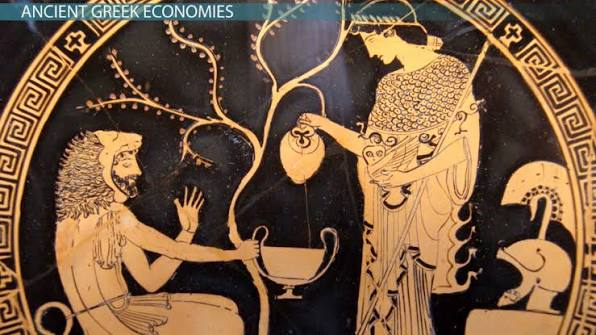
The Grain Obsession: The primary driver of Greek international trade was food security. Cities like Athens could not grow enough grain on their rocky home soil to feed their populations. Merchants sailed in large fleets to the Black Sea (modern Ukraine/Romania), Egypt, and Sicily to swap high-end Greek luxury goods—fine painted pottery, silver from the Laurion mines, marble, and premium olive oil—for massive bulk cargoes of wheat and barley.
Maritime Loans and Risk: Ancient trade was built on sophisticated financial speculation. Because shipwreck, piracy, and storms meant a high probability of total loss, wealthy urban investors backed merchants using a system called maritime loans (nautikon daneisma). Investors advanced cash at exceptionally high interest rates (often 20–30%). If the ship sank, the merchant was completely absolved of the debt; if the ship arrived safely at the port of Piraeus, the merchant paid back the principal along with the hefty interest, fueling a vibrant, capitalistic banking economy in port cities.