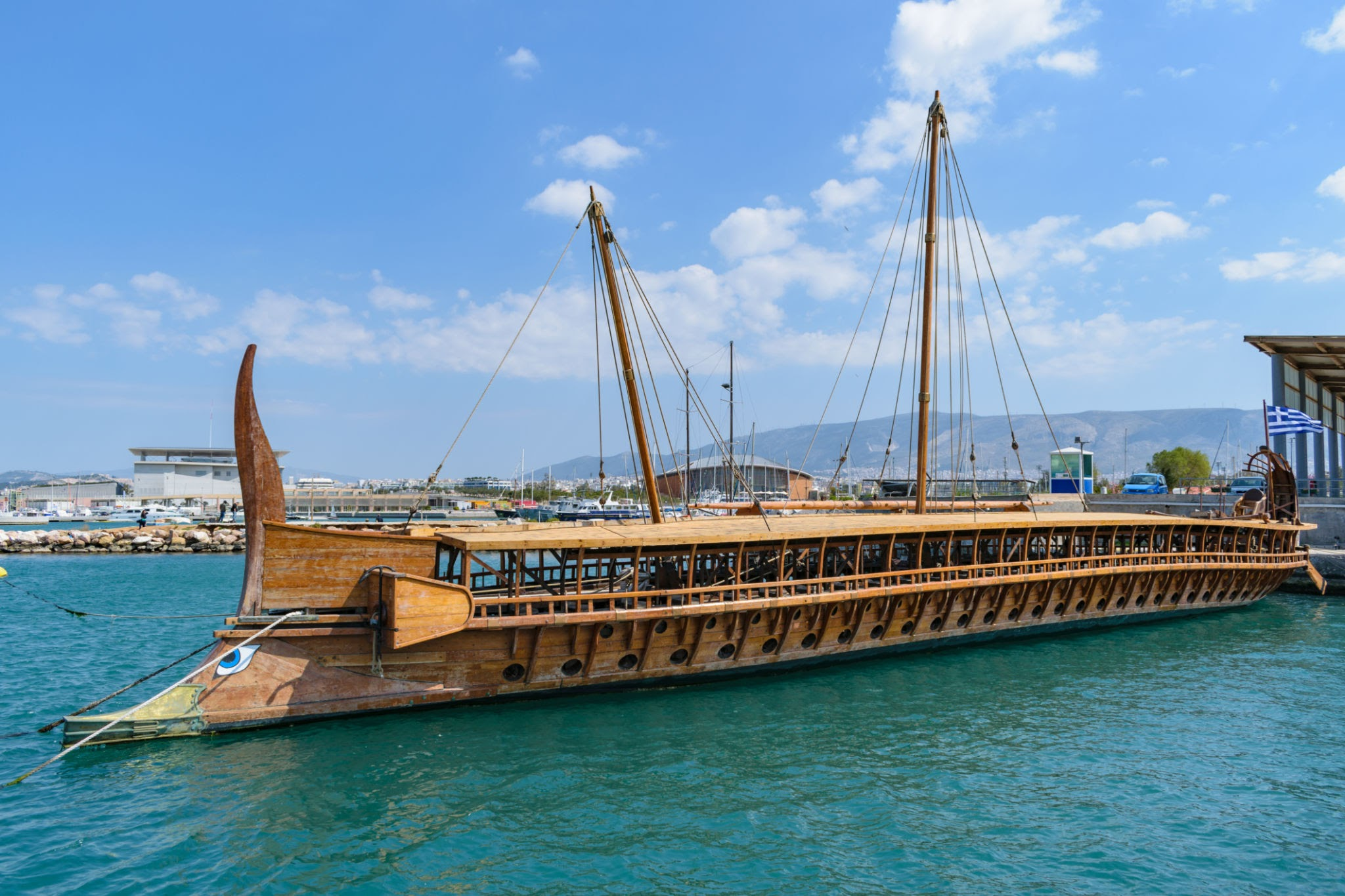
Shell-First Construction: Unlike modern wooden ships, which are built by fastening planks onto a pre-existing internal skeletal frame, ancient Greek shipwrights used a shell-first methodology. They laid down the heavy oak keel first, then built the outer hull planks upward, edge-to-edge.
The Mortise-and-Tenon Lock: To hold the hull planks together without metal spikes, artisans cut thousands of precise, rectangular slots called mortises into the edges of the wood. A tightly fitting wooden peg, or tenon, was inserted into the slots, pinning the adjacent planks together. The entire joint was then locked permanently in place by driving a wooden dowel through the assembly, creating a strong hull that could withstand severe ocean stresses.
The Ramming Weaponry: Ships were constructed primarily of lightweight silver fir or pine to maximize speed and agility. At the prow, shipwrights integrated a massive wooden timber clad in a multi-pronged bronze casting: the water-line ram (embolos). The entire purpose of the ship’s sophisticated, flexible construction was to act as a guided missile, utilizing the muscle power of 170 oarsmen to punch holes directly through the hulls of enemy vessels.