The modern understanding of love often collapses complex emotional states into a single, romantic ideal, but the ancient Greeks approached the concept with surgical, analytical precision. They recognized that affection, desire, and bonding manifested in completely different psychological and physiological ways. Rather than relying on a singular term, classical Greek culture divided love into distinct, codified categories, an intellectual framework that directly fueled the development of early lyric poetry and fundamentally altered the trajectory of Western romantic literature.
At the apex of physical and emotional intensity was eros, the primal, passionate love driven by desire and sexual attraction. To the Greeks, eros was not a gentle feeling but a dangerous, destabilizing force—a cosmic madness sent by the gods that could strip a person of their reason and dignity. This overwhelming sensation was contrasted with philia, the deep, reciprocal affection found in lifelong friendships, familial bonds, and tight-knit political alliances. Additionally, they defined agape, a broader, unconditional love for humanity or the divine, and storge, the instinctual, empathetic love shared between parents and children.
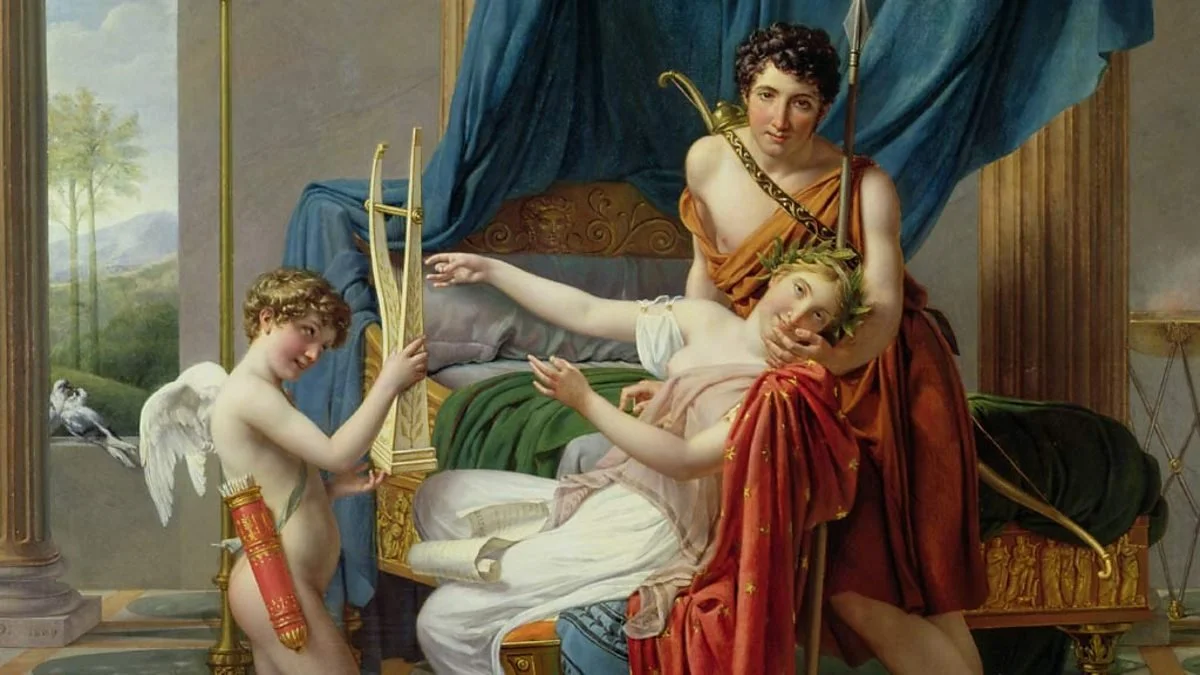
This rich vocabulary allowed Greek lyric poets to map the human interior landscape with unprecedented nuance. While epic poets like Homer focused on the masculine, civic duties of war, lyric poets shifted the lens to individual vulnerability. Writing on the island of Lesbos during the archaic period, the celebrated poet Sappho revolutionized literature by capturing the physical pathology of eros. In her surviving fragments, love is described not as a pleasant romance, but as a violent physical ailment that causes the tongue to break, a subtle fire to race under the skin, and the eyes to lose sight, inventing the literary tradition of love as a agonizing, intoxicating sickness.
Furthermore, these concepts were deeply explored in philosophical works like Plato's Symposium, where love is framed as a ladder. Plato argued that while eros begins with the physical attraction to a beautiful body, it must ultimately be channeled upward to love beautiful ideas, and eventually, the universal concept of beauty itself. This tension between primal physical longing and transcendent spiritual union became the foundational blueprint for romantic poetry, establishing the ancient Greek taxonomy of love as an enduring intellectual and emotional legacy that continues to shape how human passion is expressed in modern art.