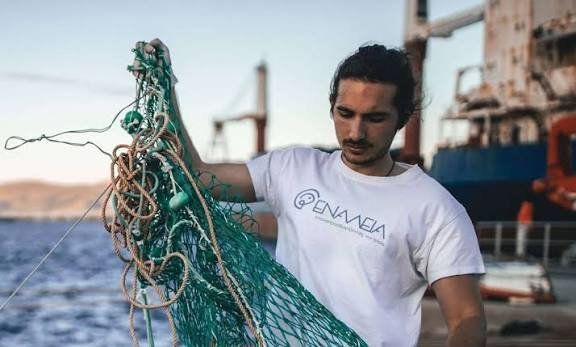
While the literary elite of ancient Greece frequently celebrated agriculture and grain production as the only honorable foundations of civic life, the maritime reality of the Aegean basin ensured that fishing and net technologies were vital drivers of the regional coastal economy. With thousands of kilometers of fractured coastline and islands, fishing provided a critical, immediate source of dietary protein and economic livelihood for the working-class populations who populated the port towns and maritime hubs across the Greek world.
The primary technological catalysts for this maritime industry were the specialized nets manufactured by coastal craftsmen. Net makers utilized fine, multi-ply linen twine or split hemp fibers, knotting the mesh by hand using specialized bone or bronze netting needles to ensure structural integrity under the strain of seawater and thrashing fish. The technical repertoire included the amphiblestron, a circular, weighted casting net thrown by hand in shallow waters, and the sagene, a massive seine net equipped with cork floats along the top line and heavy terracotta or lead sinkers along the bottom, which formed a vertical wall of netting designed to encircle entire schools of fish close to shore.
Beyond netting, Greek fishermen deployed complex longline systems made of twisted animal hair or linen, outfitted with hundreds of bronze or forged iron hooks baited with squid or small fry. For large pelagic species like bluefin tuna, which migrated systematically through the Aegean bottlenecks into the Black Sea every spring, the Greeks developed industrialized, community-scale capture operations. They constructed tall wooden spotting towers along coastal cliffs where specialized sentinels watched for shifts in water coloration indicating a tuna shoal. Once sighted, a synchronized flotilla of small boats deployed heavy, deep-water blockading nets to trap and harvest the massive fish.
Economically, the fishing industry supported a vast secondary market centered around food preservation. Because fresh fish spoiled rapidly in the intense Mediterranean climate, coastal towns established large-scale salting factories. Workers gutted the catch, packing the fish tightly between alternating layers of sea salt inside ceramic amphorae, or fermenting the innards to produce a pungent, highly valued fish sauce known as garos. This preserved fish was an inexpensive, shelf-stable source of protein that could be transported deep inland to landlocked communities, turning the raw bounty of the Aegean Sea into a stable, highly profitable commercial currency.