Introduction
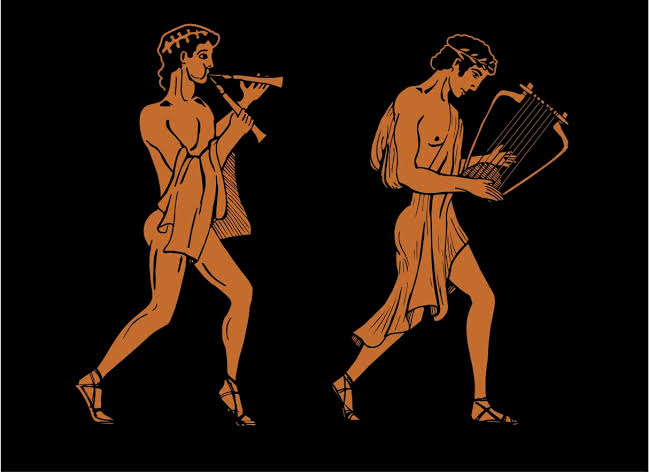
The oral traditions of the archaic Aegean, crystallized in the monumental epics of Homer—the Iliad and the Odyssey—formed the structural bedrock of ancient Greek education, morality, and civic identity. However, the impact of these sweeping narratives stretched far beyond the borders of the classical Greek world. As empires rose and fell, the themes, characters, and metrical structures of Greek epic poetry crossed geographic and linguistic boundaries. They directly shaped the literary masterpieces, political ideologies, and cultural identities of later civilizations, establishing a foundational narrative tradition that continues to influence Western literature today.
The Transmission Vectors: From Rome to the Modern Age
The earliest and most profound adoption of Greek epic poetry occurred in the rising Roman Republic. Recognizing the immense cultural authority of Greek literature, Roman intellectuals systematically adapted Homeric frameworks to forge their own national identity. This process reached its artistic peak in the 1st century BCE with Virgil’s Aeneid.
Virgil deliberately mirrored Homer's work, structuring the first six books of his epic as a wandering maritime voyage modeled on the Odyssey, while devoting the final six books to a brutal war modeled on the Iliad. By transforming the Trojan hero Aeneas into the mythical ancestor of Rome, Virgil utilized Greek poetic structures to legitimize the imperial rule of Augustus Caesar, proving that epic poetry could function as a potent political tool.
During the European Renaissance and the subsequent Enlightenment, the rediscovery of classical Greek texts injected Homer's narrative archetypes directly into the bloodstream of Western European literature. Thinkers and poets adopted the dactylic hexameter structure and the core narrative framework of the nostos (the epic journey home).
John Milton’s Paradise Lost adopted the traditional Homeric invocation of the Muse and the epic catalog of warriors to craft a Christian cosmic drama. Centuries later, James Joyce’s modernist masterpiece Ulysses mapped the entire structure of the Odyssey onto a single day in 20th-century Dublin, demonstrating that the psychological conflicts and heroic archetypes engineered by the ancient Greeks remained universally applicable to the human condition.
Conclusion
The historical trajectory of Greek epic poetry proves that profound storytelling possesses an extraordinary capacity for cultural survival. The Iliad and the Odyssey did not remain static relics of an ancient Mediterranean past; instead, they functioned as flexible blueprints that later societies continuously adapted to solve their own artistic and political challenges. By codifying the fundamental concepts of heroism, honor, tragedy, and the human journey, the ancient Greek poets provided a lasting vocabulary that continues to shape how later civilizations interpret their world.