Introduction
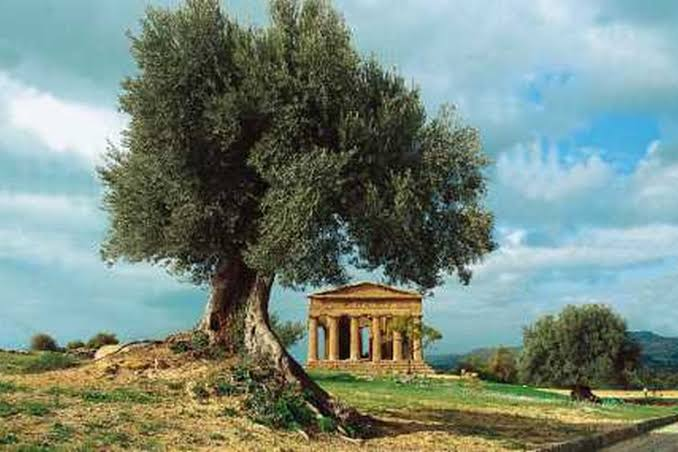
The olive tree (Olea europaea) was the undisputed ecological, economic, and ideological foundation of ancient Greek civilization. Thriving in the rocky, nutrient-poor soils and volatile weather conditions of the Aegean basin where classic cereal crops frequently failed, the deeply rooted olive tree provided a remarkably stable, highly versatile resource.
To the ancient Greeks, the tree was fundamentally inseparable from their cultural identity; it was simultaneously recognized as a divine gift from the gods and the primary engine of their domestic wealth and maritime trade. By masterfully exploiting this single crop, the Greeks transformed a rugged landscape into a lucrative commercial empire.
The Agricultural Economics and Mythic Weight of Liquid Gold
In mythology, the olive tree represented the ultimate triumph of civic order and intellectual intellect over raw, unbridled force. According to the foundational myth of Athens, the goddess Athena competed against Poseidon for the patronage of the city. While the god of the sea struck the earth to produce a saltwater spring, Athena planted the first domesticated olive tree atop the rocky Acropolis. The divine judges awarded her the victory, decreeing that the olive tree was a far more valuable gift to humanity because it brought nourishment, light, and economic prosperity, forever binding the plant to the concepts of wisdom, peace, and civilization.In an era before soap, athletes slathered their bodies with olive oil and scraped away the dirt and sweat with a metal tool called a strigil, using the oil as a skin protectant and cleanser. It was also the primary fuel burned in millions of terracotta lamps that illuminated the ancient world.
This immense domestic demand turned olive oil into an exceptionally lucrative export. Greek merchant ships packed their hulls with thousands of clay amphorae filled with oil, trading them across the Mediterranean for grain, lumber, and metals. The economic value was so high that at the prestigious Panathenaic Games, victorious athletes were not awarded money, but rather dozens of beautifully painted prize amphorae filled with premium oil harvested from the city's sacred groves—a reward worth a substantial fortune that could be easily liquidated in any port.
Conclusion
The olive tree was the vital catalyst that allowed ancient Greek society to flourish within a fragile Mediterranean ecosystem. By providing a reliable source of high-density calories, industrial fuel, and a highly valuable commercial trade good, it offered the economic security necessary to build complex urban societies. Simultaneously, by anchoring this tree to the goddess Athena, the Greeks elevated a simple agricultural crop into a sacred symbol of their highest civic ideals, proving that the roots of classical civilization were deeply intertwined with the landscape that sustained it.