Introduction
The trajectory of ancient Greek civilization was directly forged in the intense heat of the metallurgical furnace. From the early Bronze Age through the technical advancements of the Classical and Hellenistic eras, the mastery of metalworking was the primary driver of military supremacy, industrial expansion, and artistic expression across the Aegean world.
The ability to extract, alloy, and shape metals transformed every facet of Greek life. It completely revolutionized the tools of agriculture, provided the heavy defensive armor that redefined infantry warfare, and created the universal monetary systems that fueled the birth of market economies.
Metallurgical Technology, Mining Infrastructure, and Civic Coins
The industrial backbone of Greek metallurgy was anchored to intense, state-organized extraction sites, the most significant being the state-managed silver mines of Laurium near the southern tip of Attica. Here, thousands of enslaved laborers worked under brutal conditions, digging out deep underground networks of vertical shafts and galleries to extract silver-bearing galena ore.
Once brought to the surface, the ore was crushed and washed on large, plastered stone tables designed to separate the heavy, metal-rich particles from lighter waste rock. The concentrate was then loaded into specialized furnaces using the process of cupellation—melting the ore under a steady stream of air to oxidize base metals like lead, leaving behind pools of exceptionally pure silver bullion.
This silver was central to Athenian geopolitical supremacy, providing the raw material to mint the iconic "owl" tetradrachm coins. These coins featured a standardized weight and high purity that turned them into the trusted reserve currency of the entire Mediterranean basin, facilitating complex long-distance trade.
Simultaneously, in workshops across the Greek world, metalsmiths—who revered the limping craftsman god Hephaestus as their divine patron—pushed technological boundaries:
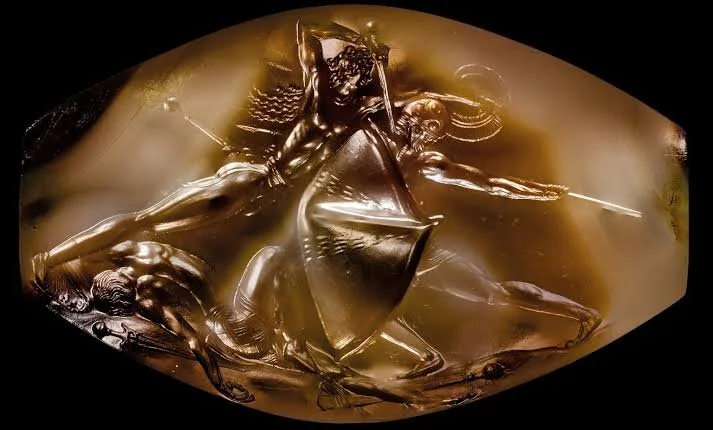
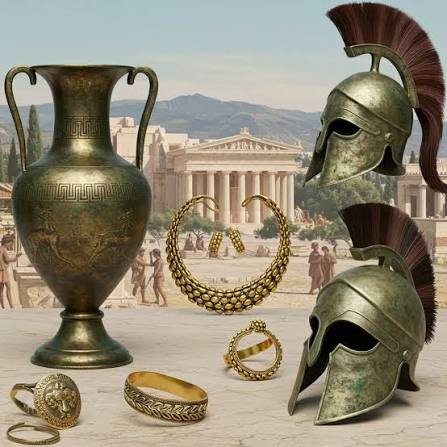
Military Engineering: Blacksmiths utilized advanced casting techniques to create the iconic bronze Corinthian helmets and heavy breastplates (thorax). They mastered the carbonization of iron to forge exceptionally sharp, resilient hoplite swords (xiphos) capable of piercing enemy defenses.
Agricultural Advancements: The production of tough iron plowshares, scythes, and axes allowed farmers to break open heavy soils and clear dense woodlands, dramatically expanding arable land and agricultural output.
Artistic Innovations: Sculptors abandoned solid-casting in favor of the sophisticated lost-wax method (cire perdue) for large-scale hollow bronze statues. This allowed them to capture dynamic, lifelike poses and intricate anatomical details that stone sculpture could rarely match.
Conclusion
The systematic mastery of metalworking was the ultimate technological engine that drove the rise and sustainability of the ancient Greek world. By combining advanced mining infrastructure with precision engineering and artistic craftsmanship, the Greeks successfully forged the material foundations of their society. From the pure silver coins that stabilized their markets to the bronze armor that defended their democracies, the work of the classical furnace proved that human ingenuity could transform raw elements of the earth into the primary structures of a lasting civilization.