Introduction
In the semi-arid Mediterranean environment of the ancient Aegean, seasonal food scarcity was a constant threat to urban populations and military expeditions. Lacking mechanical refrigeration, the ancient Greeks engineered a highly sophisticated array of chemical and physical preservation techniques to arrest organic decay. These methods were rooted in empirical observations of osmotic pressure, pH manipulation, and oxygen exclusion.
By utilizing naturally occurring preservatives—primarily sodium chloride (sea salt), acetic acid (vinegar), honey, and olive oil—Greek households, military logisticians, and maritime traders successfully transformed highly perishable seasonal gluts of fish, meat, and produce into shelf-stable commodities that could endure long-term storage and trans-Mediterranean voyages.
The Chemistry and Logistics of Preservation Techniques
The foundational pillar of the Greek food preservation industry was curing through salting (taricheia). Fish, primarily sourced from lucrative migratory tunny and mackerel runs in the Black Sea and the Hellespont, was processed at coastal stations. The flesh was either dry-salted with coarse sea salt or submerged in concentrated brine solutions, low-oxygen environments that inhibited the growth of putrefying bacteria while facilitating the enzymatic breakdown necessary to produce highly prized, umami-rich fermented fish sauces analogous to Roman garum.
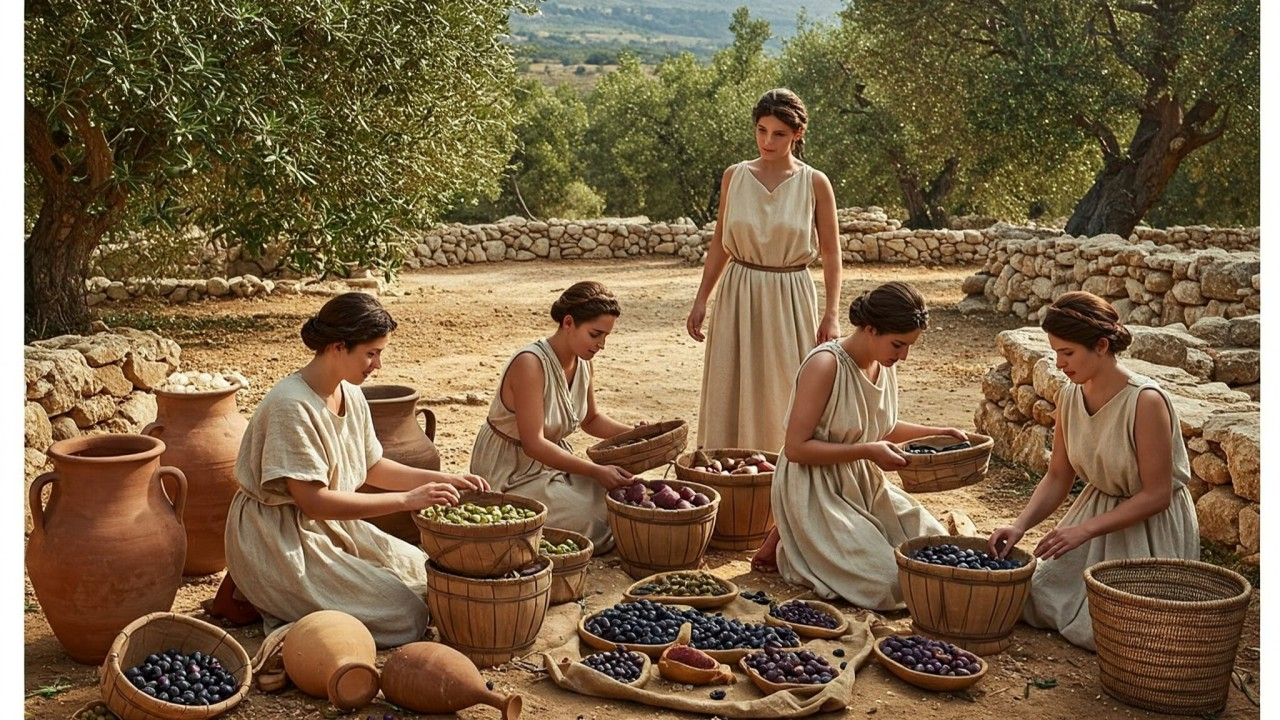
Vegetables like wild brassicas, bulbs, and capers were first blanched or dried, then packed into earthenware vessels filled with mixtures of vinegar, boiled wine, and salt, lowering the pH to create an environment hostile to foodborne pathogens.
To preserve delicate fruits like figs, pears, and quinces, the Greeks submerged them in wild honey, leveraging its high sugar concentration and low moisture content to draw water out of microbial cells via osmosis. Finally, a thick layer of olive oil was poured over the top of the packed jars, creating an airtight seal that prevented oxidation and aerobic fungal growth.
Conclusion
The food preservation technologies of the ancient Greeks were far more than simple domestic chores; they were a vital socio-economic catalyst that directly underpinned the expansion of Aegean civilization. The ability to reliably store calories allowed city-states to weather crop failures, sustain large-scale standing armies, and fuel a massive commercial shipping network. By mastering the chemical interplay of salt, acid, and air exclusion, Greek society overcame the strict limitations of seasonal biology, creating a stable foundation for urban growth and cultural exchange across the ancient Mediterranean.