Introduction
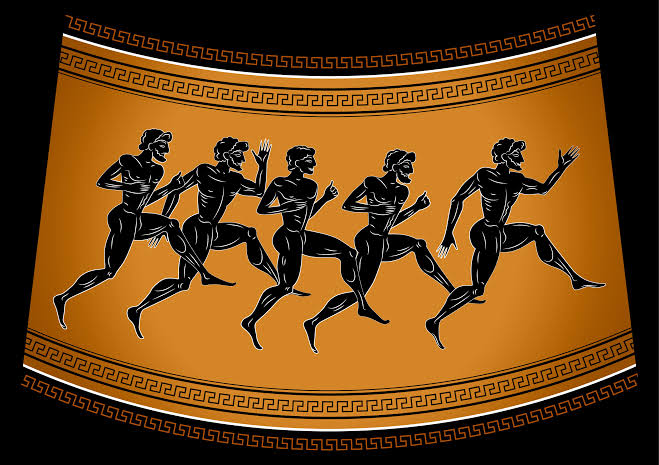
Athletic competition (agon) was a defining feature of ancient Greek identity, serving as a vital training ground for warfare, a grand stage for aristocratic display, and a highly sacred expression of religious devotion. Far from being informal, casual gatherings, Greek sports competitions were highly institutional, professionalized events governed by strict legal codes, complex mechanical engineering, and absolute pan-Aegean treaties.
Whether competing in local civic festivals or traveling to the prestigious Panhellenic games, ancient Greek athletes operated within a rigid, highly structured athletic infrastructure designed to maintain order, enforce fairness, and elevate physical excellence to the level of divine honor.
The Institutional Infrastructure and Mechanical Engineering of the Games
The organizational pinnacle of Greek athletics was the Crown Games circuit, which operated under the protective framework of the ekecheiria (the Sacred Truce). Months before a festival commenced at Olympia, Delphi, Nemea, or Isthmia, official heralds traveled to every corner of the Mediterranean world to declare a formal cessation of military hostilities, guaranteeing safe passage for athletes and spectators across warring territories.
Upon arrival at the sanctuary, athletes were subjected to an intense, mandatory 30-day training camp monitored by the Hellanodikai—the official judges. These individuals held absolute legal authority, possessing the right to fine, publicly whip, or disqualify any competitor who engaged in bribery, false starts, or foul play.
The starting line of the stadium featured the balbis, a continuous row of stone slabs carved with dual parallel grooves designed to standardize the foot placement of runners.
To prevent false starts, the Greeks engineered the hysplex—a complex, mechanical starting gate. This device utilized a system of vertical wooden posts held under high tension by twisted ropes or animal sinews. A central starter pulled a cord, triggering a mechanism that snapped the barrier ropes downward simultaneously. This mechanical innovation ensured that no athlete could gain an unfair head start, anchoring athletic victory strictly to physical merit.
Conclusion
The elaborate organization undergirding ancient Greek sports proves that these events were not merely forms of casual entertainment, but highly sophisticated civic institutions. Through the combination of sacred legal treaties, strict institutional oversight, and specialized mechanical engineering, the Greeks created a stable, standardized arena where deeply divided city-states could peacefully interact. The enduring structural legacy of these ancient competitions laid the early foundational blueprints for international sports organization, showing that the pursuit of athletic excellence has always demanded a high degree of structural discipline.