Introduction
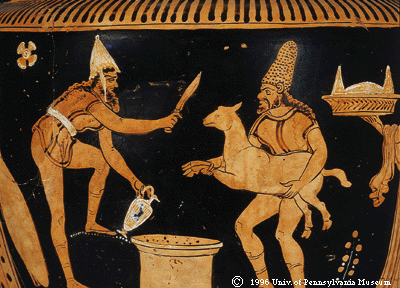
Animal sacrifice formed the central act of worship in ancient Greek religion and served as the primary means through which humans established relationships with the gods. Known as thysia, these public ceremonies honored deities, sought divine protection, celebrated festivals, and reinforced civic unity. Rather than being viewed merely as religious offerings, sacrifices functioned as communal events that combined worship, political participation, and shared meals. Nearly every major festival, military campaign, agricultural celebration, and civic ceremony involved ritual sacrifice performed at outdoor altars dedicated to the Olympian gods.
Preparation and Ritual Process
The chosen animal—typically a cow, sheep, goat, or pig—was decorated with ribbons and garlands before being led in a formal procession to the altar. Priests sprinkled barley grains and sacred water over both the altar and the animal. When the animal lowered or shook its head after being sprinkled with water, participants interpreted the movement as symbolic consent to the sacrifice.
The priest cut a small lock of hair from the animal and placed it upon the sacred fire before performing the ritual slaughter. Women participating in the ceremony raised the traditional ololyge, a ritual cry marking the solemn moment of sacrifice.
Distribution of the Offering
After the sacrifice, the inedible thigh bones wrapped in fat were burned on the altar as the gods' sacred portion. According to Greek belief, the fragrant smoke carried the offering upward to Mount Olympus. The remaining meat was carefully divided among priests, civic officials, and ordinary citizens before being roasted and shared during a communal feast.
Because meat was relatively expensive, these religious festivals provided many people with one of their few opportunities to consume roasted meat, making sacrifice both a sacred obligation and an important social occasion.
Religious and Social Significance
Animal sacrifice strengthened the reciprocal relationship between mortals and the gods through the exchange of gifts and divine favor. These ceremonies also reinforced political authority, promoted community cooperation, and celebrated shared religious identity across Greek city-states.
Conclusion
Animal sacrifice stood at the heart of Greek religious life, combining worship, communal celebration, and civic unity. Through carefully structured rituals and shared feasts, Greek communities expressed gratitude, sought divine protection, and strengthened social bonds that united both citizens and their gods.