Introduction
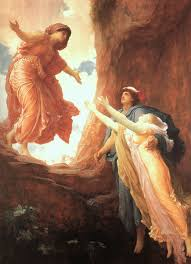
The story of Persephone's return from the Underworld is one of the most important myths in ancient Greek religion. It explains the changing seasons, the annual cycle of plant growth, and the close relationship between life and death. Persephone, the daughter of Demeter, the goddess of agriculture and harvest, was abducted by Hades, ruler of the Underworld, who wished to make her his queen. Demeter's overwhelming grief caused crops to fail and famine to spread across the earth, threatening both humanity and the gods who depended upon human sacrifices. The myth eventually led to a compromise that established the yearly cycle of the seasons and became the central story of the sacred Eleusinian Mysteries.
The Abduction of Persephone
One day, while gathering flowers in a meadow with the Oceanid nymphs, Persephone noticed a beautiful narcissus blooming among the grass. As she reached to pick it, the earth suddenly split open, and Hades emerged from the Underworld in his black chariot. He seized Persephone and carried her beneath the earth before anyone could rescue her.
Demeter searched tirelessly across the world for nine days and nights, carrying blazing torches and refusing food, drink, or rest. Eventually, the sun god Helios, who had witnessed the abduction, revealed that Zeus had secretly permitted Hades to marry Persephone.
Demeter's Grief and the Great Famine
Heartbroken by the loss of her daughter, Demeter abandoned Mount Olympus and wandered among mortals disguised as an elderly woman. In her sorrow, she neglected her divine responsibilities, causing crops to wither, forests to dry, and fields to become barren. A devastating famine spread across Greece, threatening the survival of humanity.
As starvation increased, fewer sacrifices reached the Olympian gods, forcing Zeus to intervene before all human civilization collapsed.
The Pomegranate and the Divine Compromise
Zeus ordered Hermes to descend into the Underworld and escort Persephone back to her mother. Hades agreed but secretly offered Persephone several seeds from a pomegranate before she departed. According to ancient divine law, anyone who consumed food in the Underworld became permanently connected to that realm.
Because Persephone had eaten the pomegranate seeds, she could not remain permanently on Earth. Zeus therefore established a compromise: Persephone would spend one-third of each year with Hades as Queen of the Underworld and the remaining two-thirds with Demeter on Earth.
The Origin of the Seasons
Whenever Persephone returned to her mother, Demeter rejoiced, causing flowers to bloom, crops to flourish, and the earth to become fertile once again. Spring and summer symbolized Persephone's return and the renewal of life.
When Persephone descended once more into the Underworld, Demeter mourned her absence. Vegetation died, harvests ended, and winter covered the land until her daughter returned again.
Religious Importance and Legacy
The myth became the foundation of the Eleusinian Mysteries, one of the most sacred religious traditions of ancient Greece. Initiates believed Persephone's yearly return symbolized hope, rebirth, and the promise of life after death.
Conclusion
The story of Persephone's return from the Underworld beautifully explains the seasonal cycle while expressing themes of love, loss, renewal, and immortality. It remains one of Greek mythology's most enduring stories, illustrating the balance between life and death that governs both nature and human existence.