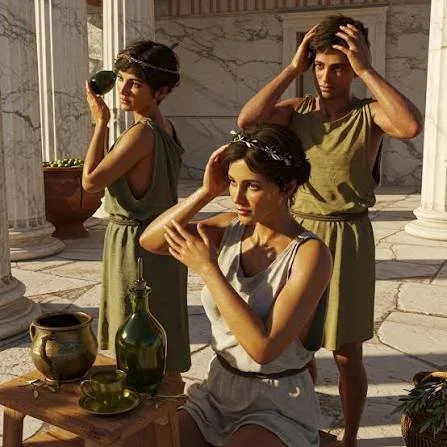
Ancient Greeks Used Olive Oil on Their Skin Every Day—But It Was More Than a Beauty Product
Olive oil was one of the most important substances in ancient Greek civilization.
It was food.
Fuel.
A trade commodity.
A religious offering.
And, importantly, a substance used in bodily care.
Ancient Greek athletes, wealthy citizens, laborers, and households could use oil in different ways. Its role in grooming was closely connected with bathing, exercise, medicine, perfume production, and social identity.
Olive Oil Before Soap
Modern people often imagine bathing as a process involving soap and large amounts of running water.
Ancient Greek hygiene worked differently.
Oil could be applied to the skin and later removed with accumulated dirt and sweat.
Athletes were particularly associated with this practice.
After exercise, an athlete could use a curved scraping instrument called a strigil.
The tool removed a mixture of:
Oil.
Sweat.
Dust.
The practice was common in Greek athletic culture.
Why Apply Oil Before Exercise?
Oil could help protect the skin from environmental exposure.
It also became part of athletic ritual.
An athlete preparing for competition might apply oil before entering the training area.
This was therefore not simply about cleanliness.
It was connected with identity.
The athletic body was carefully maintained.
The Strigil
The strigil became one of the recognizable objects associated with Greek bathing and athletics.
Its curved blade allowed a person to scrape material from the body.
In artistic representations, the tool appears alongside athletes.
The process could remove sweat and dirt without relying on soap in the modern sense.
Scented Oils
Olive oil could also function as a base for perfumes.
Fragrant substances might be infused into oil.
These could include plant materials and aromatic ingredients obtained through Mediterranean and long-distance trade.
Perfumed oils were associated with grooming and luxury.
They could be stored in specialized containers.
Oil and Social Status
Not everyone had equal access to expensive scented oils.
Luxury grooming products could demonstrate wealth.
The type of container used could also communicate status.
Small perfume vessels became important objects in Greek material culture.
Olive Oil and Medicine
Ancient Greek medical writers discussed oils and other substances in treatments.
However, ancient medical theories should not automatically be confused with modern clinical science.
Greek physicians operated according to different understandings of the body.
Nevertheless, oil could be used in massages and external applications.
Its role in bodily care was therefore practical as well as cosmetic.
The Olive Tree and Greek Civilization
The importance of olive oil began with the tree itself.
Olive cultivation shaped Mediterranean landscapes.
The trees could produce valuable crops for generations.
Oil was traded.
Stored.
Taxed.
Offered in religious contexts.
The economic importance of olives made them deeply connected with Greek life.
Athena and the Olive
According to Athenian mythology, Athena provided the olive tree to the city.
The tree became associated with her protection and wisdom.
This made olive cultivation both economically and symbolically important.
The Athlete's Body
Greek athletic culture celebrated physical development.
Gymnasia and training grounds became social institutions.
Oil and the strigil were part of this environment.
The body was trained.
Displayed.
Cleaned.
Maintained.
The use of oil therefore intersected with Greek ideals concerning beauty and physical excellence.
Did Ancient Greeks Use Olive Oil Like Modern Moisturizer?
There are similarities, but the comparison should not be oversimplified.
Ancient practices occurred within a completely different system of hygiene and medicine.
Olive oil was not simply purchased as a cosmetic moisturizer.
Its use could involve athletic preparation, massage, bathing, perfume, religious practice, and medicine.
Nevertheless, the basic observation remains remarkable:
Thousands of years before modern skincare industries existed, Mediterranean societies had already recognized the importance of oils in bodily care.