How Greek Craftsmen Carved Tiny Images Into Metal With Extraordinary Precision
Ancient Greek metalworkers were not limited to casting statues.
They also engraved, incised, embossed, hammered, and decorated metal objects with remarkable precision.
Metal engraving appeared in objects ranging from weapons and armor to jewelry, vessels, mirrors, and ceremonial objects.
The work required specialized tools and extraordinary control.
A single slip could permanently damage the surface.
Engraving Versus Embossing
Two techniques should be distinguished.
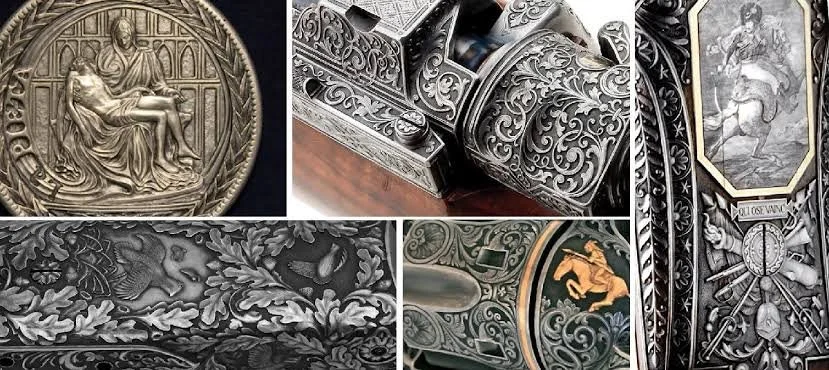
Engraving involves cutting lines into the metal surface.
Repoussé involves hammering metal from the reverse side to create raised forms.
Chasing refines and defines forms from the front.
Ancient craftsmen could combine several techniques.
This allowed them to create highly complex decorations.
The Tools
Metalworkers could use hardened metal tools to:
Cut.
Punch.
Hammer.
Polish.
The exact tool shapes varied according to the task.
Fine lines required small pointed instruments.
Broader effects required different tools.
Working With Bronze
Bronze was especially important.
Its relative workability made it suitable for:
Vessels.
Armor.
Decorative objects.
Sculptures.
Artists could engrave details into cooled metal.
Gold and Silver
Precious metals offered additional possibilities.
Gold could be hammered extremely thin.
Silver could receive detailed surface decoration.
Because these materials were valuable, craftsmanship was closely connected with wealth and status.
Engraving Mythology
Artists could depict:
Gods.
Heroes.
Animals.
Battles.
Processions.
Mythological scenes.
The object became a narrative surface.
A vessel could tell a story.
A shield could display identity.
A piece of jewelry could communicate status.
Precision and Patience
Unlike modern industrial engraving, ancient craftsmen often worked entirely by hand.
This required:
Stable lighting.
Sharp tools.
Skilled hand control.
Experience with metal behavior.
The craftsman had to know how much force to apply.
Too little pressure created a weak mark.
Too much could gouge the surface.
Metal Decoration and Social Status
Highly decorated metal objects were expensive.
They could belong to:
Elite households.
Temples.
Warriors.
Religious institutions.
Their decoration demonstrated access to skilled craftsmanship.
Why Greek Engraving Matters
Metal engraving demonstrates that Greek art was not limited to monumental marble sculpture.
Ancient Greek artistic culture extended into tiny objects.
A craftsman could spend enormous effort creating details that might be only a few millimeters wide.
The same civilization that built temples also mastered miniature craftsmanship.
The scale changed.
The attention to detail did not.