Icarus Wasn't Simply a Story About Flying Too High—The Ancient Myth Is a Warning About Human Ambition
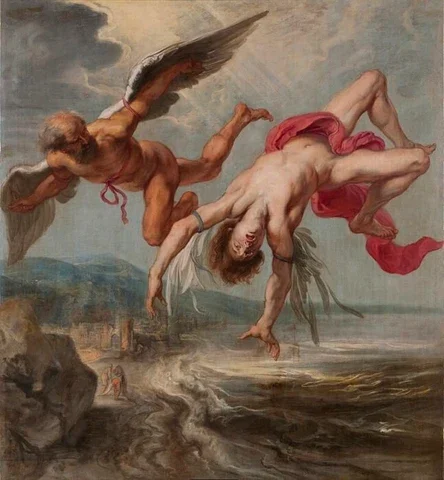
Few Greek myths are as visually powerful as the story of Icarus.
A young man.
A pair of wings.
A forbidden flight.
The Sun.
Melted wax.
A fall into the sea.
The image has become one of the world's most recognizable metaphors for ambition.
But the ancient story is more complicated than the modern phrase “don't fly too close to the Sun.”
Daedalus and Icarus
Icarus was the son of Daedalus, a legendary craftsman and inventor.
Daedalus was associated with extraordinary ingenuity.
His intelligence was both his greatest strength and the source of his troubles.
The Labyrinth
Daedalus was traditionally credited with constructing the labyrinth for King Minos of Crete.
The labyrinth was designed to contain the Minotaur.
After becoming trapped or restricted in Crete, Daedalus sought a way to escape.
The Wings
According to the famous version of the story, Daedalus constructed wings using feathers held together with wax.
He warned Icarus not to fly too high or too low.
Too low and the sea could weigh down the wings.
Too high and the Sun's heat could soften the wax.
The Fatal Flight
Icarus became overwhelmed by the experience of flying.
He rose higher.
The wax weakened.
The feathers separated.
Icarus fell into the sea.
The myth ends in tragedy.
The Moral
The traditional interpretation often emphasizes moderation.
Greek thought frequently warned against hubris—excessive pride or overconfidence.
Icarus becomes an example of someone who exceeds human limits.
But the story can be interpreted in several ways.
It may also concern:
Youth.
Disobedience.
Desire.
Freedom.
Technological power.
The dangers of ignoring experienced advice.
Daedalus Is Important Too
It is easy to focus entirely on Icarus.
But Daedalus is arguably equally important.
He represents human ingenuity.
He can solve seemingly impossible problems.
Yet his inventions do not automatically produce happiness.
Technology gives humans power.
But power requires judgment.
The Myth and Technology
The story has acquired new meaning in modern times.
Every generation develops technologies that seem to give humans extraordinary abilities.
Flight.
Nuclear energy.
Artificial intelligence.
Genetic engineering.
Space exploration.
The Icarus myth continues to ask the same question:
What happens when our ability to do something grows faster than our wisdom about how to use it?
Was Icarus a Historical Person?
No.
Icarus belongs to Greek mythology.
There is no historical evidence that a real person constructed wax wings and flew from Crete.
The value of the story lies elsewhere.
Myths do not need to be historically factual to reveal cultural attitudes.
The Sea of Icarus
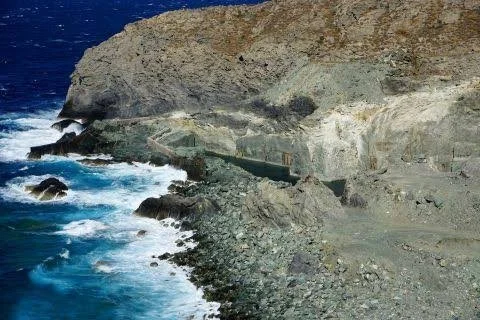
Ancient geographical traditions associated Icarus with regions of the Aegean.
His name became connected with the Icarian Sea and Icaria in later geographical tradition.
The landscape itself became part of the myth.
Why Icarus Still Matters
Icarus has survived because his story is universal.
Human beings want to rise.
We want to explore.
We want to escape limitations.
We want to become more powerful.
Those desires can produce extraordinary achievements.
But they can also produce disaster when confidence replaces judgment.
The tragedy of Icarus is therefore not simply:
“Don't dream too big.”
It is closer to:
Dream boldly—but understand the limits of the technology, the environment, and yourself.