Every Ancient Greek Coin Had a Mark of Authority—and It Protected an Entire Economic System
Ancient Greek coins were not simply pieces of metal.
They were official products.
A city or ruler needed to guarantee that the coin represented a specific weight and value.
One of the most important technologies for doing this was the coin die.
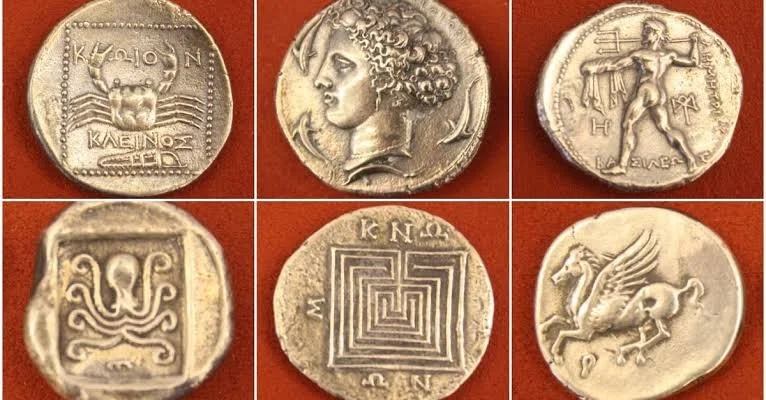
By striking metal between engraved dies, authorities could place recognizable designs onto coins.
The resulting image acted as a mark of authenticity.
What Was a Coin Stamp?
The term “stamp” can be misleading if it suggests a modern rubber stamp.
Ancient coins were struck using engraved metal dies.
A blank piece of metal, often called a flan, was positioned between dies.
A hammer strike transferred the design.
The process required force and precision.
The Obverse and Reverse
Coins commonly had two decorated sides.
One side was associated with the obverse.
The other with the reverse.
Different images could communicate different information.
One side might display a deity.
The other might display an animal or civic symbol.
Why the Design Mattered
The design helped users recognize the issuing authority.
A coin could communicate:
City identity.
Political authority.
Religious affiliation.
Economic legitimacy.
In an era without modern banks or paper currency, recognition was crucial.
Weight Was Critical
Ancient monetary systems relied heavily on standardized weights.
A silver coin needed to contain an expected amount of precious metal.
If coins were consistently underweight, confidence could decline.
Authorities therefore had an incentive to maintain standards.
Counterfeiting
Counterfeiting was a problem in the ancient world.
Fraudsters could attempt to create imitations.
Authorities used recognizable designs and controlled coin production to protect currency.
But ancient counterfeiters could be creative.
Some fake coins used base metal covered with precious metal.
Others imitated official designs.
Coins as Economic Technology
A coin reduced the difficulty of exchange.
Instead of weighing raw silver for every transaction, merchants could use standardized pieces.
This accelerated commerce.
A merchant could recognize the type.
Evaluate its weight and condition.
And accept it in exchange.
Coins and International Trade
Greek coins traveled far beyond their issuing cities.
Athenian silver coinage, for example, circulated widely.
Coins found far from their place of production can provide evidence of trade networks.
This makes coinage valuable to archaeologists.
A coin is not only money.
It can be a travel record.
Changing Coin Designs
Political changes could produce new coin types.
A ruler might issue new designs.
A city might change its symbols.
A new political regime could replace earlier imagery.
Coins therefore provide chronological evidence.
Why Coin Stamps Were So Powerful
A small engraved die could reproduce the same official image thousands of times.
This created consistency.
Every coin carried the authority of its issuer.
In effect, the coin die was an ancient mass-production technology.
A single engraved image could become one of the most widely circulated symbols in the Mediterranean.
The coin in a merchant's hand was therefore more than money.
It was a tiny piece of government, religion, art, and commerce traveling through the ancient world.