The story of Perseus and the sea monster is one of the most famous heroic myths of ancient Greece. In modern retellings, the monster is often called the “Kraken,” but this is technically an anachronism. The Greek creature is generally identified as Cetus, a monstrous sea being.
The myth tells how Perseus rescues Andromeda after her mother, Cassiopeia, boasts that her daughter is more beautiful than the Nereids.
Cassiopeia's Boast
Cassiopeia was the queen of Ethiopia in the mythological tradition.
She claimed that Andromeda—or in some versions herself—was more beautiful than the Nereids, the sea nymphs associated with Poseidon.
The insult provoked divine anger.
Poseidon sent a sea monster to devastate the kingdom.
Andromeda's Sacrifice
An oracle declared that the monster could only be stopped if Andromeda were sacrificed.
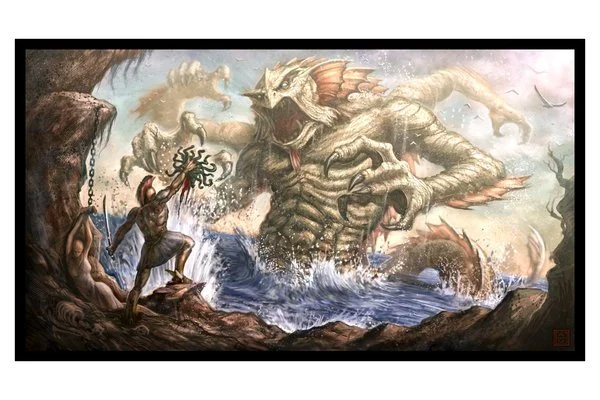
She was chained to a rock beside the sea.
This is the moment when Perseus arrives.
Perseus had recently defeated Medusa and was returning with her severed head.
Perseus Meets Andromeda
Perseus saw Andromeda and fell in love with her.
He asked why she had been chained to the rock.
After learning the story, he offered to kill the monster in exchange for marrying Andromeda.
Her parents agreed.
The Battle with Cetus
Perseus confronted Cetus.
Ancient sources describe the creature as a massive sea monster rather than a specific zoological animal.
The exact method Perseus uses to defeat it varies.
Some traditions emphasize his sword.
Others connect the monster's defeat with the petrifying power of Medusa's head.
Perseus ultimately kills the creature.
The Wedding Conflict
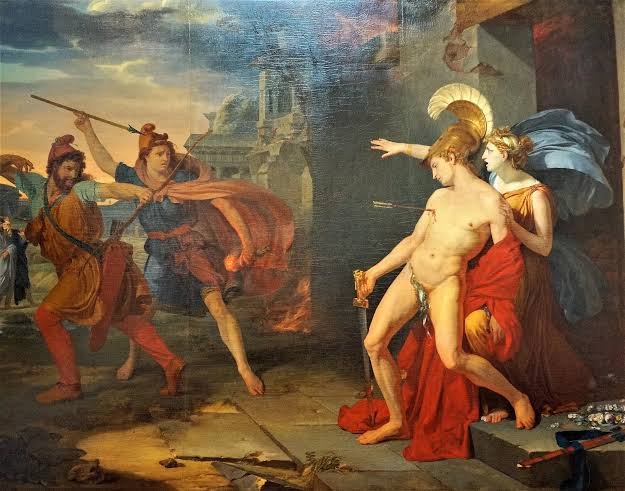
Perseus and Andromeda's marriage is threatened by Phineus, who had previously been promised Andromeda.
A confrontation develops between Perseus and Phineus' supporters.
Perseus uses Medusa's head to turn his enemies to stone.
The petrifying head thus remains central to his heroic identity.
Andromeda in the Stars
The myth was later connected to constellations.
Perseus, Andromeda, Cassiopeia, Cetus, and several related figures appear in the night sky.
This reflects an important feature of Greek mythology: myths were frequently connected with explanations for celestial patterns.
Why “Kraken” Is Inaccurate
The Kraken is a creature from Scandinavian folklore, particularly associated with later Nordic traditions.
The Greek Cetus belongs to a different mythological tradition.
Modern popular culture frequently merges mythologies for dramatic effect, which explains why Perseus is sometimes described as fighting a Kraken.
However, historically speaking, calling the monster Cetus is more accurate.
Conclusion
The story of Perseus and Cetus combines heroic adventure, divine punishment, romance, and celestial mythology.
It also demonstrates how ancient myths change when they move across cultures and centuries.
The modern “Perseus versus the Kraken” story is recognizable, but the original Greek myth is more specifically a confrontation between Perseus and Cetus.
Behind the monster is a deeper theme: human beings confronting the consequences of divine power, pride, and fate.