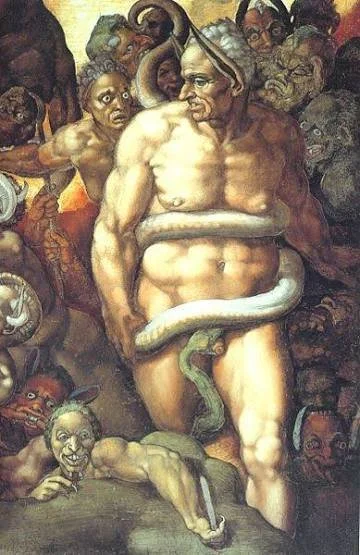
King Minos is one of the most important legendary rulers associated with Bronze Age Crete. He is traditionally described as the son of Zeus and Europa and as the king of Knossos.
The myths surrounding Minos combine political authority, divine favor, maritime power, and tragedy.
The Birth of Minos
Europa was a Phoenician princess whom Zeus approached in the form of a magnificent white bull.
Zeus carried her to Crete, where she became the mother of Minos, Rhadamanthus, and Sarpedon.
Minos later became king of Crete.
The Bull of Poseidon
One of the most famous episodes concerns a bull sent by Poseidon.
Minos requested a divine sign proving his right to rule.
Poseidon caused a magnificent bull to emerge from the sea.
Minos was supposed to sacrifice the animal.
Instead, he kept it.
This act of disobedience had catastrophic consequences.
Pasiphae and the Bull
Poseidon caused Minos' wife, Pasiphae, to develop an unnatural passion for the bull.
With the assistance of Daedalus, she was able to approach the animal.
Their union produced the Minotaur.
The creature had the body of a human and the head of a bull.
The Labyrinth
Minos ordered Daedalus to construct the Labyrinth.
Its purpose was to contain the Minotaur.
The creature became part of Crete's political mythology and eventually became associated with Athens.
Theseus and the Minotaur
After Athens was defeated in conflict with Crete, Athens was required to send young people as tribute.
Theseus volunteered to join the group.
Minos' daughter Ariadne fell in love with Theseus and gave him a thread that allowed him to navigate the Labyrinth.
Theseus killed the Minotaur and escaped.
Minos and Daedalus
Minos eventually turned against Daedalus.
Daedalus escaped from Crete with his son Icarus using artificial wings.
Icarus flew too close to the sun and fell into the sea.
The story illustrates the consequences of ignoring limits.
Minos as Lawgiver
Not all traditions portray Minos negatively.
Some ancient writers describe him as a wise lawgiver and powerful ruler.
He was sometimes said to have received laws directly from Zeus.
This dual image is important.
Minos can simultaneously represent authoritarian power and legitimate kingship.
Minos and the Historical Minoans
The historical civilization of Bronze Age Crete is called “Minoan” because modern archaeologists adopted the name from the legendary Minos.
This does not prove that a historical King Minos existed exactly as described in mythology.
However, the myths may preserve distant memories of Crete's powerful palace societies and maritime influence.
Conclusion
King Minos stands at the intersection of mythology and archaeology.
His legendary kingdom includes palaces, ships, monsters, labyrinths, divine bulls, and heroic adventures.
Although the historical reality behind Minos remains uncertain, his mythology reflects ancient Greek memories of a powerful Cretan civilization.
His story ultimately warns about the responsibilities of kingship.
Minos receives divine favor but violates divine expectations. His personal decisions then produce consequences that affect his family, kingdom, and descendants.