Why Ancient Greeks Believed Bees Were Connected to Gods, Prophets, and the Secrets of Life
Bees occupied a fascinating position in ancient Greek culture.
They produced honey, one of the most valuable sweet substances available before industrial sugar production.
But their importance went beyond food.
Bees became associated with:
Divine figures.
Nymphs.
Priestesses.
Purity.
Fertility.
Prophecy.
Death and rebirth.
The production of sacred substances.
Greek mythology transformed the humble bee into a symbol of extraordinary power.
Honey Before Sugar
For ancient Greeks, honey was a major source of sweetness.
It could be used in:
Food.
Drink.
Medicine.
Offerings.
Religious rituals.
Honey was therefore economically important.
Beekeeping could provide a valuable agricultural product.
Melissa: The Bee and the Nymph
The Greek word melissa means “bee.”
It also became associated with certain mythological and religious figures.
One tradition tells of a nymph named Melissa who cared for the infant Zeus.
According to later versions of the story, she fed him honey.
This connected bees and honey with the upbringing of the king of the gods.
Bees and Priestesses
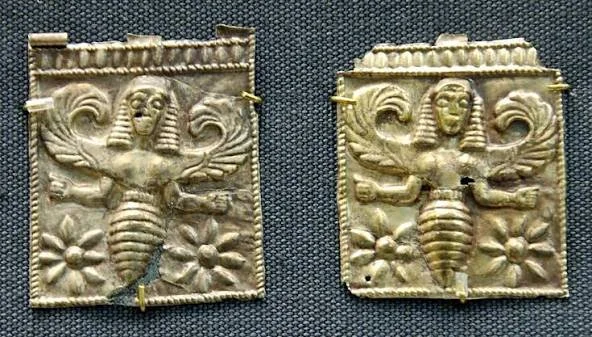
The word Melissa could also be associated with priestesses in certain religious contexts.
This connection is particularly important in traditions surrounding Demeter and Persephone.
The bee's symbolic association with purity, fertility, and sacred transformation made it suitable for religious imagery.
Honey and the Gods
Honey could be presented as an offering.
Its sweetness distinguished it from ordinary food.
It could symbolize abundance.
The gods of Greek mythology were frequently associated with extraordinary foods and substances.
Honey therefore became part of the boundary between ordinary nourishment and sacred consumption.
Bees and Prophecy
Ancient Greek religion included strong connections between bees and prophetic traditions.
The bee's mysterious behavior may have contributed to this symbolism.
Bees disappeared into hidden spaces.
They emerged collectively.
They created honey inside concealed structures.
To ancient observers, the hive could appear almost like a miniature supernatural society.
The Bee as a Model of Society
A hive contains:
Workers.
A queen.
Specialized behavior.
Collective organization.
Ancient thinkers were fascinated by social order in nature.
The bee could therefore become an example of coordinated community life.
Beekeeping Technology
Greek beekeepers developed practical methods for maintaining hives.
Ancient hives could be made from materials such as:
Clay.
Woven plant materials.
Wood.
The beekeeper needed to understand seasonal patterns.
Colonies required protection.
Honey had to be harvested without destroying the entire colony.
This was a practical agricultural skill.
Honey in Medicine
Ancient Greek medical traditions recognized honey's usefulness.
It could be used in preparations and external applications.
Again, ancient medicine should not be treated as equivalent to modern medical science, but the repeated use of honey demonstrates its perceived therapeutic value.
Bees and the Soul
In some ancient traditions, bees became associated with the soul.
Their movement between hive and landscape could symbolize transformation.
The emergence of bees from enclosed spaces could resemble ideas of rebirth.
These associations made bees especially powerful religious symbols.
Why Bees Became Mythological
The bee represented something mysterious.
It was tiny but powerful.
It could create sweetness.
It lived within a highly organized community.
It disappeared into darkness and emerged again.
It produced something that could be consumed as food, medicine, and offering.
For ancient Greeks, the bee was therefore more than an insect.
It was a symbol of nature's hidden intelligence.